

Rob
-
Posts
12,942 -
Joined
-
Last visited
-
Days Won
371
Content Type
Profiles
Forums
Events
Downloads
Store
Gallery
Articles
Everything posted by Rob
-
Thanks chaps.
-
I decided I needed a life. His basic problem is that if a proof is listed in Spink for a type, what he lists is a proof. So here we have a bog standard worn 1937 crown, but it must be a proof and fortunately for this imbecile, a Matt Proof is listed. ipso facto he has an extremely rare matt proof - coz it isn't shiny like the rest of them. Price it a bit higher than the regular proof and you arrive at the listing. Spink apparently has the complete list of coins, so only one 1806 proof halfpenny exists and Peck wasted 10 years of his life writing the book. He said he has been collecting/dealing for 54 years. The last 53 have been wasted.
-
All of it. I deal, collect and question marks are as a red rag to a bull leading me to spend large amounts of time understanding the unexplained.
-
I think it's a rerun of an old article. i.e. they were scratching about for something to fill this month's pages. As for selling it, I don't think so. It is too useful as a research piece for the provincial mints I am working on to get rid. In fact I could do with lots more coins of various types but in a similar condition.
-
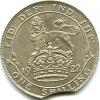
1842 Shilling with Inverted G over D in FD
Rob replied to Martinminerva's topic in Confirmed unlisted Varieties.
Could be a reversed C? -
We are also comparing chalk and cheese here because the reverses are different on the two coins. His is reverse 1 which is only found with two obverse dies A & B. Yours is reverse 2 which is found paired with B, C, D, E & F and additionally is 1644 6d reverse die 1. Clearly yours was the longer lived die. Thinking out loud, the obverse A die may have been taken away from Oxford and used elsewhere after recutting (W/SA, Bristol or Exeter?) because the lifetime of the small dies is considerably longer than larger ones. The fact that yours is also a 6d die could date an emergency provision to replace reverse 1?
-
His is higher grade, yours is better struck up but worn and with a big hole. Yes, a plug will drop the desirability a lot. Both are overpriced and I wouldn't want either because S2985s aren't that rare. You could find a problem free VF or so within a year if you wanted one. The provenance of John's coin will help offset the flat bits.
-
If I see wax on a coin I go into overdrive and have one or more late nights.
-
I know, that's where I bought it. I was also going to buy it in St.James's 3 where it was lot 253 (with cabinet story), but the estimate of 2500-3000 was easily surpassed by Mark Teller who paid about £4K all in. I then put a bid in at Goldbergs at the same level I was willing to pay 3 years previously and on the day of the sale came second, but 2 weeks later an invoice appeared at my max, so presumably the vendor decided to cut his losses. I would have had to pay nearly $8K for the seller to recover his/her outlay. Now for the difficult bit. Where did the wax come from? You can see on collotype images where the depression is resulting from wax which remained stuck to the coin, so it will be obvious once the image is located.
-
The name given to them is bezants, but don't ask me where the name originates. The various marks in the forks are a recurring feature of coinage from H8 through to the end of hammered coinage. They have to mean something, and that something is likely to be an identifier for an engraver or period for example. If you compare the provincial mint coins, you see that certain punches occur in groups and this association carries through different issues in the same place or issues from different places. i.e. the basic punch set must stay with the engraver rather than the mint location.
-
Well I can't see my warning points anywhere - not that I particularly care. What do they mean, as a matter of interest?
-
I haven't asked anyone yet, though I'm sure someone will be able to shed some light on it. The flan is slightly uneven, but not as bad as you may think given we are talking about a coin that is struck from a rough piece of diestock. The previous incarnation of the obverse die was a halfcrown, so you get a few inconsistencies in any case on the die depending on how well it was polished down and how good the fabric of the die was.
-
Not sure I understand you Rob? The presence of new posts is - as it has always been - indicated by a dark coloured folder against the forum name, instead of a pale colour. Once in a new post, I notice (YAY) that there is now a "Next unread topic" button adjacent to the "Back to ......" button, so there's no need to clear darker coloured topics, it can all be done from within each topic without having to go back out to the topic list. YAY. This has been discussed before - a couple months ago. Some use the icons to tell them what status the posts are, others don't know, or can't be bothered to find out what they mean and just go on the date and time of the last post. I obviously fall in the latter group, as once a post is read, you know what it says.
-
The 1705 came from London Coins in 2004 when graded aEF/EF. I had that marked down a bit though on account of the obvious wear to the plumes. Fully struck plumes come up to a sharp point, though I suspect that not many have seen coins in that condition, CGS included. Don't know if the previous record had any bearing on the assigned grade? The gVF for the 1707 is far too generous. Also did they record the M over inverted M in MAG as a variety? The 1709 I acquired from a serious shilling collector on ebay a long time ago. It was covered in grease and crud, which dissolved off to produce quite a pleasingly toned coin underneath. Probably due to the previously attached crud given the variance in toning between the two sides! The 1700 is where I had it, though needless to say acquired as an ebay unc from a dealer who should know better. Thanks for that Rob, I think you either have a photographic memory or very good records to recall these 4 coins I bought from you last year, all of which I remain very pleased with! They are not finalised yet, but I did point out the M over inverted M on the 1707 to them, so hopefully that will be recorded in their database and on the slab. The 1700 and 1705 are 2 of my very favourite coins ... I don't believe the 1705 was previously slabbed by CGS as this is the first of the type on their records, so I suspect they have no idea it was previously sold by their main shareholder London Coins - and I didn't know about that 'provenance' so I didn't tell them! The 1705 was lot 745 in sale 104 on 29/2/2004. I still expect them to have compared any past examples in their photo database and obviously would have found this one. I usually remember who from and when I bought coins, but the info is also recorded should I have a mental block.
-
The 1705 came from London Coins in 2004 when graded aEF/EF. I had that marked down a bit though on account of the obvious wear to the plumes. Fully struck plumes come up to a sharp point, though I suspect that not many have seen coins in that condition, CGS included. Don't know if the previous record had any bearing on the assigned grade? The gVF for the 1707 is far too generous. Also did they record the M over inverted M in MAG as a variety? The 1709 I acquired from a serious shilling collector on ebay a long time ago. It was covered in grease and crud, which dissolved off to produce quite a pleasingly toned coin underneath. Probably due to the previously attached crud given the variance in toning between the two sides! The 1700 is where I had it, though needless to say acquired as an ebay unc from a dealer who should know better.
-
An interesting article on p.46 of this month's Coin News talking about a York shilling, which, as it is mine, offers scope for some discussion on the questions raised. This is the same coin below, and no, I didn't write or provide any input for the article. This was reputedly found in a Jacobean chest of drawers, though I have my doubts about the full story behind it. As is obvious from the image, the coin has a flaw through the crown band which is filled with wax. According to the article, the wax was used to 'mark' the flaw, though from experience I would say that the wax is usually left from an impression taken in order to illustrate the coin in an auction catalogue or other journal in the first half of the last century. I am not convinced that the wax 'may have been placed there by the original finder in the early 1980s' as stated in the article - does anyone know a person who has done this? The question therefore is whether the coin was 'lost' in the chest of drawers for reasons we can only speculate on, or whether it was genuinely lost down the back of it centuries ago. Unsurprisingly given the presence of the wax, a lot of midnight oil has been burnt trying to find an illustration of the coin which would clearly tick enough boxes to warrant illustrating, but sadly to no avail.I am still confident the coin will appear in a catalogue from pre-WW2 days. The colour of the wax is quite a vivid red, similar to that seen on coins illustrated in Sotheby sales from the turn of the century onwards and also in Glendining sales towards the end of the 1930s.By the 1930s, the wax used at Sothebys was considerably darker in colour. The possibility also exists that the coin was illustrated in a foreign sale [catalogue]. Likely candidates identified from old catalogues in my possession have been a bit thin on the ground. i.e. none. Thoughts ladies and gentlemen please.
-
Although the date of the last post shows, is there any way of including the time as well? o/w you have to open it up to see if it is a new post or not whereas previously you only had to look at the time of the last one which you would obviously remember.
-
I usually go, but this year my daughter bought us a pair of tickets to the Proms on Friday night. What an excellent venue and concert.
-
C.W.Peck, Numbers on rarity ratings.
Rob replied to MRD's topic in British Coin Related Discussions & Enquiries
Keep your eyes open as I don't have a spare. It only covers copper, bronzed and gilt pieces because Mick doesn't collect Silver or Gold Soho or restrikes, so does have its inherent limitations. Having said that, the latter are so rare that there must by definition be few collectors of them in these metals. I can probably help here if you need any info. Sorry, I lied. Didn't realise I had one spare. PM sent. -
C.W.Peck, Numbers on rarity ratings.
Rob replied to MRD's topic in British Coin Related Discussions & Enquiries
Rule of thumb. PU/EXR say R7 & R6 with ER being R5. When you get to R4 and more common, it is fair to say that virtually all would fall into a category that covered double figures though it is quite likely there are more than 100 of the commonest types. All of which assumes of course that the Peck rarity assigned is correct. More important than absolute numbers is the number of freely circulating and therefore available pieces. There are a handful of pieces where there are probably only the four recorded known, but only a single piece is available. Some Taylor restrikes are much more common than Peck suggests. -
C.W.Peck, Numbers on rarity ratings.
Rob replied to MRD's topic in British Coin Related Discussions & Enquiries
Keep your eyes open as I don't have a spare. It only covers copper, bronzed and gilt pieces because Mick doesn't collect Silver or Gold Soho or restrikes, so does have its inherent limitations. Having said that, the latter are so rare that there must by definition be few collectors of them in these metals. I can probably help here if you need any info. -
C.W.Peck, Numbers on rarity ratings.
Rob replied to MRD's topic in British Coin Related Discussions & Enquiries
Just to add - there are coins rated as common as VS by Peck where no examples have come to market since 1970. Mick concluded that they were virtually unobtainable and I concur. Conversely there are coins rated R which are always available. That's usually called common. Half are probably about right, with the rest requiring some adjustment in both directions. -
C.W.Peck, Numbers on rarity ratings.
Rob replied to MRD's topic in British Coin Related Discussions & Enquiries
All are somewhere between 1 and lots For a somewhat more useful indicator, see Mick Martin's survey of Soho patterns in the July 2009 Circular where he tabulated the number of times a particular reference coin has appeared in UK sales and lists since 1971 and gives a comparison between Peck rarity and availability. Interesting reading. -
Hammered gold coins.....
Rob replied to Colin88's topic in British Coin Related Discussions & Enquiries
Mmmm .. chocolate! And .. how the heck does anything confectionary related last from Christmas Rob? There must be something wrong with you. In my house it's an hour from gift unwrapping, tops! Simple. The hammered gold isn't melting here, though it is hot. All the chocolate however, is. -
Hammered gold coins.....
Rob replied to Colin88's topic in British Coin Related Discussions & Enquiries
I can confirm the only ones melting at the moment are the christmas tree decoration gold coins.