
Rob
-
Posts
12,935 -
Joined
-
Last visited
-
Days Won
371
Content Type
Profiles
Forums
Events
Downloads
Store
Gallery
Articles
Everything posted by Rob
-
Which would you choose ?.
Rob replied to PWA 1967's topic in British Coin Related Discussions & Enquiries
Doubly rare with 3 'eyes' -
Which would you choose ?.
Rob replied to PWA 1967's topic in British Coin Related Discussions & Enquiries
The third needs Polyfiller. -
Which would you choose ?.
Rob replied to PWA 1967's topic in British Coin Related Discussions & Enquiries
Does anybody have a real-life example of this hypothetical conundrum? Just wondering if we are tying ourselves in knots about a situation which doesn't actually exist as far as we know. -
Which would you choose ?.
Rob replied to PWA 1967's topic in British Coin Related Discussions & Enquiries
Almost certainly unique given there is no duplication known in the 8 or 9 similar pieces struck in aluminium around this one (Ballpark of Peck types R20-30 refers). This is one of a few exceptions to the rule of a piece of red felt having more appeal than the unpleasant coin within the tray recess. Anything struck in aluminium during the 19th centurey will be rare as it was a precious metal at the time. -
Which would you choose ?.
Rob replied to PWA 1967's topic in British Coin Related Discussions & Enquiries
I think I've already nailed my colours to the mast. http:// -
Which would you choose ?.
Rob replied to PWA 1967's topic in British Coin Related Discussions & Enquiries
Depends entirely on the coin. If you have a choice of one pierced and the other with a bit missing off the edge, do you cut off your nose to spite your face and refuse to have either, or decide which one is more attractive to you? Given the former means you can never fill the spot, I presume that the decision will ultimately depend on how driven you are to complete, and in that case it probably doesn't matter which one you have, -
There were many dies for this issue. This is for both with hearts and no hearts. Your large image above shows a lot of wear to the arms, so this would likely affect the central star too. The middle one has some of the rays missing, which judging from the position suggests a filled die. Dies were punched in by hand in the 18th century, so variation in execution is the order of the day.
-
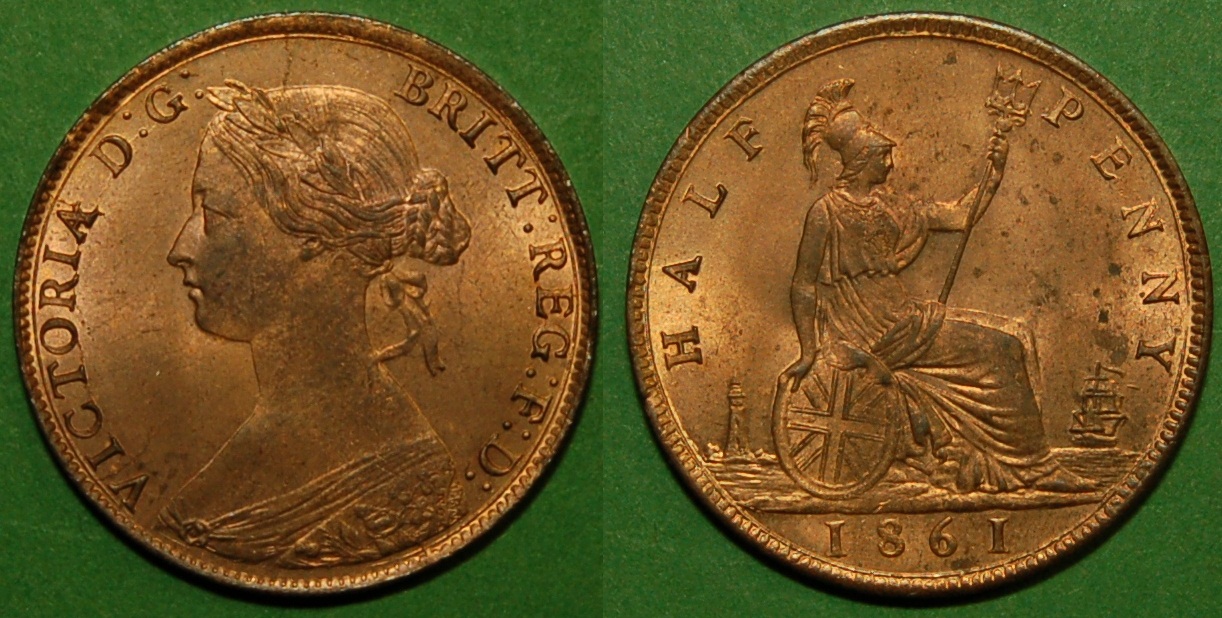
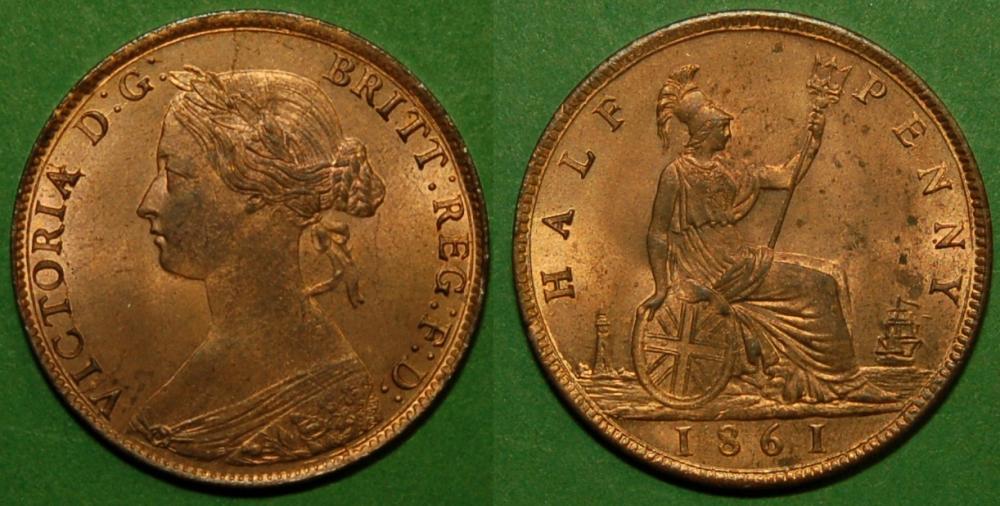
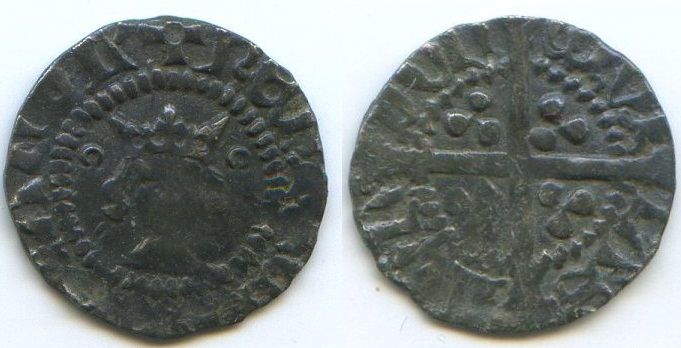
I got this 1861 for the obverse die, which seemed to present quite a problem in a good grade. Henry V halfpennies can be identified by the broken annulets beside the head
-
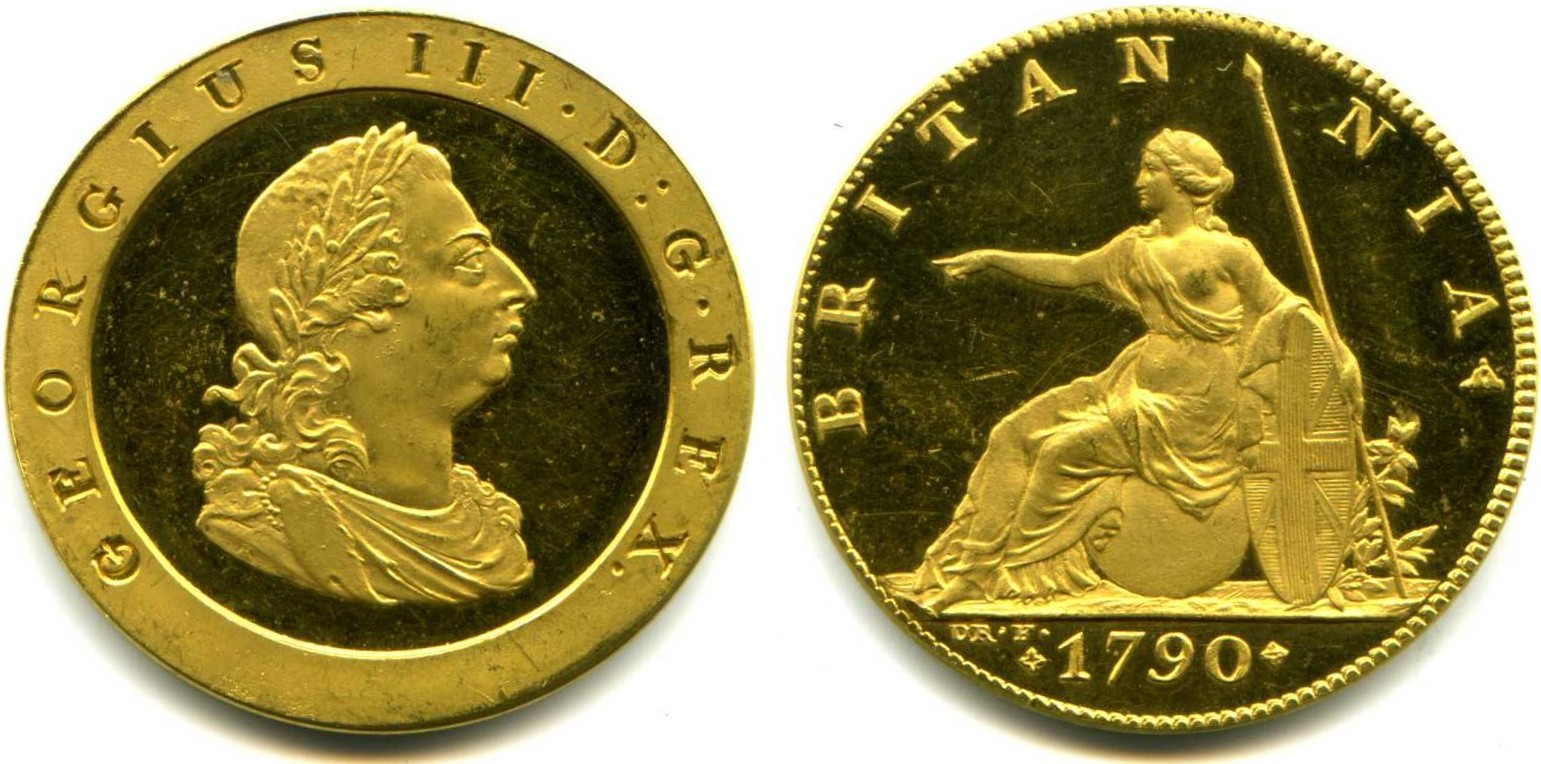
I've got Nicholson's and have had another as well. Peck's own coin was in Baldwin's basement and well worth getting when it comes around again. The brass one was also Nicholson's. The other example in the BM is horrible.
-
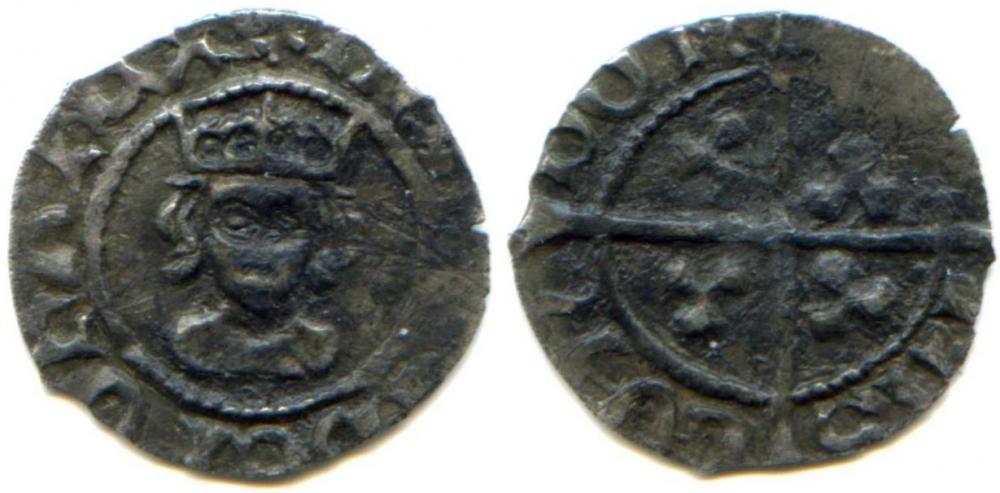
Henry VII 1st issue with the half rose and lis mark (below). Priced roughly the same as H8 halfpennies (above) in Spink, you will see dozens of the latter for every one of these. Quite chuffed with this one, ex-Shuttlewood. .........
.jpg.fa9d652d930adf10f971266b29177d4f.jpg)
-
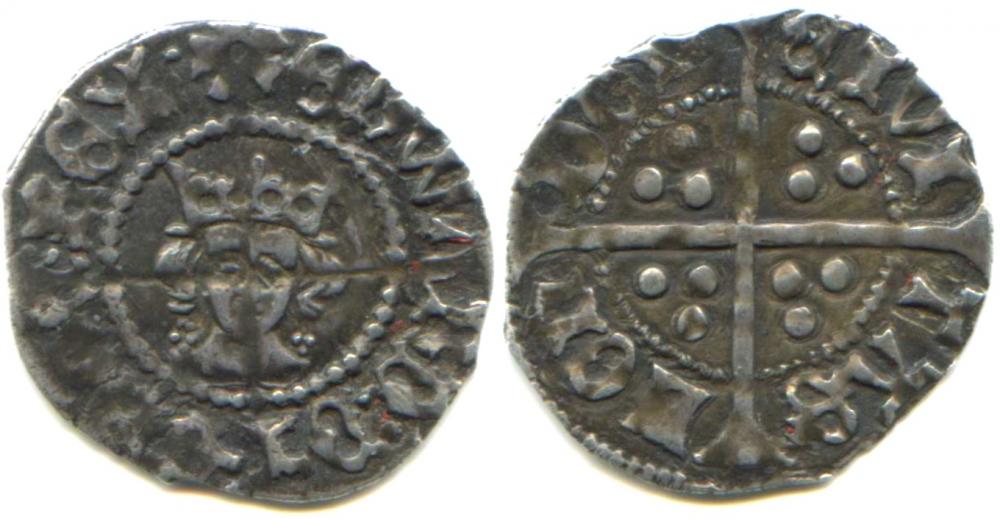
Edward IV heavy coinage halfpenny with i.m. rose. The copious quantities of wax stem from this coin's illustration in Whitton's BNJ article where it was pl.11. no.12. Gold restrike type R64 by Taylor. Henry VIII halfpenny struck under Archbishop Edward Lee at the episcopal mint at York as denoted by the letters E L beside the bust. Dates to 1531-44.
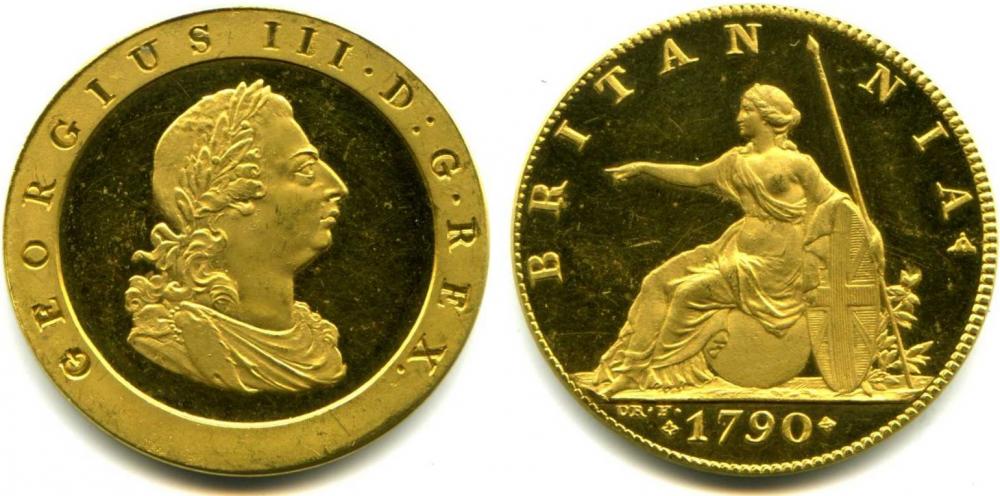
-
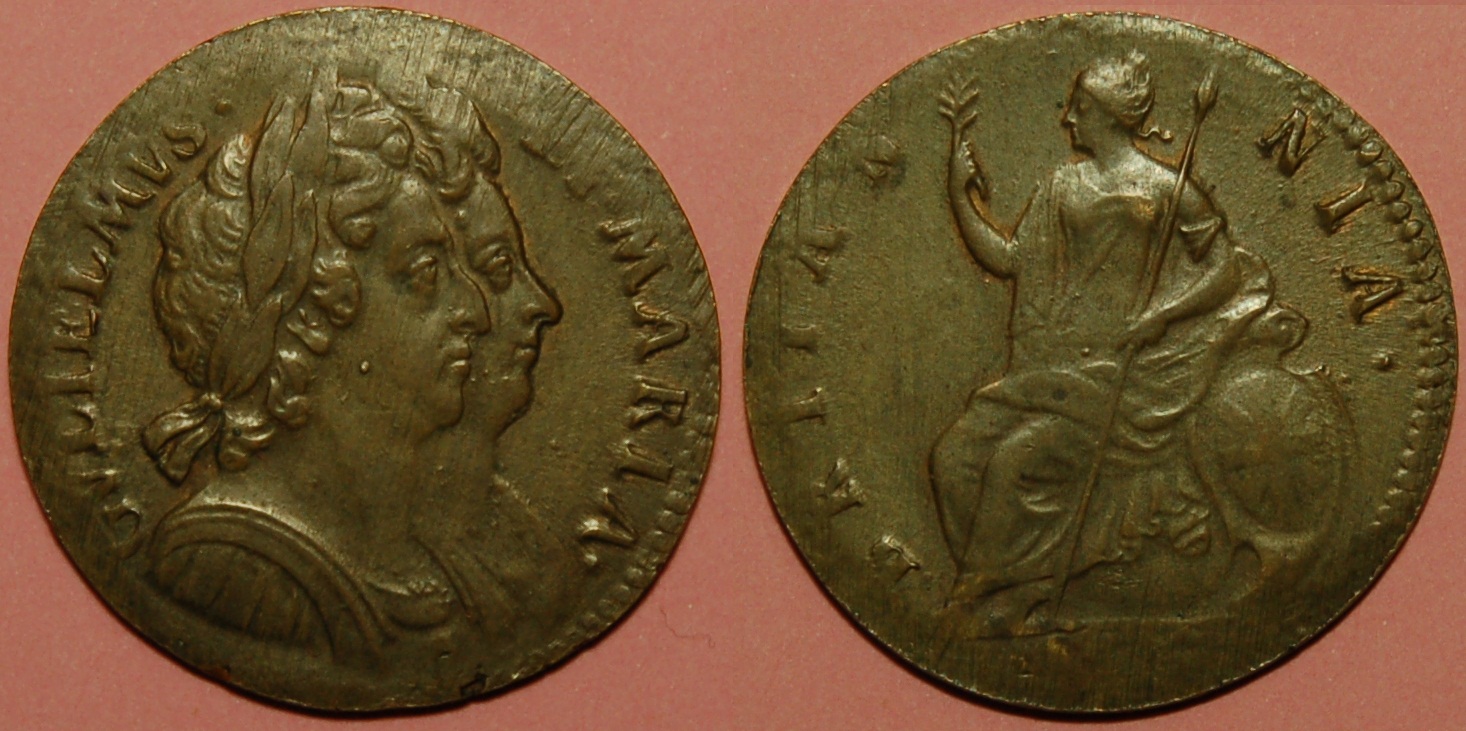
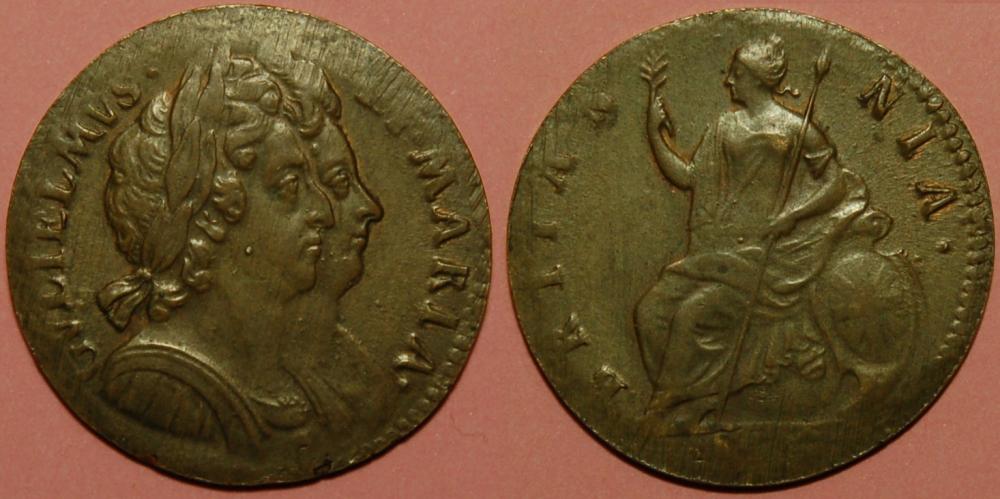
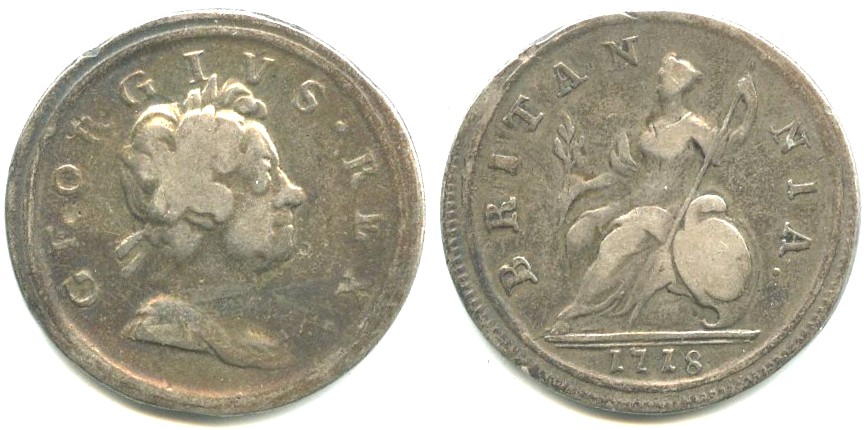
To appease the milled brigade, here is a P607, a W&M 1/2d struck in brass. A 1718 struck in silver. As I noted on this forum 8 or 10 years ago, this coin is the subject of a typo in Peck. Footnote 1 says the coin weighed 157.3 grains, was 26.5mm diameter, had 2 file cuts on the edge and was somewhat worn. This matches the description in all bar the weight which is not 157.3, but 115.7 grains. i.e. the typesetter used the first 1 of the weight as being footnote 1. It came out of Baldwin's basement.
-
1st is an Elizabeth I 7th issue halfpenny. The basic design was carried over into the following reign of James I where it was used for the first couple of initial marks - thistle & lis. From James I rose onwards, a revised design was used with the English rose on one side and the Scottish thistle on the other. Although strictly a penny, the debased issues of Edward VI and Philip & Mary were used as halfpennies on account of their reduced silver content. This example was struck at York. The final piece is a James I with the initial mark cinquefoil current from 1613-5. This issue coincided with the granting of the Harington patent for copper farthings. As a result, the production of silver small change virtually stopped. I can only recall seeing 2 examples with this mark in the past 10 years.
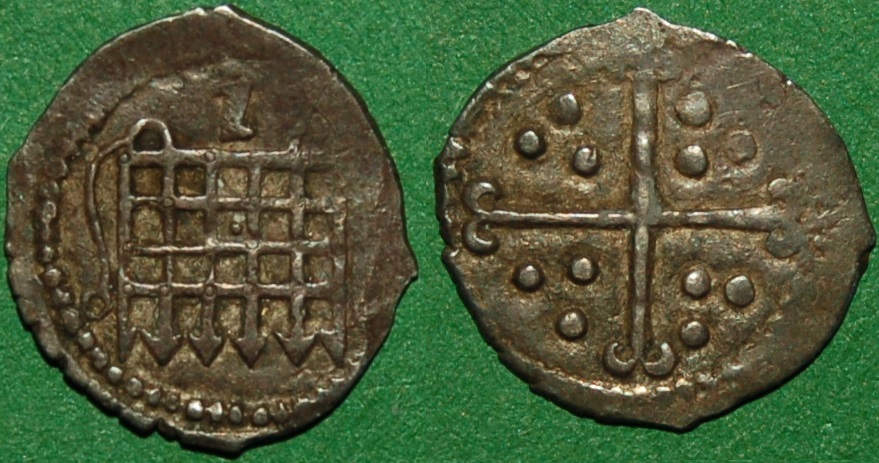
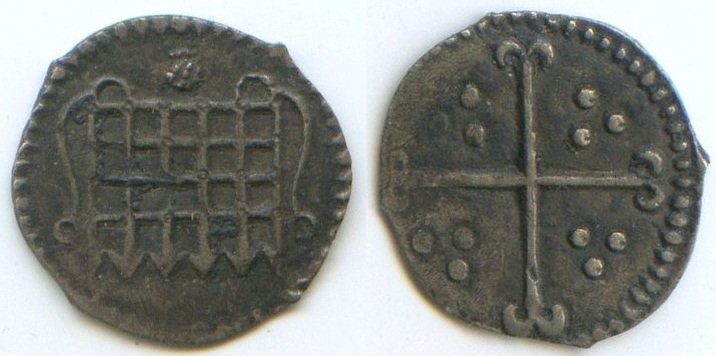
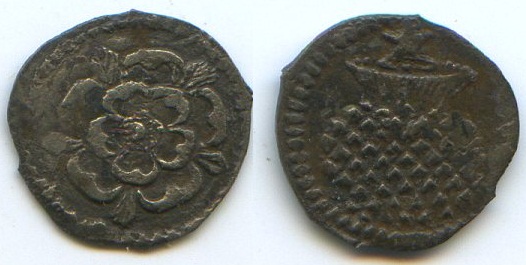
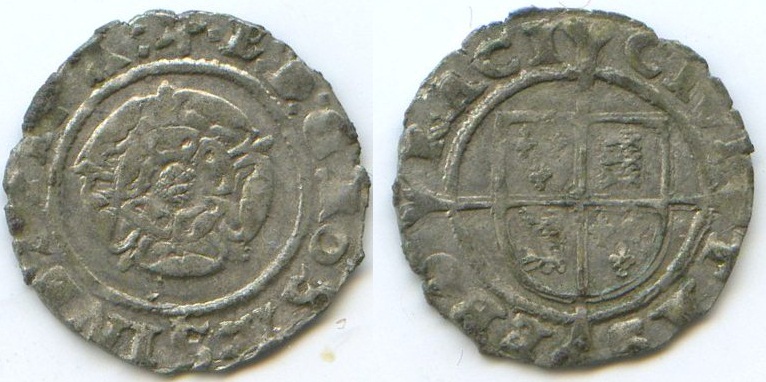
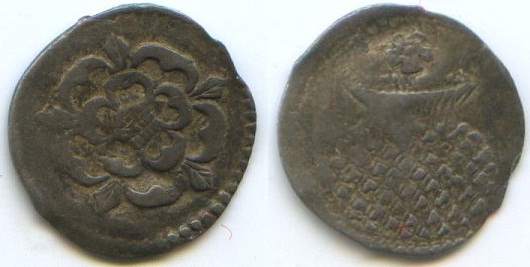
-
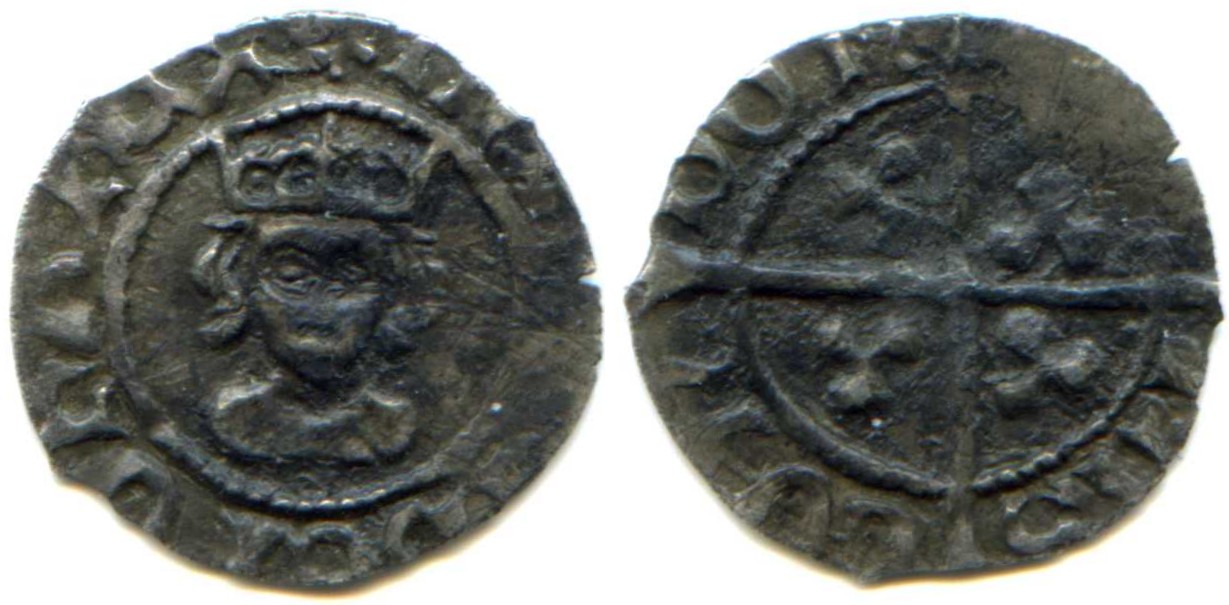
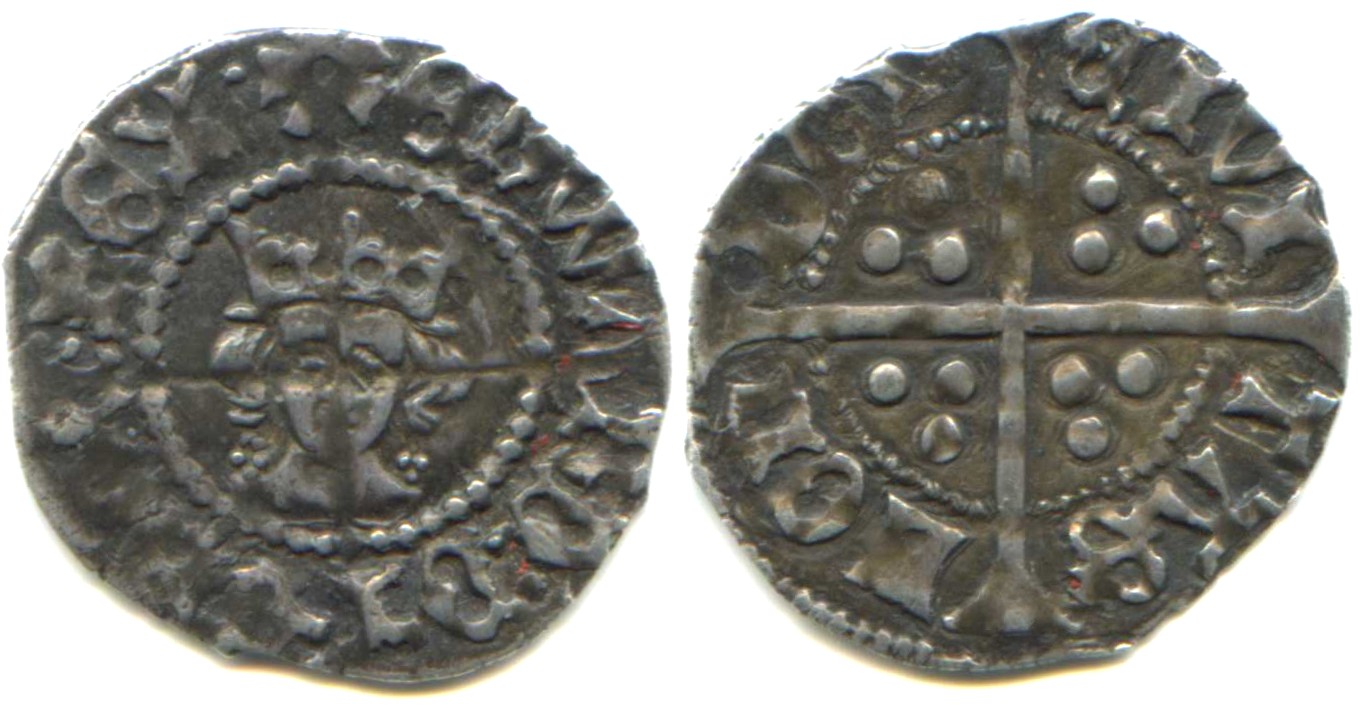
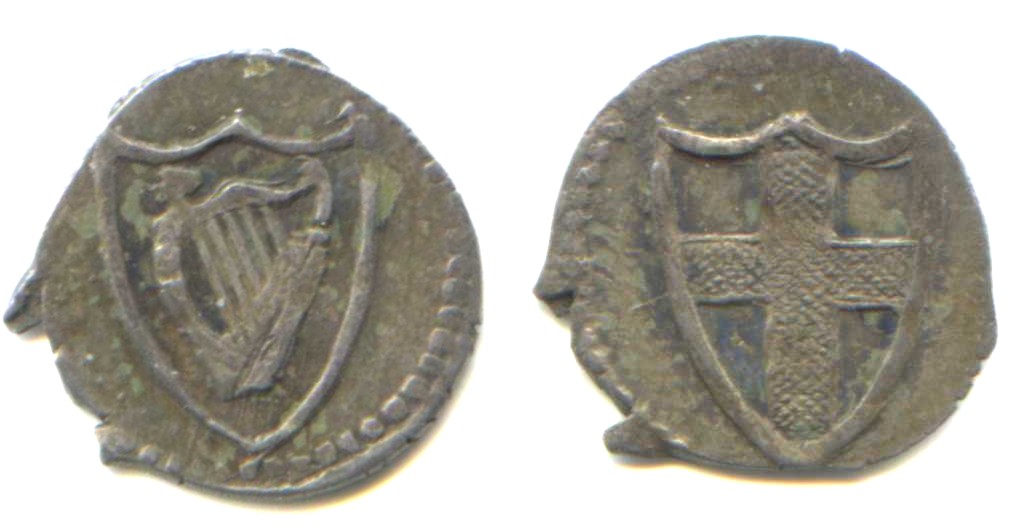
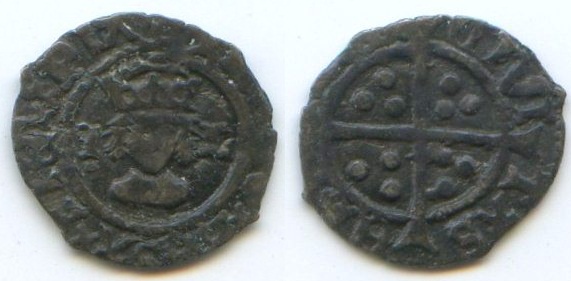
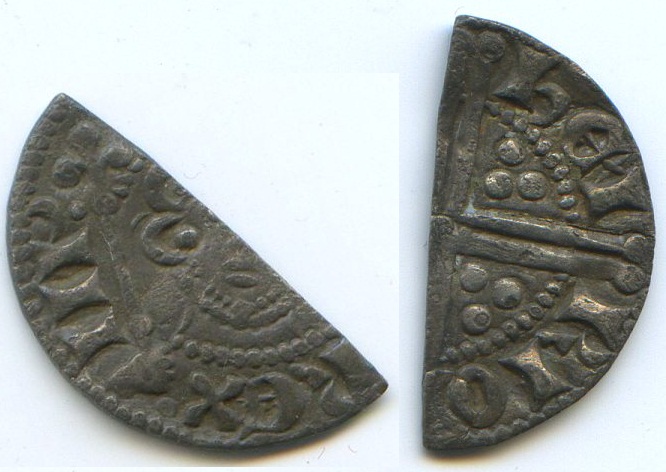
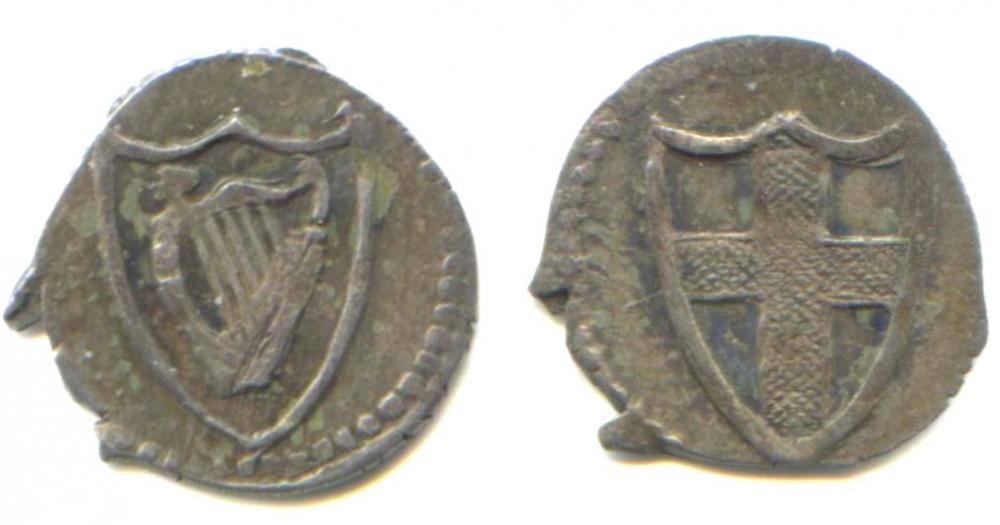
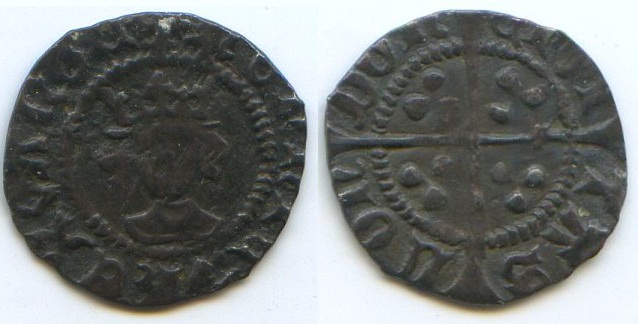
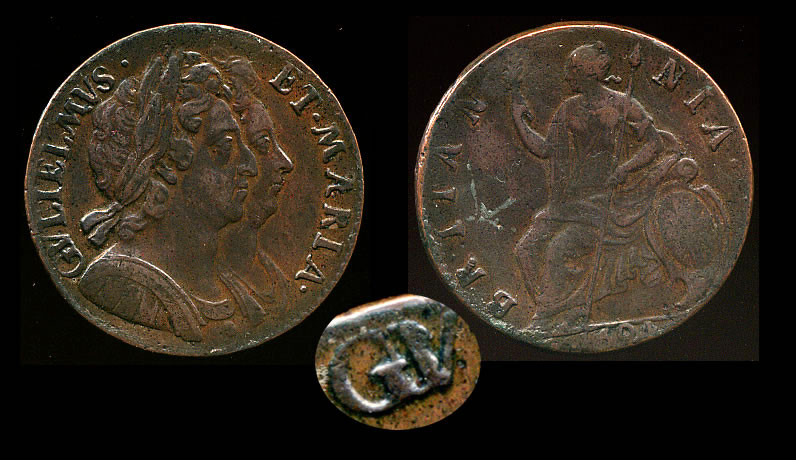
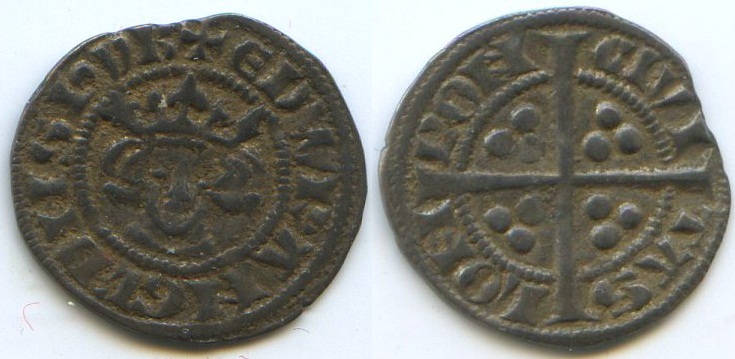
Michael-Roo was saying that nobody posts halfpennies, so here is an attempt to rectify that. From Saxon times up to the medieval period, it was normal to use the reverse cross as a cutting guide to produce a halfpenny of which this Henry III long cross is a typical example. Next up is the Commonwealth halfpenny, the last hammered silver halfpenny produced in this country. Third is a so-called Pinecone-Mascle issue halfpenny of Henry VI, the name derived from the presence of pinecone and mascle (diamond) symbols in the legend. 4th is a 1694 William & Mary halfpenny with GV of GVLIELMVS struck over a B - the engraver presumably starting the reverse legend in error. 5th is an Edward I class 7 halfpenny.
-
Most Conservative Graders
Rob replied to coinmerchant's topic in British Coin Related Discussions & Enquiries
He hasn't necessarily dipped things. You can only sell what's available to buy and there is a lot of dipped material in the market. -
It's a cash and they were struck over a period of a few hundred years. They aren't rare for the most part, but the series is quite complex and some do fetch good money if you know what you have. The best reference book is Berger's PhD thesis (1976) - if you can find one. Obviously the market for Chinese reference material is somewhat limited, so you should be able to pick up a copy for not too much money, say £60-80. I had one a couple years ago and it sold within a week or two at the lower price.
-
Done on a scanner so drained of colour, but wonderfully iridescent in the hand. Must look for a camera image.

-
Mossop, Coins of the Lincoln Mint
Rob posted a topic in British Coin Related Discussions & Enquiries
Has anybody got access to a copy? If so, please could you PM me. Thanks. -
coins minted on the "wrong" blank
Rob replied to Komisaruk's topic in British Coin Related Discussions & Enquiries
Nope -
The suggestion that the RM is deliberately creating errors seems a little wide of the mark when they have no control of the market for circulating coins. They would not be able to turn round and say 'used undated 20p, forty quid if anyone wants one', so unless they advertise errors when new, I can't see how they can ask more than face value for circulating pieces
-
Almost every collection has a name put to it eventually, the only caveat being that it does need to have sufficient quality to be memorable. You can't buy in total isolation and so hide your identity indefinitely, eg, I was able to put a name to Declan's acquaintance with the old milled gold a couple years ago on the back of a date and a coin or two.
-
coins minted on the "wrong" blank
Rob replied to Komisaruk's topic in British Coin Related Discussions & Enquiries
And there were quarter and half farthings dated 1868 as well, but these in the same design as the early Victorian coppers. I don't think they were made as sets because the halfpennies appear more often than the other denominations, certainly more so than the pennies. Maybe there were sets made and a few extra halfpennies. Having said that, I've never seen a boxed set, nor an empty box to take them. -
coins minted on the "wrong" blank
Rob replied to Komisaruk's topic in British Coin Related Discussions & Enquiries
The 1967 off-metals are probably the mint workers having a bit of fun as this coincided with the closure of the mint at Tower Hill and its relocation to Llantrisant. There are quite a few of them about. The 1868 cupro-nickel proofs were intentional as all denominations otherwise struck in bronze are known and it coincided with the introduction of cupro-nickel coins for Jamaica. Copper and bronze don't perform well in humid tropical conditions, so they switched to cupro-nickel for this reason. The same applied to a number of British possessions with similar climates. For example, here is a third farthing struck in cupro-nickel from the same period.
-
Ah, good. Thanks.
-
Possibly not noted before. Coincraft lists both A's unbarred but doesn't mention stops at all, so it would come under this reference (WMHD-065). I don't know whether Nicholson 049 had a stop or not and now the images are no longer available, so can't say. The die is different to both my unbarred A's obverses. Baldwins 47 lot 357 definitely has a stop.