

Rob
-
Posts
12,934 -
Joined
-
Last visited
-
Days Won
371
Content Type
Profiles
Forums
Events
Downloads
Store
Gallery
Articles
Everything posted by Rob
-
There is only one mint - Tower. The bell dates it to 1582-3
-
Half Sovereign with with I.E.B. initials
Rob replied to Cal from U.S.'s topic in Confirmed unlisted Varieties.
If it is a filled J then it shouldn't be a variety IMO as this arises from die blocking due to normal operation. If it is a properly formed letter I then it would be a variety and is not recorded. -
rarity attributions which are in the mind of the seller (usually).
-
The only relevant ones are R7 (1 or 2), R6 (3 or 4), R5 (5-10), R4 (11-20), numbers that should be taken with a pinch of salt. Once you get more common than that it is increasingly a case of guesstimation, with some a fair way off the mark. In any case, the original ESC never assigned numbers for R3 and commoner. A bit of research around your chosen field and you will likely have a better feel for rarity than suggested by ESC. Milled coinage of England by Cope and Rayner published in 1972 attempted to assign a rarity for a given grade - far more useful. Although not perfect, it was considerably better than ESC, though more limited in scope.
-
It is WWP, a fact noted by Davies on p.31. The angle imaged showing the first W, the second one is on the next side of the buckle clockwise, and the P is on the opposite side. The reverse was done by Pistrucci, not Wyon, a fact reinforced by the rather obvious signature.
-
A very basic error by NGC
Rob replied to Accumulator's topic in British Coin Related Discussions & Enquiries
Important name on the ticket seems to add a point, and also a large collection consigned for auction. Grades are inconsistent because you are using the same tool whether it's a TPG or not, i.e. a fallible human. If you want automated grades, use a robot. -
I have a theory on this and it may well be wrong. I think it may be an apprentices test piece. Made oversize as they learn the process of manufacture. Other types of apprentices do similar things but in reverse, furniture makers make half size models to test them. However as a coin is small to begin with it would make sense for the apprentice to make it larger when learning. The double stamping would not have stretched it, if it had Britannia would be double struck with one figure smaller than the other whearas the reverse is clearly rotated by a few degrees. There is more rotation the further away from the centre hence less error at the point where the trident touches the leg. Also both sides would have been effected if double stamping had made it bigger. it is possibly thinner because they somehow used a standard size blank which would have had to have made slightly larger before being stamped. just a theory imo I have a theory on this and it may well be wrong. I think it may be an apprentices test piece. Made oversize as they learn the process of manufacture. Other types of apprentices do similar things but in reverse, furniture makers make half size models to test them. However as a coin is small to begin with it would make sense for the apprentice to make it larger when learning. The double stamping would not have stretched it, if it had Britannia would be double struck with one figure smaller than the other whearas the reverse is clearly rotated by a few degrees. There is more rotation the further away from the centre hence less error at the point where the trident touches the leg. Also both sides would have been effected if double stamping had made it bigger. it is possibly thinner because they somehow used a standard size blank which would have had to have made slightly larger before being stamped. just a theory imo Pete it was listed as 1861 5+G (R18) and no one seemed interested at 99p Presumably, everybody who needed one already had one, or more likely couldn't live with it they bought it. I have no idea on the numbers available, but presume a few are known, guaranteed to be in better grade. I've fallen for that one myself in the past - buying something because it seemed too cheap Not sure what's happening with these replies which seem to be in quadruplicate as I write, but IanB might be onto something. When the designs are first made, it is done on something the size of a dinner plate after which it is reduced. There is nothing to stop a piece of intermediate size being made. Keeping an open mind, it might be kosher.
-
Good
-
?
-
Yes, but that's the rub. If not rare, then it is unlikely that you will have the only example, nor is it likely to be in the right grade for the prospective purchaser. If mint state, then you are likely to want to hang on to it.
-
If you are just starting out, you might have a misconstrued idea of rare coin. Rare coins are exactly that - a handful known and collectively we are mostly aware of their various locations. These coins tend to find the person who wants one and bypass the general market. They are something you are unlikely to encounter in day to day collecting unless dug up and listed on ebay. Without a history of wanting specific rarities, and more crucially putting your money where your mouth is when they become available because they don't usually come cheap, then you won't figure on a dealer's radar. Most people consider a coin to be rare if not immediately available. In reality, they are simply impatient. Rare might take months or even years for a coin to surface.
-
Less than you might imagine. There are common ones and rare one, just like everything else. £2-3K usually gets you a nice one, but some need a bit more than that, particularly the later Charles I pieces because very little gold was struck approaching or during the Civil War and after.
-
They are all collectable, just a case of supply and demand. Too many to be absorbed by collectors and they become bullion. Prices vary from £20-30 above bullion to half a million. Horses for courses.
-
You'll get a lot better than 60% on sovereigns. Most are bought a fraction under bullion and sold for a tenner or a bit more. The money is made on quick turnaround, not a large capital gain. Obviously doesn't apply to all sovereigns, but certainly does to many 20th century pieces.
-
One thought that has just been conveyed to me. Do we now have a prospective future issue to be countermarked with a greyhound or portcullis? Alternatively, if they are not legal tender, then there is no reason why anybody can't gert a job lot made in China for 10p each and flog them at a huge profit. If not legal tender, then this would not be illegal, methinks.
-
Coins of all grades have a place in any collection. Sometimes it is Hobson's Choice with one date from a run only available in low grade whilst being able to fill all the others with minty examples. A run of mint state coins can be just as uninspring as a box of washers when they are uniform in colour, differing maybe only by a small change to the last datal figure.
-
Rarity of "Normal Date" 1888 Shilling
Rob replied to VickySilver's topic in British Coin Related Discussions & Enquiries
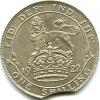
Guesstimate of 5-10% but no more, maybe less. It's a good job the date isn't rare otherwise you might struggle to pick one up. As I recall, it took me a good year or two to find an acceptable example. -
Correct. This coin went for one bid above my maximum in the saleroom, but I received an invoice at my max a couple weeks later. Presumably not made reserve and the seller cut their losses. http://
-
I had it in hand
-
I have seen something crude that looks to be in good agreement for a halfgroat, both stylistically and in weight.
-
Correct
-
A type collector will get an example of each basic type, usually the cheapest date for the issue unless they have deeper pockets. Many but not all issues have a key date which costs multiples of the cheapest year.
-
Nice coin. It's always good to match these up to old drawings as a little artistic license was usually employed. This series has a way to go yet, with hitherto unrecorded denominations.
-
Neither you, myself or anyone else is obliged to use them. It is however a legitimate business which advertises a service and provides what is offered. If you don't want TPGs, then to put them out of business you have to destroy their raison d'etre which ultimately will require people to be educated in coin grading and authentication from birth, thus doing away with the need to obtain a second opinion. I think there are more important things to worry about.
-
Firstly, comparing the two coins is irrelevant because what was needed was a before and after picture, no two coins being the same. That said, it is not necessary to try to use acetone on every coin as the only reason would be to remove soluble deposits, most of which are likely to be residue from fingers. Coins will tone naturally from exposure to the atmosphere. This would not be removed. Some people are obsessed with cleaning everything in acetone - I am not convinced. If it isn't obvious why you would need to use a solvent, then why do it?