Leaderboard



Popular Content
Showing content with the highest reputation on 01/27/2026 in Posts
-
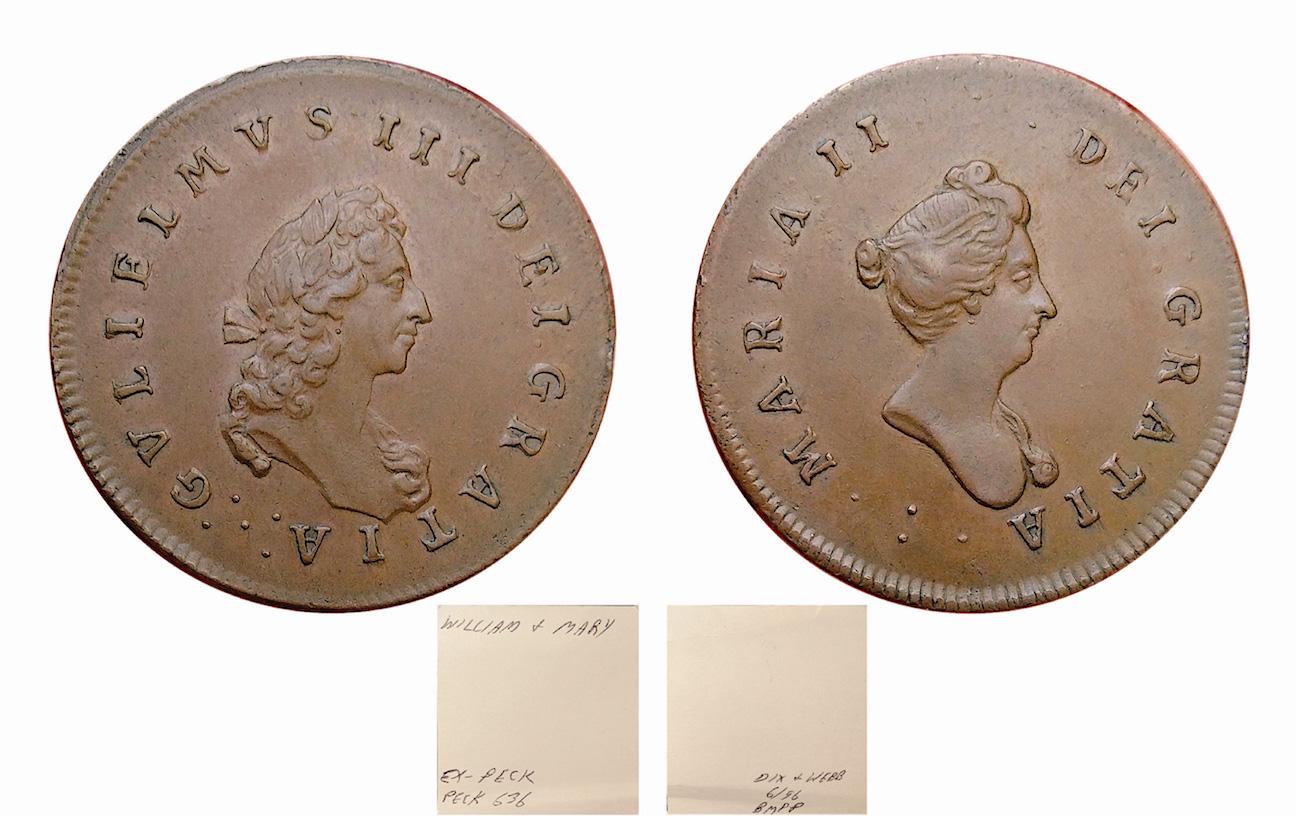
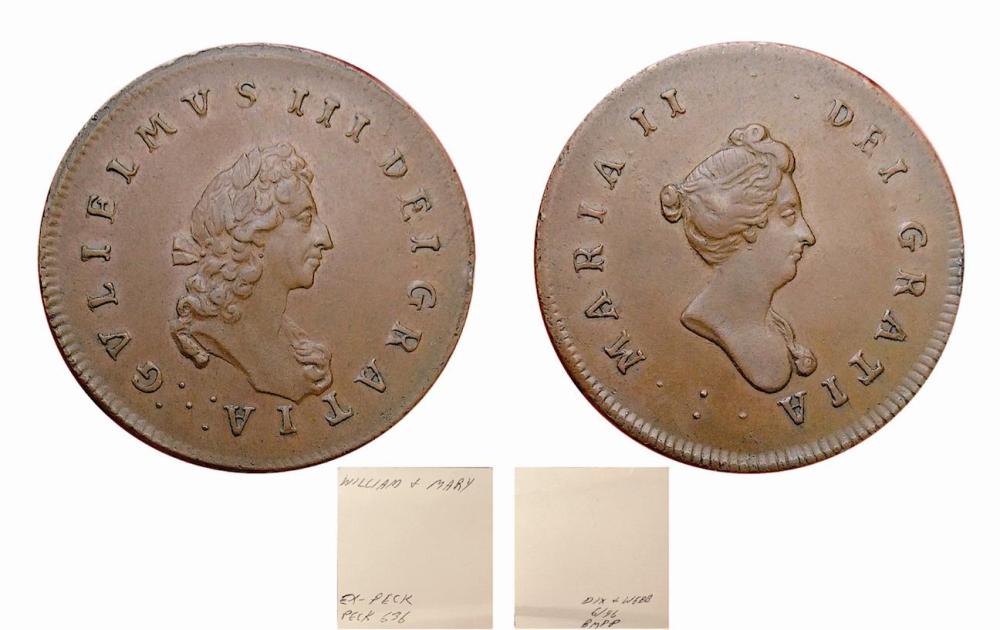
You'd need a deep pocket for most of these recent items at Heritage, but not all early copper has sky-rocketed over the last few years - the slab-grades have the main effect of course. There are two Peck plate coins, but none of the coins including theses were provenanced by Heritage. Perhaps the buyers recognised them too, but probably just going on the grades. All are hammer prices: 1694 1/2d - MS61 - $1200. Surprisingly low grade for a coin that retains lustre, this is the Nicholson example that sold for £1,200 (I think) in 2004, if so it's made no money at all over the last 20+ years! This is the exception price-wise. 1694 1/4d - MS64RB - $7,000. Lovely colour though slightly porous detail, this is Colin Cooke's own example sold 2005. 1695 1/2d - MS63 - $9,000 - big rise on this one, though it has been glossed and lost some lustre since previously sold at Baldwin's 2010 Strickland-Neville Rolfe auction. I saw it at the time and wondered if it was thick-flan (there's only one known otherwise) as it did look unusually thick. It was a bit porous though so that can be deceptive. Unfortunately it was sealed in plastic and I couldn't ask Baldwins to weigh it, because if it was heavy weight, they'd have amended the description and it wouldn't have been a bargain! It wasn't very cleanly struck though and It went for £540 back then. 1699 1/4d date in legend - MS64 - $7,000. This is Brook's example and is the Peck Plate coin despite the dark photograph where you had to squint to make out much. The edge variation matched up and it is of course the no-stop between A and the date variety - which was also not mentioned by Heritage. As far as I know, this was last sold in the Shuttleworth collection SNC 2001 as EF £650. 1701 1/2d - MS63 - $7,250. Also the Peck plate coin and Heritage auctions missed (or the slabbers couldn't be bothered to note) it was no stops obverse (P.704). This is ex Nicholson Hopetown House, Peck.4 points
-
Those prices are quite astonishing. I have Peck's own 636 plate coin (Montagu 3); so now may be a good time to sell.
 4 points
 -
You were 100% correct Stu and thanks unwillingly numismatist for putting me on to Liz who verified it was a fantasy piece unfortunately 😕 Thanks guys this is much appreciated because it's irked me for some time. Glad it was in a joblot of coins auction and as it hardly cost anything.2 points
-
Welcome back @seuk. I am sorry to hear about Gary, though I did not know him. He made a wise and altruistic decision in passing on his collection intact before he passed. Is/was the website I linked to above yours or his? Is it likely that it will ever be resurrected? It was a wonderful and powerful addition to our knowledge of counterfeit coins.1 point
-
That's sad. I lost my mum to a brain tumour in 2021. By the time she was diagnosed it was stage 4. Three months she lived from diagnosis to passing away. Affected us all deeply. Thank you for replying. I look forward to seeing your future research when you are publishing your findings. Stu.1 point
-
Poor Gary, but absolutely fantastic that you’re still around and working with the counterfeit coinage. Nice to hear from you.1 point
-
Hi Guys! I'm still around but haven't had much time for coin study lately. Gary was about to start a new cancer treatment which unfortunately proved to be in vain. As he knew he might not be recovering, he offered me to buy his collection of counterfeit George IIIs shillings at a very fair price. So I jumped on a plane and spend a pleasant evening with him where we wrapped the coins in rolls with paper and looked at some of his vast collection. Next morning the very day he would start the new treatment, I returned to Denmark - and never heard from him again. I haven't yet had a chance to look at the coins, of which there are apparently over a thousand. Instead, I've been working with my own collection in the hope of being able to refine the group divisions and perhaps arrive at a more correct classification for the whole series. Only when that's finished, I will start classifying Gary's coins.1 point
-
Americans love the 'evasions' so would possibly snap up the 1775? As for the 1773, it's worth keeping - I've never seen anything that size before, so even if a fake it's got great novelty value! The 1882H is nice enough to keep though only worth a few £.1 point
-
No problem.It was only afterwards when i was looking at it thinking how's it been made it dawned on me that it looks like it was soldered on. It looks like the right arm on the figure has fallen off and possibly the E on that side as well or not enough solder was used and it just smudged the E. That would explain why it's unique as it's literally been handmade by someone. I doubt you could make another even similar without adding or losing bits. It's something to be on the look out for in the future. I have seen similar work on fake stycas. Usually though with them they go back to bare metal when you plunge them in acetone as the patina is painted on them. Stu.1 point
-
1882 were nearly all minted by Heatons and therefore carry the H - a few were minted in London (just to test the new electronic presses?) and are very rare. I'm baffled by the George III coins though - pennies weren't minted until 1797, "cartwheel" type. There's no 1773 or 1775 pennies, but there were halfpennies which are noticeably smaller than bun pennies unlike your 1773. The 1775 looks very wrong and is probably an 'evasion' type, i.e. a contemporary forgery produced in the US. The 1773 "penny" looks more like a genuine halfpenny should apart from the size , but is also probably wrong - REX is wider spaced than on a genuine example.1 point