All Activity
- Today
-
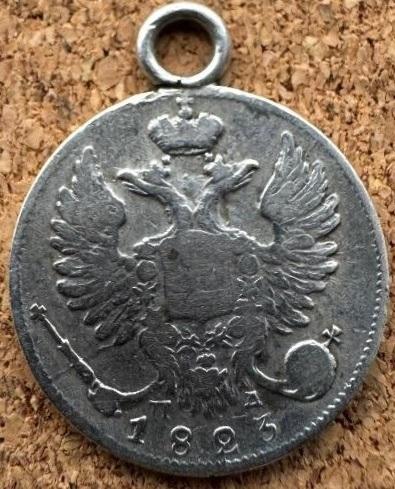
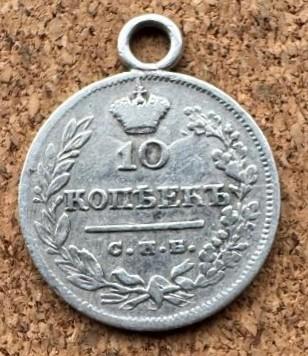
Russian 10 Kopeks, Alexander I, 1823 Silver .868 mm. St Peterburg initialled ПД - Pavel Danilov Pavel Danilov was a mint master at the Saint Petersburg Mint during the reign of Alexander I in the early 19th century. He is known for his work on the 1823 silver rouble 👍
-
The manuscript of the poem he wrote was sold at Noonans. https://www.noonans.co.uk/archive/lot-archive/results/131481/
-
If i can dig anything more up about him i will do. Be interesting to see if i can find out what year's he was in the service as you can then research the unit and find out where they got put on active service and what place's they fought in. I love this sort of stuff myself , i was able to research my grandads naval history off his WW1 naval logbook and find out about ships he was on that got sunk while he was aboard them. I never got to meet him as he died in 1935 when my dad was 3 so we never really knew much about him. It was fascinating and i was able to fill in some blanks for my dad about his father's family history before he passed away in 2019.
-
I absolutely love this! If you were ever able to bring this man’s life any more alive, do start a thread, I’d follow it like a novel. What a story, and so intimately connected through that coin!
- Yesterday
-
Or bone meal fertilizer. I think he was okay. I found this out about him.. William Grant fought as a Sergeant in Captain John Warren’s company of the 92nd Highlanders at Waterloo. He was shortly afterwards promoted to Sergeant-Major and, on 5 November 1819, he was appointed Adjutant with the rank of Ensign. He did not live to claim a Peninsula Medal. I'd probably need a paid Ancestry account to get any more information. Not sure what year they started awarding peninsula medals .
-
lets hope he never ended up as a pair of falsies
-
Weigh it please.
-
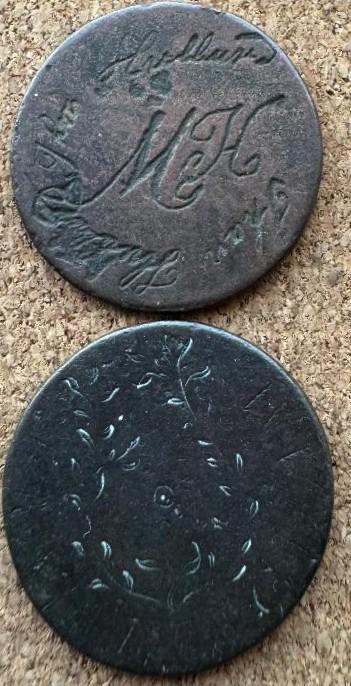
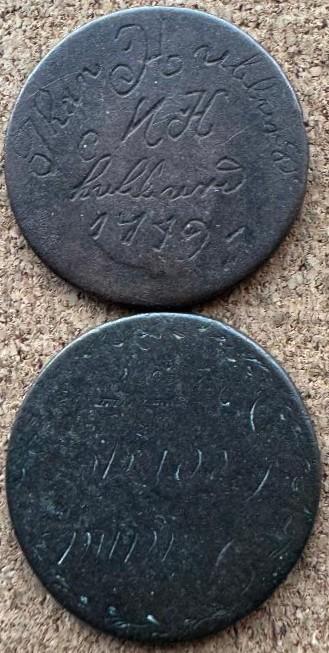
Aha... re discovered these....convict coins was mention some years back I believe one is George II 1727-1760 the coin is engraved 1749....the other engraved but unable to decipher any details..... anyone able to offer up more details would be most welcome....
- Last week
-
That’s stunning, @Ukstu I’ll try and look the thread out @Sword it was in a conversation about Maundy money, as you guessed.
-
That's amazing! Superb engraving too. It would have taken some thought to work out what wordings would fit neatly around the edge.
-
Not the best of pictures but here's the edge. It reads * SERJEANT WILLIAM GRANT , 1ST BAT 92ND HIGHLANDERS. I bought it online from a dealer in Glasgow who had omitted the edge details in the description of sale. I was a bit miffed at first until i did some research. He is Roll number 51 on the Waterloo medal database. He also composed a poem about the battle that was on a manuscript that was sold by Noonans in September 2006 (lot 1100)
.thumb.jpg.dcd1c11463a0da4059dea665f1a377ae.jpg)
-
Really? Can you post a link to the thread? Mind you, monarchs do give Maundy money in red purses each year.
-
That's fascinating. Well done for finding it out and keeping the story alive. This is the sort of item I would buy; but for the story and history rather than as a coin.
-
-
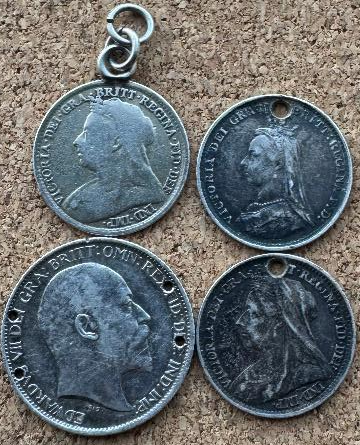
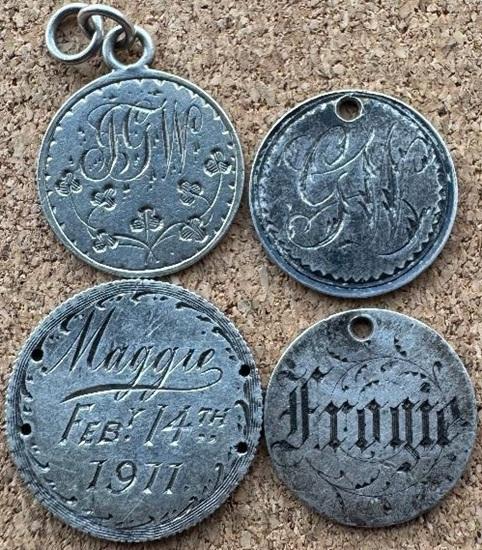
some that I have picked up ages ago......
-
I'll also take plugged/edge loss etc hammered coins, especially if it makes them affordable (eg my Richard III in the name of Edward IV/V groat), I try to avoid actual holes and coins that have been broken and repaired unless extremely difficult to get otherwise (eg my Matilda 1d). I woudn't take a milled coin with any of these defects, although I've got a couple that have been cleaned/polished.
-
 TerritoryHunter joined the community
 -
Now that’s what it’s all about, capturing historical moments in time. Similar to when we talked on here recently about whether a particular coin could be proven to have passed through the hand of Queen Elizabeth I herself, things like that, what an exciting thought. Or a bullet hole through a signpost in Somerset where a dog fight between a spitfire and a German light bomber occurred. Love history!
-
I don't tend to buy them now but when i first started collecting i bought holed / plugged coins. I have a milled sixpence of Elizabeth I that would of been way out my budget at the time if it wasn't for the plug in it. Don't mind counterstamped stuff so much as it's an interesting field that you can research sometimes. I picked up a cartwheel penny last year that had an edge engraving in the same style as the waterloo medal. When i researched the name on it i found out the guy had actually been at Waterloo. I only paid £10 for it as well so wasn't expensive.
-
As Chris said, photos can make things look an unusual way and, as I said, I’d really want to see the physical coin if I were buying, ‘and I’m not claiming yours is counterfeit,’ but an interesting piece for sure. I think that’s sorted any libels out! 😉 Seriously, if you bought this from a reputable dealer in a fair, it wouldn’t matter even if it were genuine…if you had second thought about a coin, for any reason - as long as the coin was EXACTLY as it was when you took it away - they wouldn’t blink an eye to receive it back, knowing you’d be coming back to them, time and time again. Let us know how you get on.
-
Interesting - must admit that I hadn’t even considered whether it could be fake as there was nothing (in my limited experience) to suggest that it was. Given that I bought it from a dealer at a coin fair (rather than online) and it was presented as genuine, one would reasonably expect (?) the dealer to either know a fake and if so certainly not pass one off as genuine!? The matter of it being plugged becomes irrelevant if the coin itself could be fake so I suppose I now need to establish whether it is in fact genuine. Thanks all for your feedback!
-
That was actually my first thought when I saw it, too! But mainly due to the edge almost looking in places as if it were 2 pieces bonded together, à la an electrotype. But I'm not a hammered expert by any means and I'm sure there are other factors that can cause a pic to come across that way, so I kept my mouth shut.
-
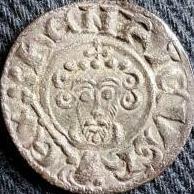
My first thought, regardless of whether I can ‘do’ a plugged coin or not, was whether it was genuine? A lot of fake coins are scuffed up to look old, and the scratches in this piece look so intentional and even, on a coin I would’ve expected to be buckled (or wavy at best) from such a harsh life, yet it has such a perfect and even wear to the raised surfaces? Here’s an example of some of the copies out there for these groats? I’m not claiming yours is counterfeit, just saying this one pricks my suspicion enough that I wouldn’t personally want to buy such an example blind! There’s a really good Elizabeth I fake shilling out there, that was even cast with a plug in place. Either they hadn’t noticed the original coin was plugged, or they thought it might avoid the scrutiny of serious collectors, on account of the market they are typically absorbed by? Who knows?

-
No sorry but they are just scrap. The best thing to do with any Bronze coins post 1901 is to buy the David Groom book " British 20th Century Bronze Coin Varieties ". Its only about £10-£15 posted on Amazon and will help you get familiar with any varieties for Bronze Pennies, Halfpennies and Farthings. There is a seperate one for silver coins also, should you be interested in those.
-
I think all these alterations add to the history. A plug means someone thought it interesting enough to use as a medallion or touch piece, then someone later felt it was interesting enough to repair. Engravings are often love tokens or claims to ownership. A split or fragment means it has been in the ground for some time. I think that is why I find perfect proof coins a bit dull.





.jpg.23b7bcc00be8d3f9e9b8b22d4dcbe49d.jpg)