All Activity
- Past hour
-

How to tell if coins have been cleaned.
Coins Of the UK and US replied to Coins Of the UK and US's topic in Beginners area
By the way, I use the Photo Manager app to keep the photos below 500KB. -
How to tell if coins have been cleaned.
Coins Of the UK and US replied to Coins Of the UK and US's topic in Beginners area
Apologies for the bad photo, if I did the full image, it would have been too much data. -
How to tell if coins have been cleaned.
Coins Of the UK and US replied to Coins Of the UK and US's topic in Beginners area
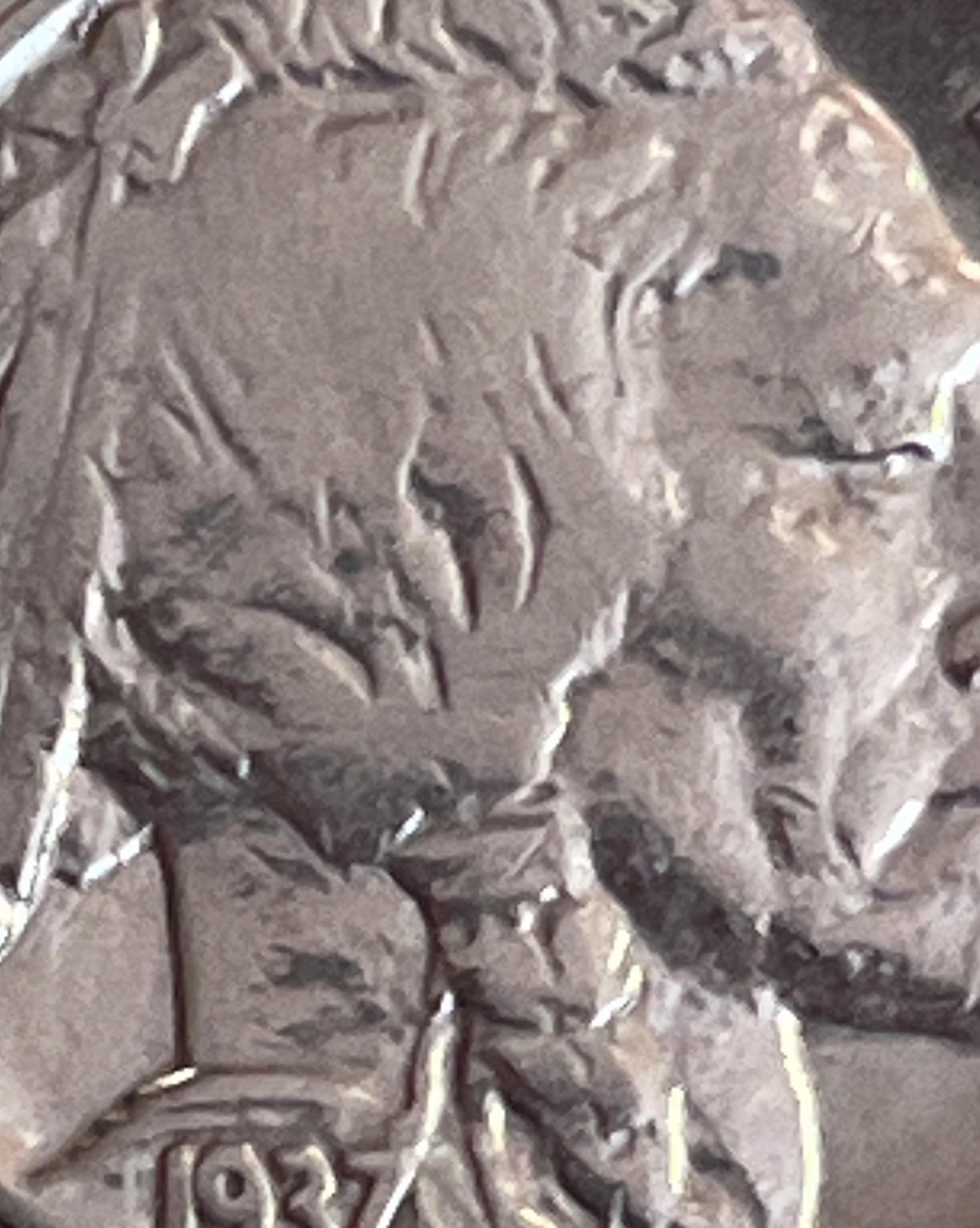
I have this very shiny 1937 USA buffalo Nickel. To me, it looks too shiny to not be cleaned.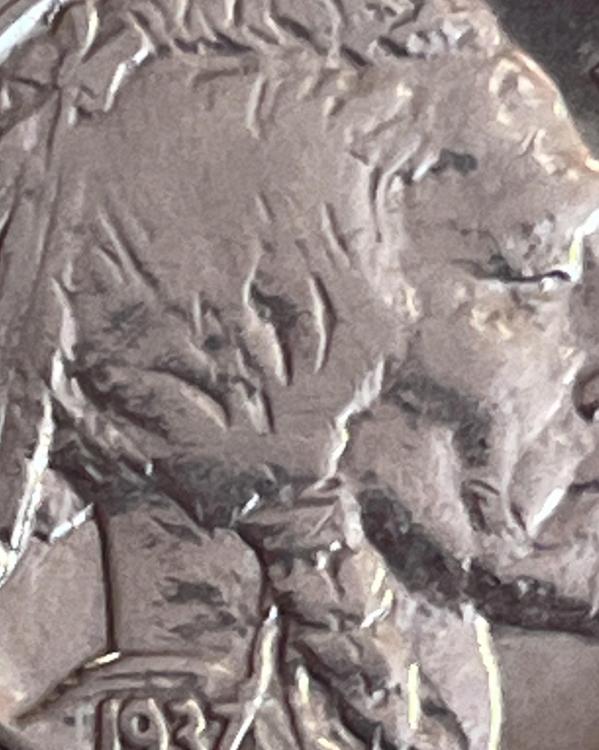
-
How to tell if coins have been cleaned.
Coins Of the UK and US replied to Coins Of the UK and US's topic in Beginners area
Thanks Guys. -

How to tell if coins have been cleaned.
Coys55 replied to Coins Of the UK and US's topic in Beginners area
I use Irfanview, also free. - Today
-

How to tell if coins have been cleaned.
Paddy replied to Coins Of the UK and US's topic in Beginners area
You need to ensure the photos total no more than 500Kb per post. You may need to acquire a suitable photo editor to achieve this - On Windows machines Photoscape, which is free, is a good option and the one I use. Also, once you have posted a picture in a particular thread, the system remembers that and won't let you post another straight away. Simply come out of the thread and back in and it should then let you. -
How to tell if coins have been cleaned.
Coins Of the UK and US replied to Coins Of the UK and US's topic in Beginners area
This is unrelated but I am trying to add 2 photos on the forum but the forum says it takes up too much data and it won’t let me. Could anyone please help me with this. -
 Yup. I have a gorgeous 1818 crown for example. But my shillings are far easier to find and much easier for my budget overall. I've stretched my timeline into more expensive territory (Charles II, James II, W&M etc) but one at a time, here and there, & they aren't as bad as the crowns.
 -
How to tell if coins have been cleaned.
Coins Of the UK and US replied to Coins Of the UK and US's topic in Beginners area
Thanks Wlewisiii. This is great. -
Thanks Sword. This is really helpful. I agree that the early crowns are very expensive but they are absolutely beautiful.
-
 I love crowns as their large size allows you to see so much details and admire the engraver's art. Pistrucci's St George and the dragon design wouldn't work on a small coin like a threepence for example. But high grade pre 1887 examples are very / too expensive for me. Worn examples lose their appeal as the intricate details are gone. I have got some of the common ones in high grade and had to settle for a nice VF+ Victoria VH. If I ever come into money one day (fat chance!), then I would like to get a GVF Charles II crown. When I visit the Ashmolean Museum, I always see and admire the Charles I Oxford crown. Then I moved on to the smaller halfcrowns, florins, shillings, etc. as they are more affordable. I buy very little these days and don't have a tick list.
 -
I think you would be fine if you use mylar which is an inert plastic. Avoid PVC like the plague as it releases harmful chemicals. I am not a bronze collector and would probably use inert 2x2 coin holders which is air tight for high grade lustrous examples. Airtight is good for bronze to reduce the chances of toning.
-
How to tell if coins have been cleaned.
wlewisiii replied to Coins Of the UK and US's topic in Beginners area
Look for microscopic scratches (hairlines) (sometimes not so microscopic) that catch the light, or a "flat" look where the natural frosty luster is gone, losing the original "cartwheel" effect of an original coin. Comparing it to an uncleaned coin is often the best method. This is when a loupe and a strong light are useful. I don't mind gently cleaned coins - it can be done carefully with little to no damage. OTOH, sometimes for some coins I've happily bought more heavily cleaned ones because that brings the price down to a level my budget can afford. As an example I have a cleaned 1873 Bordeaux mint 5 Francs coin that is XF/AU details. Without cleaning, it goes for $125+; I got the cleaned one for $45 - less than melt. I'd love to find, for example, a cleaned but otherwise nice 1905 shilling because they tend to be quite expensive as _the_ key date in the 20th century. A cleaned one that is otherwise nice might have a price tag my budget allows more easily. Some collectors won't touch them at all but only really harsh cleaning with scratches and totally destroyed luster are the ones I avoid. Hope this helps. -
Hi everyone. I am trying to increase my expertise on coin collecting but I am unsure how to tell the difference between just high quality coins and cleaned coins. If anyone can please help me with this, that would be greatly appreciated. Thanks in advance, all the best, F Drummond.
-
Thanks Bernie. That’s some good advice.
-
An Ariel Square 4! Lovely machines. My first, a long time ago was a '77 Bonneville 750. Still love Triumphs to this day.
-
 So do I. It will get the wife off my back telling me to stop doing all the things I enjoy. Rest assured all will be fine. I'm not giving up the ghost yet. I haven't yet created a box for Rob Pearce 1958-2026 to tick yet. Eventually it will be filled, but family history suggests I might be around for a while yet. My father's eldest sister was 96 when she died. Never married, ran a smallholding on her own, then had a sweet shop in Wells, rode a motor bike until she was 70 and refused to go into a home to the day she died on the grounds they were full of old people. The interesting bit was the bike. At 5'3" and weighing 5 &1/2 stone, one that she rode was an Ariel square 4. I guess she didn't want to conform to the insecure female model. By the time she stopped after coming off on ice one night, she was down to a 250, but was collecting her pension. I liked visiting her sweet shop.
 - Yesterday
-
It just seemed bit of a sweeping statement and reflected the personal searches of 2 people for different varieties. Had it been a survey of 30 or 40 collectors, all searching with the same level of intensity, either statement would have had more supporting evidence behind it. Both are unquestionably less than common, but I wouldn't like to assign a rarity of one relative to the other because I haven't done the spadework. My NGC MS65 1673 halfpenny was in a 65 slab when I bought it in 2006 and did so because I could see without a glass that it was actually a 5/3. To me that was obvious. Thanks to the work done by Nicholson identifying the various 5 over 3 dies with their different styles, I was then able to say that the majority of 1675 halfpennies were actually 5/3 and the straight, clear 5 from new dies was the rare type. At this point the yearly mintages fell into place, because if you believe the mint output figures, 1673 and 1675 were not particularly different and certainly not as rare as the 1672 in the case of 1675, yet listings in past catalogues suggested they were much on a par with far more 1673s than the figures suggested. That was my 3rd unassigned 5/3 to go in the collection, none of which was in less than a 63 slab. And all now out. Add the identifiable dates from images rather than cataloguers opinions and you arrive at not dissimilar numbers of 1673s and 1675s, and 1672 then becomes much rarer relatively. Which is what the mint said. Consequently I am happy with my analysis. This study also showed the existence of a doubly cut overdate, when close examination of my 5/3 showed it in fact to be 5 over 3 over 2. Totally unambiguous if you look at the pictures in the confirmed unlisted varieties section. It ain't going anywhere soon, but my sketches do allow others to identify the reverse die involved. Nobody would have considered it likely prior to my discovery due to the propensity of the mint to use dies to extinction.
-
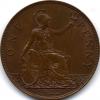 I advise that you should not store your copper or bronze coins in anything that resembles plastic, such as plastic pockets. The coins will sweat and get verdigris.
 -
I do also really like the Shilling but my favourite British silver coin is the crown.
-
Thanks for the help guys. This is great. Those cabinets are gorgeous but I think they are slightly out of my price range.
-
CH boiler not working in the winter is a real pain. But replacing a 20+ year model will save a lot of money and energy as the new one will be much more efficient. I did notice the cheaper bills when I had to replace mine with a Worcester Bosch some years back. Sorry to hear about your health issues Rob, and I hope the tests will go well.
-
I find them beautiful. Big enough to see all the detail yet small enough to get lots in a small space. The art of them is also a really huge plus for me. It's like the best of all worlds when it comes to English Silver Coinage 😇
-
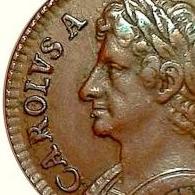
What year is this coin?
Michael-Roo replied to Beau's topic in British Coin Related Discussions & Enquiries
Not sure what you're saying in relation to the above 1736 (3/5), 1754 (4/0) comments Rob. Could you clarify?