All Activity
- Past hour
-
It seems to me that British history is filled with “Brexity” events, and this goes back to the very start of British written text. I could list quite a lot of them that involve money and thus coins. Has anyone else given thought to this matter in general, or is willing to mention historical examples of it that spring to mind? Meanwhile I am new to this group and still trying to find my way around. Recently I tried to raise a matter somewhat linked to this, by reviving a very old thread in the members only section. Few seemed to notice it, so I hope moderators will look sympathetically if I repeat it here, as I am still hoping to get (any) response. It concerns events in 1903 when several committee members at the Royal Numismatic Society resigned to create the British Numismatic Society, having concerns about “continental bias” at the RNS. I wrote: ~~~~~~~~~~~~~~~~~~~~~~~~~ Here are some details about the past and present relations between the Royal and British Numismatic Societies. I select what seem to me the most important facts, and I do it because I think past events throw a light on current predicaments. This story is primarily selected from the Official History of the Royal Numismatic Society here: https://numismatics.org.uk/wp-content/uploads/2014/05/a-history-of-the-royal-numismatic-society.pdf The RNS was founded in 1836, and was a mix of officials (BM, Mint, Academia) along with with coin dealers and coin collectors. It was wide ranging, with of course a lot of influence from the aristocratic grand tour inheritance – coins of Rome and Greece - along with an interest in Oriental coins, especially of India, due to Britain’s Imperial context back then. The RNS went into crisis in 1903 in a row over a paper by W J Andrew about the coinage of Henry I, which was aggressively attacked by two officials from the Public Records Office. Andrew resigned and other members backed him stating that the Public Records Office writers were “not members of the Society and that they confess with an air of superiority, that they have no knowledge of numismatics” That paper was the straw that broke the camel’s back. Two further members of the RNS council resigned, having been accused of telling tales in public about what had been said in private at RNS committee meetings. They created a new breakaway society, the British Numismatic Society. Prominent amongst them was Carlyon-Britton, the new BNS president who published this paper in 1904 https://www.britnumsoc.org/publications/Digital BNJ/pdfs/1903_BNJ_1_17.pdf Where he complained about the condescending and self interested positions taken by the British Museum. Whilst personal animosities were not made explicit we should note a BNS view that “British numismatics were inadequately catered for by the Royal Numismatic Society with its classical and continental bias”. That at time when Barclay Head was the curator at the BM, and an editor of the RNS Journal. He published exclusively on Greek coinage, and a RNS tribute on his death noted that of the thirty contributors to his Festschrift, “ten wrote in German, five in French, one in Italian, and one in Greek”. Moving forward now to my own lifetime, having become a member of the Yorkshire and Oriental Numismatic Societies in the 1970’s, I joined the Royal Numismatic Society in 1986. I was struck by a general and genuine camaraderie that existed at that time. Both between the two societies themselves, and also between senior society officials members (Professors and the like) towards ordinary collector/dealer members. Correspondence was entirely on first name terms. In my own experience that camaraderie began to break down around 2000. Prior to 2000 official/academic posts seemed to be recruited from trained historian, many of whom had developed in interest in coin collecting itself at a young age. After 2000 we started to see the jobs going people trained in archaeology, a culture which was largely hostile to private coin collecting and very often noticeably politically left leaning (the two matters being somewhat linked). Today I see a landscape where RNS and BNS are joined at the hip, but isolated from the world in their ivory towers. Members of the same small elite group run both societies. The attitudes of condescension voiced in 1904 have re-emerged. However the will of individual collectors to band together against it has evaporated. 2026 is a fractured world. Collectors and elite professionals hardly seem on the same planet. Others will no doubt differ, and of course I would welcome comment. Robert Tye
- Yesterday
-
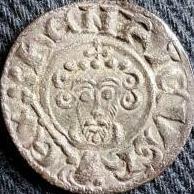
British Coin Type set.
Ukstu replied to Coins Of the UK and US's topic in British Coin Related Discussions & Enquiries
Try and get some more capsules for them like the one the Jubilee head Victoria is in. Those PVC ones break down over time and leave a sticky green residue on your coins. -

How to tell if coins have been cleaned.
Coins Of the UK and US replied to Coins Of the UK and US's topic in Beginners area
Thanks Citizen H. Your help is much appreciated. -

How to tell if coins have been cleaned.
Citizen H replied to Coins Of the UK and US's topic in Beginners area
maybe its been washed, to remove grime it will tone down in time, its been circulated so expect scratches, wear, and dings. 👍I must dig out some of mine... -
How to tell if coins have been cleaned.
Coins Of the UK and US replied to Coins Of the UK and US's topic in Beginners area
Thanks everyone. The help is much appreciated. This is the coin in question. -
How to tell if coins have been cleaned.
Citizen H replied to Coins Of the UK and US's topic in Beginners area
just chipping in.... I tend to wash mine, warm soapy water, ultra soft brush to remove all the hand grime, some of my circulated Maundy's have improve immensely ....I tend to leave tarnished one's alone and never used silver dip,..... as mention by others gentle sympathetic washing wont harm the coins, rinse with cool clean water and pat dry, it works for me👍 -
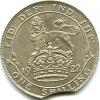
How to tell if coins have been cleaned.
Rob replied to Coins Of the UK and US's topic in Beginners area
Maybe. It all has to be looked at in context, but is one of the things you would check. A band of parallel lines would likely be cleaning with a cloth, but you would only see that on a proof or a coin with otherwise good surfaces. Thankfully, the application of a Brillo pad is blindingly obvious. Interpretation is everything. -
British Coin Type set.
Citizen H replied to Coins Of the UK and US's topic in British Coin Related Discussions & Enquiries
ah! these are some of mine, the better ones.... to heavy to put in a folder so left in pouches 👍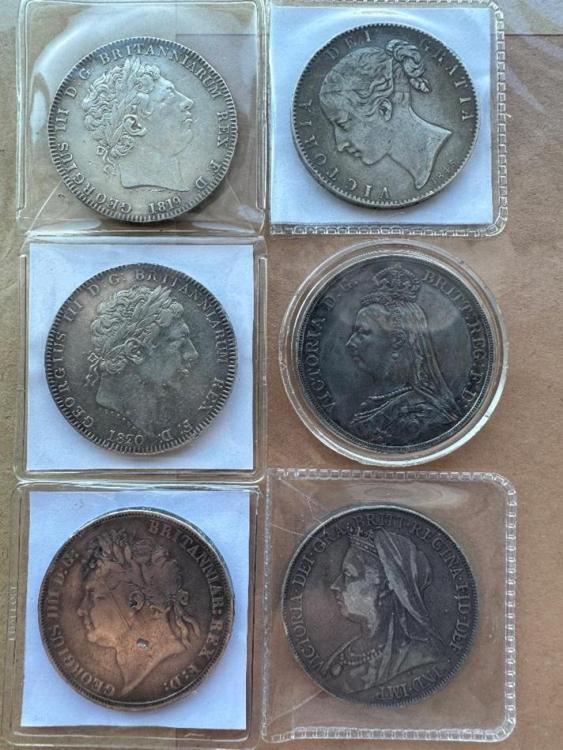
-
How to tell if coins have been cleaned.
Coins Of the UK and US replied to Coins Of the UK and US's topic in Beginners area
If a coin has straight lines across it, is that a good indicator that the coin has been cleaned? -
How to tell if coins have been cleaned.
Coins Of the UK and US replied to Coins Of the UK and US's topic in Beginners area
Thanks Rob. Your help is much appreciated. -
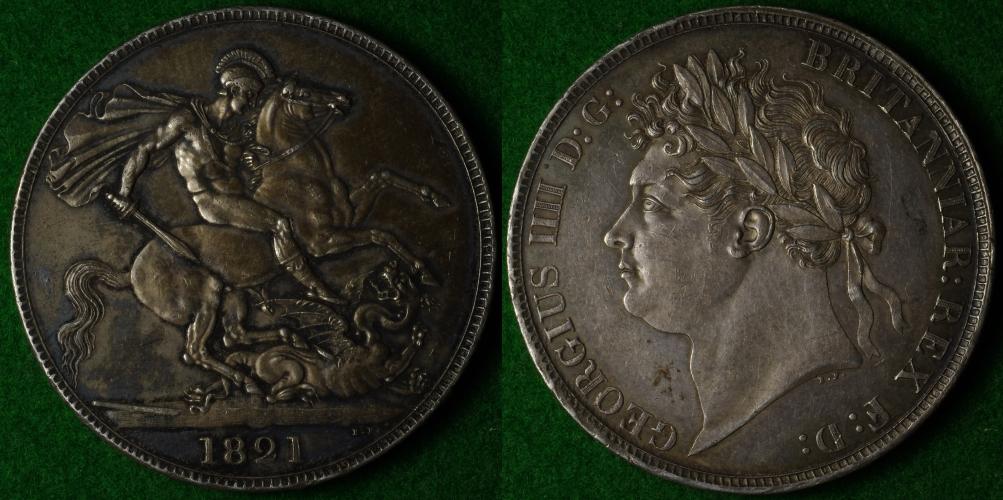
This is a close up of my George IV crown I got from a large collection that was a gift. It is a lot worse condition than yours Paddy.
-
How to tell if coins have been cleaned.
Rob replied to Coins Of the UK and US's topic in Beginners area
I think people get a bit worked up over the question of cleaning as the topic is somewhat nuanced. Every coin in circulation showing signs of wear has effectively been cleaned because the act of circulation ensures that contact is made with other surfaces which rub against each other. i.e. nothing different to taking a the use of chemical cloth to a coin and rubbing. That just speeds up the process. The only thing that is offensive in the eyes of most collectors is a case of a polished coin, with or without the use of chemical substances. Personally I love toning for the fact it gives added confidence that the surfaces have not been messed about with, but even that has a few caveats because silver dip will leave a residue on the coin which over time will give the piece in question a typically pinkish hue. Any coin in someone's pocket will end up from friction with lots of faint parallel lines, because they were there. Without polishing chemically, I defy anyone to see the difference between pocket rub and a soft cloth, though clearly it would be possible in the case of demonetised coins to use your loaf and conclude that not being in circulation any more, the only option left is deliberate. In the case of the Morgan above, if the surfaces aren't reflective, probably not other than 'cleaning' from circulation, because there is clearly wear to the high points. -

British Coin Type set.
Paddy replied to Coins Of the UK and US's topic in British Coin Related Discussions & Enquiries
I hadn't realised GIV Crowns had got so high! This is my best, picked up about 15 years ago as part of an old family collection: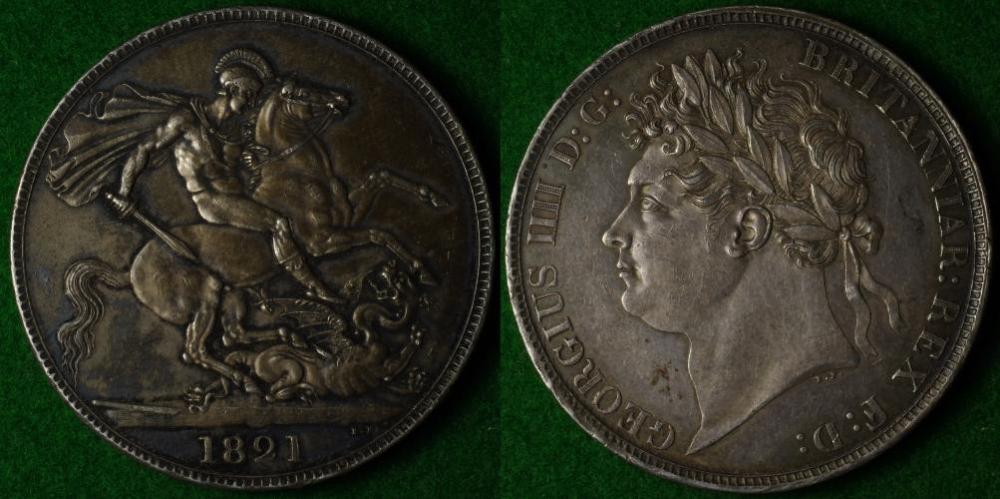
- Last week
-
British Coin Type set.
Sword replied to Coins Of the UK and US's topic in British Coin Related Discussions & Enquiries
Very true. But a decent EF example is now well over a thousand pounds. I don't particularly like that George IV portrait and so didn't want to pay so much. As for William IV, I would eventually settle for a halfcrown which is of the same design. -
How to tell if coins have been cleaned.
Coins Of the UK and US replied to Coins Of the UK and US's topic in Beginners area
I have noticed that this Morgan Dollar in my collection has a few small scratches (hairlines) on it. Do we think it has been cleaned? -
Thanks Paddy. Charles II 1667 and William III 1696.
-
British Coin Type set.
Paddy replied to Coins Of the UK and US's topic in British Coin Related Discussions & Enquiries
A nice selection! What dates on the Charles II and William III? -
These are the crowns in my collection. The George V is a Jubilee Crown.
-
How to tell if coins have been cleaned.
Coins Of the UK and US replied to Coins Of the UK and US's topic in Beginners area
Thanks for the help everyone. Apologies for the delay in response. -
Some very nice collections here.
-
 Sav01983 joined the community
 -
British Coin Type set.
Rob replied to Coins Of the UK and US's topic in British Coin Related Discussions & Enquiries
I usually turn them down when offered, because I have never looked for one for the collection, and they are way overpriced for what they are. I was offered a couple of cleaned examples 6 months ago, but declined on the grounds that I don't like cleaned coins when much better alternatives are available, and the questions of iffy ones, abused ones and the rest are a bit off-putting. Give me a florin any day. Only problem is, if I get a type example of everything else I will have to eat my words. Not looking forward to the expense when I can buy fish and chips for a few quid. -

British Coin Type set.
Peckris 2 replied to Coins Of the UK and US's topic in British Coin Related Discussions & Enquiries
George IV crowns aren’t so very hard to find and are much cheaper than William IV (the hardest). -
The 1897 dot penny, and the 1946 ONE' penny were given prominence in an early issue of Coin Monthly (beginning of 1968?), and are arguably the most collectable - ironically caused by their comparative lack of rarity therefore giving collectors a better chance to own one.
-
British Coin Type set.
Citizen H replied to Coins Of the UK and US's topic in British Coin Related Discussions & Enquiries
These are the best of my bunch, 1864 is probably the best example that I have, these as the rest I have were boot fair finds well over 30 years ago, pre computers internet day and age...... also It turns out 12 months have passed by it was 1 year today that I first joined www.predecimal.com/forum 👍🍻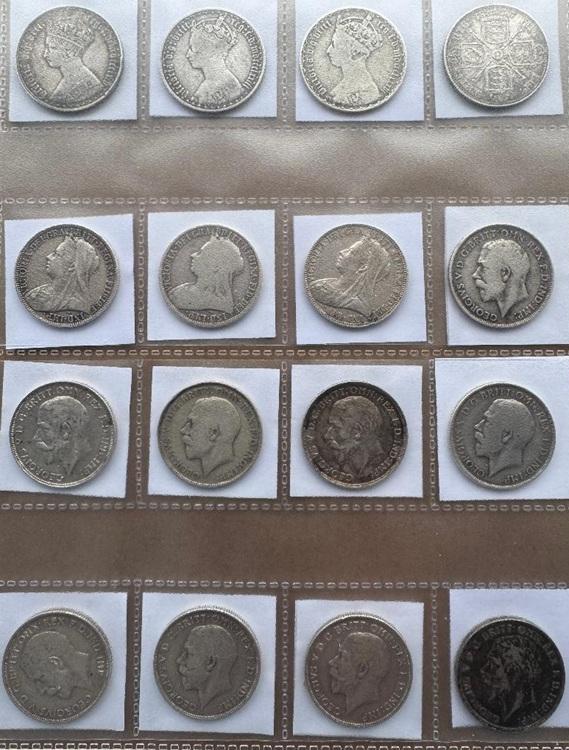
-
As recommended by coin books at the time I bought a small bottle of benzene from a nearby chemists back in the late 70's to clean my lustrous bronze farthings. It was 25p (I still remember for some reason!) and they dispensed it from a bigger bottle at the back of the shop. Those were the days, it smelt lovely but it's now banned as a carcinogen, though it was a very commonly used solvent in industry etc 50 plus years ago, so most people seemed to have survived it.