All Activity
- Today
-

Charles II (1st bust) 1 Crown How would you grade this?
Coys55 replied to Citizen H's topic in Free for all
It was probably part of an early attempt at decimalisation, with the florin (1/10 of a pound) being introduced in 1849. The intention may have been to replace the crown with the DF, but it didn’t quite work out. -

Charles II (1st bust) 1 Crown How would you grade this?
hiltonlee981 replied to Citizen H's topic in Free for all
I’m not an expert grader, but for these hammered/milled crossover-era crowns I tend to look at (1) the high-point wear on the portrait and shields, (2) any edge issues (nicks, filing, mounting traces), and (3) whether the surfaces look cleaned/tooled. If you can post a couple more close-ups (obv/rev + edge) under consistent light, it’s much easier to judge detail vs. surface problems. Also worth keeping in mind that even a lower numeric grade can still carry a premium well above melt if it’s problem‑free and attractive. For a quick rough baseline on the silver content/melt value (just to separate “metal floor” from numismatic premium), this calculator can help: https://mygoldcalc.com -

Charles II (1st bust) 1 Crown How would you grade this?
pokal02 replied to Citizen H's topic in Free for all
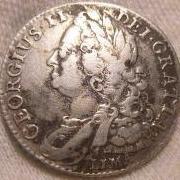
Seems strange that double florins were introduced into currency at the same time as crowns were re-introduced (no currency crowns since 1822 other than the 1844/45/47's) - any ideas why? -
Charles II (1st bust) 1 Crown How would you grade this?
wlewisiii replied to Citizen H's topic in Free for all
WIsh they were that cheap in the US! 🤣 Quite a bit over melt when I actually see one. They weren't very well liked and had real issues but I just like big silver coins 😎 -

Charles II (1st bust) 1 Crown How would you grade this?
Paddy replied to Citizen H's topic in Free for all
Not only did the Double Florin prove unpopular at the time, it still seems unpopular now. Whereas a Victoria crown in reasonable condition will make much more than melt, a similar double florin can still be picked up at scrap or even less here in the UK. Anyone looking to make a long term investment in silver would do well to keep an eye out for cheap DFs at the moment. -
Charles II (1st bust) 1 Crown How would you grade this?
wlewisiii replied to Citizen H's topic in Free for all
Reminds me what I have read that in the old west, a beer would cost one bit or 12.5 cents but because of the lack of change in many places and the use of bits (8 sections of a cut dollar from the Spanish 8 Reals or Piece of 8 ) you could buy your first drink with a quarter (i.e. two bits), the bartender would give you a dime back, and you would buy your next drink with a dime, so all things became even. -
Charles II (1st bust) 1 Crown How would you grade this?
Rob replied to Citizen H's topic in Free for all
A lot of bar workers wouldn't. That's why they stopped using them as were frequently passed off as a crown at a financial loss to the barmaid through deductions in her wages. A sort of play on an anecdote I experienced on more than one occasion whereby an old landlady in a pub in Oldham which did a particularly nice pint of Oldham bitter, had a terrible habit of giving you £4.02 change for a pound note after you had bought 7 pints which cost 14p a pint at the time. This is 50 years ago and she is long dead, but everyone remembered her for her reputation, even in a conversation with a local I had a couple years ago! I wish I could remember the name of it, but is probably long demolished - or a fast food outlet. -

Charles II (1st bust) 1 Crown How would you grade this?
Citizen H replied to Citizen H's topic in Free for all
Ah yes... double florins produced by the Royal Mint from 1887 to 1890, coinciding with Queen Victoria's Golden Jubilee. It was one of the shortest-lived coin denominations, struck only for four years. 👍 -
Charles II (1st bust) 1 Crown How would you grade this?
wlewisiii replied to Citizen H's topic in Free for all
That's a good point and probably the truth of the matter. I still wish the Double Florin had been more successful, too. -

Charles II (1st bust) 1 Crown How would you grade this?
Peckris 2 replied to Citizen H's topic in Free for all
Yeah, my bad - though the 1900 mintage was twice as high as the previous two years; theory: after Victoria died, they decided to use up the 1900 dies and carried on minting with them in 1901. That would indicate that if she hadn't died, there would have been currency crowns in 1901 and maybe 1902 if she'd gone on that long? -
Charles II (1st bust) 1 Crown How would you grade this?
Citizen H replied to Citizen H's topic in Free for all
I had a chat the other day about these things..... payment on phones and plastic cards....by 2030 all coins are obsolete....black market etc still use coins... old silver / gold coins come into own and put back into service...could this be why I started hoarding 30 odd years ago? 🤔 always good to have a plan B,....C,D,E...etc etc etc.... -
Charles II (1st bust) 1 Crown How would you grade this?
Citizen H replied to Citizen H's topic in Free for all
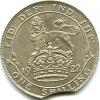
🤔 this one looks like its been used 🤣 £50.66 in scrap prices value....I did read that mintage was 256 000, proofs 15 000, I did just read that Years GV 1927-1936 Generally struck late in the year according to demand and intended to be purchased as Christmas gifts, they did not circulate well, due to the low mintage. Proofs for all dates exist but are extremely rare, with no known mintage figures, as they were for V.I.P issue. This coin was not included in demonetization legislation when decimalization was introduced in 1971. It has been confirmed by the Royal Mint that the coin remains legal tender, having been remonetized with a value of 25 pence........all good stuff 👍 -
Charles II (1st bust) 1 Crown How would you grade this?
wlewisiii replied to Citizen H's topic in Free for all
Well, 1900 was currency. There was no 1901 crown. My understanding is that, much like in the US, people just didn't want to carry around the weight of the 25 g. coins. Here the casinos are the main reason they were in production as long as they were and were a big influence on the introduction of the Eisenhower dollar in 1971. Using the crown as the basis of a commemorative denomination was probably the best thing that happened to the coin. Of course, I don't tend to think they're too heavy ... Or too bulky... But then most things are paid for by me with the funny plastic card rather than from a bag of silver coins ... -
My 1887 Young Head Halfcrown Went Prooflike at NGC!
Peckris 2 replied to VickySilver's topic in TPG Discussions
Agreed, though there are exceptions like the New York 1960 crown which - though not a proof - has "shiny" fields and commands a premium over the normal ones. And don't get me started on 'mirror' fields! I remember bidding for and winning a complete 1887 Unc silver currency set at Warwick which more than one dealer there dismissed as cleaned. As the mirroring was in the fields but not on the raised elements of the design and legend, it obviously hadn't been cleaned. Oh well, my gain... -
Charles II (1st bust) 1 Crown How would you grade this?
Peckris 2 replied to Citizen H's topic in Free for all
It was the very last year that Crowns were issued for general currency. Arguably it too might only have been a commemorative, but you could argue either way as 1901 was definitely currency. -
Charles II (1st bust) 1 Crown How would you grade this?
Citizen H replied to Citizen H's topic in Free for all
many Thanks, I was surprised to find it and I did look it up, I didn't realise Edward VII only had the one Crown Coin, its been tempting to wash it.....for now I've managed to resist the temptation.... all the very best "H" 👍 -
 Andrew C Q joined the community
 - Yesterday
-
Charles II (1st bust) 1 Crown How would you grade this?
Peckris 2 replied to Citizen H's topic in Free for all
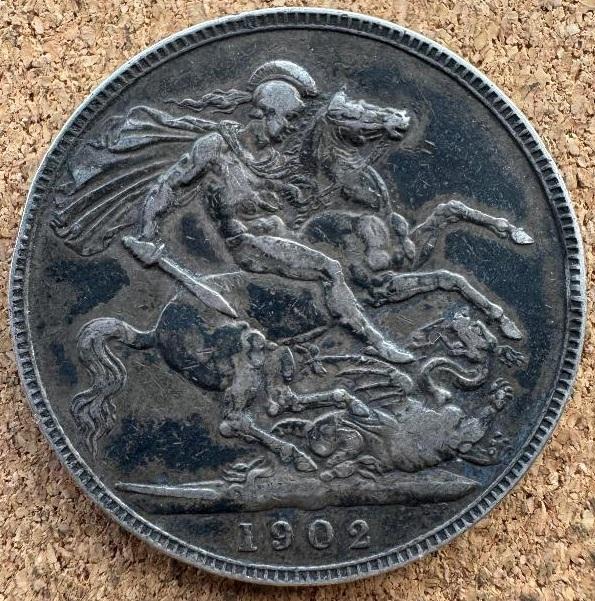
I'd agree - the reverse is no better than GF, but the obverse (under the tarnish) looks better; it's not easy to tell but I'd say AVF? -
Charles II (1st bust) 1 Crown How would you grade this?
wlewisiii replied to Citizen H's topic in Free for all
Good practice for me. I dug out my copy of The Standard Guide and looked at it and you pictures. I think that I'd call it (UK system) GF or just shy of (US) VF. The obverse shows a flattened ear but you can still see the front and rear edge of the bald spot. The reverse seems a bit more worn - the rein is disappearing on the neck but the sword is still quite clear. Lots of the high points having been hit. Anyone else think I'm off my rocker? (Or should I grab one of my 1935 crowns and get on one? 🤣) -
 OK thank you ! I really need to find a copy of Michael's book..
 -
Charles II (1st bust) 1 Crown How would you grade this?
Citizen H replied to Citizen H's topic in Free for all
As I work through the Hoard rather than start a new topic I thought Id ask the same question, Edward the VII only had one Crown coin...this one Ive not cleaned / washed, left well alone, the tarnish is patchy and its seen some circulation knocks to the edges, grade wise where would this sit?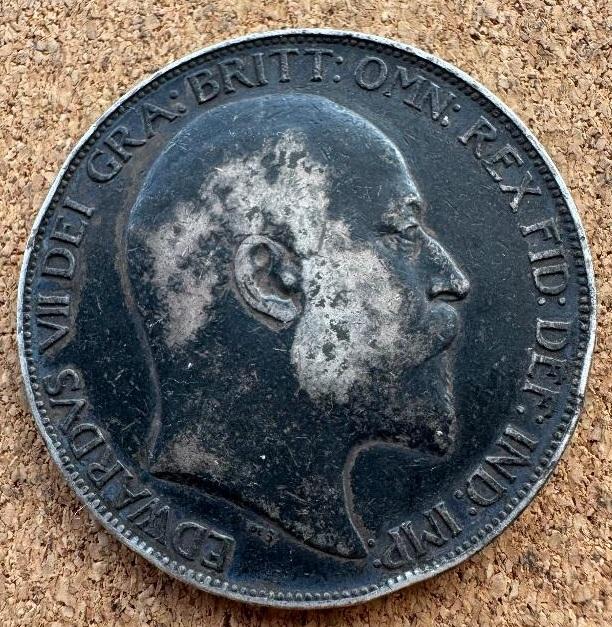
- Last week
-
D of DEI?
Rob replied to absence of uniformity's topic in British Coin Related Discussions & Enquiries
Personally it looks more like an S punch given the visible serifs on the top loop and half the number of serifs on the bottom loop, with the line joining the ends an afterthought. In Errorland, all options are on the table until proven wrong with a concrete explanation. Plenty of small S punches (including broken pieces used for reinforcing characters would be available from when DEFENSOR, GVLIELMVS or GEORGIVS were in daily use, or alternatively from DECVS on the collars. If you have a micrometer, you could measure the height of the 'S' and compare with the collar on a YH crown. It would have to predate the gothic characters used on the florins and crowns. Probably this could be corroborated by examining the RM museum's supply of remaining punches from the time before the date on the coin. If anyone has a copy of Hocking to hand, maybe they could advise if any are listed? I have had a few 1861 halfpennies with rev. G that have the same offset and a quick perusal of the farthing images suggests the same phenomenon could exist here too. The curves in the groundline base will be of the same size as the diameter of the punch shaft from which the reduced size letter was ground out and formed, the force applied for entering the character being sufficient to ground it on the blank's field. -
 For 1881H F108, Michael pictures 1881Ha and 1881 Hb - Ha with lower H and Hb with higher H, both with 11.5 teeth spacing. No mention of either of these being unusual, and no mention of rarity.
 -
hiltonlee981 joined the community
-
"One Penny 1881H with Low H, almost in contact with the linear circle, the top of the H just below the line of the base of the numerals, Gouby BP1881Ha (P+p) with 11 1/2 teeth date spacing" Can I ask please anyone with Michaels specialised book is there a estimated rarity listed for BP1881Ha (P+p) with 11 1/2 teeth date. Searching this forum no results are found. As far as I can see BP1881Ha (P+p) with 11 1/2 teeth date is not listed on Richard's website. A single example of BP1881Ha (P+p) with 11 1/2 teeth date is listed on LCA without reference to rarity. The coin however did sell for £300 listed as UNC. A similar grade coin with the same die pairing without the wider date and low H sold for 1/3 of that price. What I'm trying to figure out is the 80% remaining luster responsible for the tripling of the sold price or is it the low H and wider date. Thanks.
-
D of DEI?
absence of uniformity replied to absence of uniformity's topic in British Coin Related Discussions & Enquiries
-
D of DEI?
absence of uniformity replied to absence of uniformity's topic in British Coin Related Discussions & Enquiries
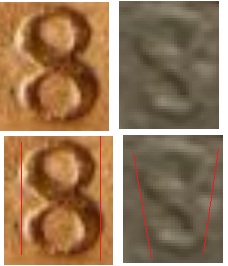
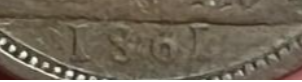
The image quality is terrible I know but unless its damage to me the 8 looks different. The left image shows a straight sided 8 where the top and bottom loop appear mostly equal with parallel sides. (This appears be to consistantly the case for the year and die pairing) The other image on the right shows the coin in question with more slanted shape and sides. It's most likely nothing. But its a good example of a question where my own research wont provide a definitive awnser.