mrbadexample Posted August 4, 2020 Posted August 4, 2020 Enough with the washers Pete, haven't you got a decent one to share? 1 Quote
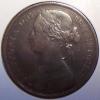
1949threepence Posted August 4, 2020 Posted August 4, 2020 1 minute ago, mrbadexample said: Enough with the washers Pete, haven't you got a decent one to share? Yeah, the right breast has worn away. Appalling. 1 Quote
mrbadexample Posted August 4, 2020 Posted August 4, 2020 2 minutes ago, 1949threepence said: Yeah, the right breast has worn away. Appalling. I don't think I've got a common date that nice! Quote
1949threepence Posted August 4, 2020 Posted August 4, 2020 4 minutes ago, mrbadexample said: I don't think I've got a common date that nice! It's certainly a very nice problem free specimen. Shame the series has that weakness with the right breast wearing away so quick. I bought an UNC 1848 which has a superb obverse but an almost breastless reverse. So whether it's actual wear or die wear, or both, I don't know. It's something Derek noted as actual wear in his grading book. Quote
mrbadexample Posted August 4, 2020 Posted August 4, 2020 1 minute ago, 1949threepence said: It's certainly a very nice problem free specimen. Shame the series has that weakness with the right breast wearing away so quick. I bought an UNC 1848 which has a superb obverse but an almost breastless reverse. So whether it's actual wear or die wear, or both, I don't know. It's something Derek noted as actual wear in his grading book. I'd have said not fully struck up, or you'd see the wear elsewhere too. Quote
1949threepence Posted August 4, 2020 Posted August 4, 2020 1 minute ago, mrbadexample said: I'd have said not fully struck up, or you'd see the wear elsewhere too. In many cases I think it has to be, as the coins concerned are otherwise immaculate. Quote
PWA 1967 Posted August 4, 2020 Posted August 4, 2020 Its wear to the REV die and not the coin i think ,the die was recut to form the rose so probably an old die. Quote
Cliff Posted August 4, 2020 Posted August 4, 2020 (edited) 1 hour ago, PWA 1967 said: Its wear to the REV die and not the coin i think ,the die was recut to form the rose so probably an old die. Am I correct in assuming that the Rev die clash, showing to the left of her right forearm on Pete and Martin's earlier pics, is on all small date, large rose examples (as well as the 5 die crack)? If so, die clash may have something to do with the apparent worn right breast? Edited August 4, 2020 by Cliff Finger trouble 1 Quote
PWA 1967 Posted August 4, 2020 Posted August 4, 2020 42 minutes ago, Cliff said: Am I correct in assuming that the Rev die clash, showing to the left of her right forearm on Pete and Martin's earlier pics, is on all small date, large rose examples (as well as the 5 die crack)? If so, die clash may have something to do with the apparent worn right breast? Not sure about that Cliff as the detail is incuse on the die so i dont think a die clash would of caused it . Quote
damian1986 Posted August 4, 2020 Posted August 4, 2020 2 hours ago, 1949threepence said: It's certainly a very nice problem free specimen. Shame the series has that weakness with the right breast wearing away so quick. I bought an UNC 1848 which has a superb obverse but an almost breastless reverse. So whether it's actual wear or die wear, or both, I don't know. It's something Derek noted as actual wear in his grading book. 2 hours ago, mrbadexample said: I'd have said not fully struck up, or you'd see the wear elsewhere too. My 1848 unaltered date penny reverse. The right breast plate is a bit flat but otherwise quite a minty coin so can't see it being wear from circulation. 1 Quote
Cliff Posted August 4, 2020 Posted August 4, 2020 48 minutes ago, PWA 1967 said: Not sure about that Cliff as the detail is incuse on the die so i dont think a die clash would of caused it . Good point Pete. Left pondering if die clash is on all 1858 LR SD, 5 die crack? You may be able to identify and help from all those you've got tucked away!!!! Quote
1949threepence Posted August 4, 2020 Posted August 4, 2020 47 minutes ago, damian1986 said: My 1848 unaltered date penny reverse. The right breast plate is a bit flat but otherwise quite a minty coin so can't see it being wear from circulation. I think there may well be two separate factors at work here. The first is undoubtedly wear. As Derek Allen says at page 110 of his book "The standard guide to grading British Coins":- Quote EF: Helmet and fingers show early wear as does the rose in the exergue, but the area which undoubtedly erodes first is the right breast. That is common to the entire series. You can't miss it. Affects even pennies with much lustre still on them. The second factor is a weak strike on coins which are otherwise uncirculated. Just co-incidental that the same area is affected. Another obvious consideration is that if the breast is weakly struck to start with, it will wear quicker anyway. A vicious circle. Quote
PWA 1967 Posted August 4, 2020 Posted August 4, 2020 (edited) 33 minutes ago, Cliff said: Good point Pete. Left pondering if die clash is on all 1858 LR SD, 5 die crack? You may be able to identify and help from all those you've got tucked away!!!! Thing with the copper pennies Cliff is that both dies were often swapped .So although the REV die may be the same on two different coins the OBV has been changed ,this happens frequently with overdates ,repairs etc. So although i cant remember looking the REV may be the same for both date types and the 5 die crack being on the OBV just the small date. The same theory with the 1848 that is mentioned different dies for both the OBV & REV that were swapped around. Edited August 4, 2020 by PWA 1967 1 Quote
Cliff Posted August 4, 2020 Posted August 4, 2020 10 minutes ago, PWA 1967 said: Thing with the copper pennies Cliff is that both dies were often swapped .So although the REV die may be the same on two different coins the OBV has been changed ,this happens frequently with overdates ,repairs etc. So although i cant rember looking the REV may be the same for both date types and the 5 die crack being on the OBV just the small date. The same theory with the 1848 that is mentioned different dies for both the OBV & REV that were swapped around. Thanks Pete. Cap off to you (an expression oft used on here in the past but can't remember who by - not seen for a while!). Quote
damian1986 Posted August 4, 2020 Posted August 4, 2020 7 minutes ago, 1949threepence said: I think there may well be two separate factors at work here. The first is undoubtedly wear. As Derek Allen says at page 110 of his book "The standard guide to grading British Coins":- That is common to the entire series. You can't miss it. Affects even pennies with much lustre still on them. The second factor is a weak strike on coins which are otherwise uncirculated. Just co-incidental that the same area is affected. Another obvious consideration is that if the breast is weakly struck to start with, it will wear quicker anyway. A vicious circle. Can we see the UNC 1848 for comparison? Quote
Martinminerva Posted August 4, 2020 Posted August 4, 2020 47 minutes ago, Cliff said: Good point Pete. Left pondering if die clash is on all 1858 LR SD, 5 die crack? You may be able to identify and help from all those you've got tucked away!!!! Hi, Cliff. Just looked at my low grade one and yes, the die clash is there. Looks like that is another good diagnostic as well as the die crack through the 5. Apologies for poor quality pics here from crappy iPad, but you should be able just to make out both clash and die crack. They are both much clearer in hand. 2 Quote
alfnail Posted August 4, 2020 Posted August 4, 2020 45 minutes ago, PWA 1967 said: Thing with the copper pennies Cliff is that both dies were often swapped .So although the REV die may be the same on two different coins the OBV has been changed ,this happens frequently with overdates ,repairs etc. So although i cant remember looking the REV may be the same for both date types and the 5 die crack being on the OBV just the small date. The same theory with the 1848 that is mentioned different dies for both the OBV & REV that were swapped around. The 1858 Large Rose reverse which is paired with the small date obverse I believe is a completely different die to the Large Rose reverse which is paired with the large date obverse. Pictures of both reverses are attached, where the first obvious difference to note is the colon dot positions. There are also other differences to individual letters in the legends, which can be seen with close up pictures. The Obverse 1858 with large numerals (some think a 9/8), apart from being interesting because of it's peculiar overdate, has the added interest of being seen paired with 3 different reverse dies; the large rose reverse being the second of those. I can provide further details about this if anyone wants more information. 4 1 Quote
1949threepence Posted August 4, 2020 Posted August 4, 2020 1 hour ago, damian1986 said: Can we see the UNC 1848 for comparison? Surely. Apologies though, I think I got a bit carried away in describing it as UNC. Looking at it again with a more critical eye, it's actually much closer to GEF/EF. Although if you look at the breast area you could be forgiven for thinking it's a lower grade than that on the reverse. Nonetheless, I think it makes the point very well about the worn breasts. 1 Quote
PWA 1967 Posted August 4, 2020 Posted August 4, 2020 (edited) Thanks Ian as i mentioned i wasnt sure if i had ever looked or not and no doubt you have pointed it out to me previously ,i knew from memory i had seen some with the thicker rim around ten past 👍 Edited August 4, 2020 by PWA 1967 Quote
1949threepence Posted August 4, 2020 Posted August 4, 2020 (edited) 42 minutes ago, alfnail said: The 1858 Large Rose reverse which is paired with the small date obverse I believe is a completely different die to the Large Rose reverse which is paired with the large date obverse. Pictures of both reverses are attached, where the first obvious difference to note is the colon dot positions. There are also other differences to individual letters in the legends, which can be seen with close up pictures. The Obverse 1858 with large numerals (some think a 9/8), apart from being interesting because of it's peculiar overdate, has the added interest of being seen paired with 3 different reverse dies; the large rose reverse being the second of those. I can provide further details about this if anyone wants more information. The position of the colon on the first example (large rose/small date) is in pretty much the same position as the intermediate colon (Peck 1503) on the 1853. ETA as well as the two stops being smaller and further away from each other. Edited August 4, 2020 by 1949threepence Quote
1949threepence Posted August 4, 2020 Posted August 4, 2020 Anyway, thanks gents. I've learnt a lot today, as no doubt have others. Quote
secret santa Posted August 4, 2020 Posted August 4, 2020 1 hour ago, 1949threepence said: The second factor is a weak strike on coins which are otherwise uncirculated. Just co-incidental that the same area is affected. Maybe not a coincidence - if the right breast is the first to show wear it is because it is the highest point of the coin. If it is the highest point of the coin, then it will be the lowest (deepest) point of the die, and therefore probably the first point that any die fill will occur, resulting in a weakly struck breast. Just a thought. 1 Quote
secret santa Posted August 4, 2020 Posted August 4, 2020 Great information, Ian, I'll add this to my varieties site in the next few days. 1 Quote
alfnail Posted August 4, 2020 Posted August 4, 2020 14 minutes ago, 1949threepence said: The position of the colon on the first example (large rose/small date) is in pretty much the same position as the intermediate colon (Peck 1503) on the 1853. ETA as well as the two stops being smaller and further away from each other. Yes, correct Mike. The DEF colon dots on the 1858LR Small date are the type which Gouby gives as CP 1858 F. Link to his site below:- http://www.michael-coins.co.uk/cp1858DEF.htm 1 Quote
1949threepence Posted August 4, 2020 Posted August 4, 2020 11 minutes ago, secret santa said: Maybe not a coincidence - if the right breast is the first to show wear it is because it is the highest point of the coin. If it is the highest point of the coin, then it will be the lowest (deepest) point of the die, and therefore probably the first point that any die fill will occur, resulting in a weakly struck breast. Just a thought. Indeed, great point Richard. Quote
Recommended Posts
Join the conversation
You can post now and register later. If you have an account, sign in now to post with your account.