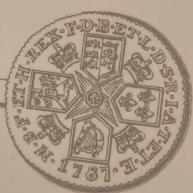
SohoMint Posted Wednesday at 07:04 PM Posted Wednesday at 07:04 PM Often when Una and the Lion's are mentioned, you first imagine gold! For me, it will always be this gorgeous silver pattern piece I had the chance to photograph. Stunning rainbow toning, never seen anything like it. 3 Quote
Rob Posted Wednesday at 08:35 PM Posted Wednesday at 08:35 PM (edited) Silver is always going to be better than gold for toning, due to the latter's relative resistance to chemical reaction. Toned gold is usually due to the copper mixed to produce the correct fineness. As you will be aware, left to its own devices and in a fairly clean environment, it will mostly turn black from silver oxide. Establish what the chemicals responsible for the colour scheme were and you probably have a good indicator of London's atmospheric constituents since Victorian time, though the toning stripe that looks like Britannia let one go, is probably from the fabrics found in a mint set. Though as always, a lot depends on the angle of the shot relative to light source. 15 or 20 years ago, I posted a picture taken one sunny day when I had a tray of Soho patterns on the desk, and the various colours reflected onto the ceiling enabled me to individually identify all the pieces using colour alone. There was a mixture of copper, bronzed, gilt and silver, but all were distinctively coloured. I think I lost the image a few years ago when photobucket went dysfunctional, so will have to wait for the sun to make another appearance unless someone can locate it on the forum. Having said all that, the one below is an oil painting in most lights and from most angles. Apologies to those who have already seen it. Edited Wednesday at 08:37 PM by Rob 3 1 Quote
SohoMint Posted Wednesday at 10:25 PM Author Posted Wednesday at 10:25 PM 1 hour ago, Rob said: Silver is always going to be better than gold for toning, due to the latter's relative resistance to chemical reaction. Toned gold is usually due to the copper mixed to produce the correct fineness. As you will be aware, left to its own devices and in a fairly clean environment, it will mostly turn black from silver oxide. Establish what the chemicals responsible for the colour scheme were and you probably have a good indicator of London's atmospheric constituents since Victorian time, though the toning stripe that looks like Britannia let one go, is probably from the fabrics found in a mint set. Though as always, a lot depends on the angle of the shot relative to light source. 15 or 20 years ago, I posted a picture taken one sunny day when I had a tray of Soho patterns on the desk, and the various colours reflected onto the ceiling enabled me to individually identify all the pieces using colour alone. There was a mixture of copper, bronzed, gilt and silver, but all were distinctively coloured. I think I lost the image a few years ago when photobucket went dysfunctional, so will have to wait for the sun to make another appearance unless someone can locate it on the forum. Having said all that, the one below is an oil painting in most lights and from most angles. Apologies to those who have already seen it. WOW that is a gorgeous one!! I love Soho Mint pieces. And... a tray of patterns you say? 👀 1 Quote
Rob Posted yesterday at 07:38 AM Posted yesterday at 07:38 AM 9 hours ago, SohoMint said: WOW that is a gorgeous one!! I love Soho Mint pieces. And... a tray of patterns you say? 👀 I used to collect halfpennies and shillings as denominations, so the accumulation of Soho patterns was inevitable. I have however tempered my habits and now only 'need' an example of each Peck die pairing in whatever metal, as opposed to all die pairings in all metals. 2 Quote
wlewisiii Posted yesterday at 07:42 AM Posted yesterday at 07:42 AM Heh. I just stick to one per year of my shillings and florins. That's enough to keep me poor 🤣 1 Quote
Rob Posted yesterday at 08:12 AM Posted yesterday at 08:12 AM Only halfpennies as it is a legacy collection. Basically I couldn't bring myself to do too much pruning as they were (mostly) too nice to throw out. And I couldn't see much point in getting rid of the unique dogs, such as the attached. An R24 in Aluminium - one that should have existed based on Peck's groupings, but he failed to locate an example. I suspect this was with a group of related aluminium die pairs at Spink when their building was bombed during WW2 and the corrosion is from water/electrolysis, as others within this group and struck in aluminium are similarly affected by water damage, albeit not as badly. See the Glens sale in the 60's or Selig's collection for other group examples. I picked it up on ebay in 2009 from the US - surprisingly nobody wanted it given its id but thankfully the condition eliminated the number chasers, so cheap as chips. . Happy days. Pennies, farthings and twopences are satisfied by an example of each type of style, rather than the nuclear option. Funds are too limited to go ballistic on all fronts. 2 Quote
copper123 Posted yesterday at 06:47 PM Posted yesterday at 06:47 PM obverse aint bad but reverse , oh dear Quote
Rob Posted 23 hours ago Posted 23 hours ago (edited) 11 minutes ago, copper123 said: obverse aint bad but reverse , oh dear The heavily gouged parts of the reverse are presumably where it was in contact with or in very close proximity to a different metal to set up the electrical circuit. Despite that, you can still see your own reflection clearly in the unaffected parts of the field, which remarkably, are still like mirrors (both sides). Of far greater importance is the context. i.e. It is a missing link which logically should exist given the existence of the copper analogue. As a coin which fills the gap, it is more important than the condition. Edited 23 hours ago by Rob Quote
absence of uniformity Posted 22 hours ago Posted 22 hours ago 1 hour ago, Rob said: The heavily gouged parts of the reverse are presumably where it was in contact with or in very close proximity to a different metal to set up the electrical circuit. Despite that, you can still see your own reflection clearly in the unaffected parts of the field, which remarkably, are still like mirrors (both sides). Of far greater importance is the context. i.e. It is a missing link which logically should exist given the existence of the copper analogue. As a coin which fills the gap, it is more important than the condition. Copper + Aluminium and water = galvanic corrosion, how do I know; my fuel filter head on my Landrover is Alu with copper sealer washers and galvanic corrosion ate away the ports on the fuel filter head. Its a slow process going by how long it lasted. Quote
absence of uniformity Posted 22 hours ago Posted 22 hours ago 23 hours ago, Rob said: Establish what the chemicals responsible for the colour scheme were and you probably have a good indicator of London's atmospheric constituents since Victorian time, Industrial rev - Coal fires - Sulfur dioxide? Quote
SohoMint Posted 1 hour ago Author Posted 1 hour ago On 10/15/2026 at 9:12 AM, Rob said: Pennies, farthings and twopences are satisfied by an example of each type of style, rather than the nuclear option. Funds are too limited to go ballistic on all fronts. Do you have the 1805 twopence? I know they are all restrikes but I still love them Quote
copper123 Posted 19 minutes ago Posted 19 minutes ago I do like those restrikes by taylor, so will handled and such beauties ,you get nothing like that in say the edward viii fantasy patterns of recent years Quote
SohoMint Posted 3 minutes ago Author Posted 3 minutes ago 12 minutes ago, copper123 said: I do like those restrikes by taylor, so will handled and such beauties ,you get nothing like that in say the edward viii fantasy patterns of recent years Agreed, though I do presume there is some bias in our views. Taylor restrikes are over a hundred years old by now and have their own history in their own right. Similiarly, Tanner pieces for Cromwell coins are desireable for it. It is possible that the Edward VIII fantasy pieces in some a hundred years or so are viewed in a similiar light - though I am uninclined to think so as the Taylor/Tanner pieces were derived from original tooling and modern fantasy pieces are pretty accessible nowadays. Only time will tell their desireablility I suppose, though I am doubtful they will be as loved. TLDR: Maybe as they get their own history they'll be interesting. Quote
Recommended Posts
Join the conversation
You can post now and register later. If you have an account, sign in now to post with your account.