Mr T Posted November 19, 2021 Posted November 19, 2021 Not sure - of the notes I've made for myself the only thing I can make out well enough is those bottom two berries and I think on obverse 13 they should be different sizes, whereas on obverse 11/12 they are the same size. Quote
Bernie Posted November 20, 2021 Posted November 20, 2021 11 hours ago, Zo Arms said: A little help please. Thinking this is obverse 13. I'm using the last colon of F:D: as my identifier, in relation to the linear circle. Sellers photo. Alternatively, confirmation that it's not 11, would be equally helpful. It looks like a 13*, let's see the reverse ! is it J, K* or L ? Quote
Martinminerva Posted November 20, 2021 Posted November 20, 2021 2 hours ago, Bernie said: It looks like a 13*, let's see the reverse ! is it J, K* or L ? What is 13* and its reference? Not Mal Lewenden's 13# ?? (Now 2 known, I understand). The latter has the two Ts of BRITT touching. For me this is obverse 11, but willing to stand corrected with further info on 13*... I agree that the reverse and date would be good to see to help tie it down! 1 Quote
Bernie Posted November 20, 2021 Posted November 20, 2021 5 hours ago, Martinminerva said: What is 13* and its reference? Not Mal Lewenden's 13# ?? (Now 2 known, I understand). The latter has the two Ts of BRITT touching. For me this is obverse 11, but willing to stand corrected with further info on 13*... I agree that the reverse and date would be good to see to help tie it down! Obverse 13* and 13#, the same, just stating that it differs from 13. Obverse 13 has 133 border teeth, 13#/* has 132 teeth Quote
Bronze & Copper Collector Posted November 20, 2021 Posted November 20, 2021 (edited) 18 hours ago, Zo Arms said: A little help please. Thinking this is obverse 13. I'm using the last colon of F:D: as my identifier, in relation to the linear circle. Sellers photo. Alternatively, confirmation that it's not 11, would be equally helpful. Based on the image, I don't believe it to be an obverse 13 which has uneven berries nor an obverse 13# where the upright of the R's point to a tooth. Comparison of the image of the coin in question with images of obverses 11 & 12 and the corresponding respective descriptors lead me to believe it is an obverse 11. Edited November 20, 2021 by Bronze & Copper Collector Quote
Bernie Posted November 20, 2021 Posted November 20, 2021 2 minutes ago, Bronze & Copper Collector said: Based on the image I don't believe it to be a 13 which has uneven berries nor a 13# where the upright of the R's point to a tooth. Comparison with images of 11 & 12 and the descriptors lead me to believe it is an obverse 11. How do you explain the wide colon dots after F:D: Quote
Martinminerva Posted November 20, 2021 Posted November 20, 2021 8 hours ago, Bernie said: 19 hours ago, Zo Arms said: A little help please. Thinking this is obverse 13. I'm using the last colon of F:D: as my identifier, in relation to the linear circle. Sellers photo. Alternatively, confirmation that it's not 11, would be equally helpful. It looks like a 13*, let's see the reverse ! is it J, K* or L ? Definitely not 13* or 13# then - back of bun and TT in BRITT wrong (see Mal Lewenden's pic below). Also, don't think it can be 13 as the visible berries are the same size - markedly different on 13, but same size on 11 and 12 as was pointed out above. Colons a fair shout, though, and not sure I can explain, unless wear or re-entering could account? I'm still going to plump for 11... Quote
Bronze & Copper Collector Posted November 20, 2021 Posted November 20, 2021 57 minutes ago, Bernie said: How do you explain the wide colon dots after F:D: I reexamined the images and still think it is an obverse 11. To my eyes the spacing of the F:D: (letters and colon) match closer to obverse 11 than 12. Possibly slightly reminiscent of obverse 13 which I eliminated due to the lack of uneven berries. I also don't see the spacing as similar to obverse 13#, which, as I stated in the original post has the uprights of the R's in BRITT and REG pointing to a tooth. The coin in question has those 2 features pointing to spaces. Again however, images can be deceiving, although unintentionally, and the best assessment is done coin in hand. Quote
Zo Arms Posted November 20, 2021 Posted November 20, 2021 Hi all. Thank you for the many opinions. Definitely not a 13#. I can identify that at a glance, but interesting to see everyone's identifiers. Another pointer, is that the second I of Victoria has been rotated slightly clockwise, so appears more upright. I didn't post the reverse because I didn't want it to influence the obverse identification. I was thinking F322A but opinions so far make me think I'm wrong. Agreed. The coin in hand, when received, will tell all. 1 Quote
Bernie Posted November 20, 2021 Posted November 20, 2021 2 hours ago, Bronze & Copper Collector said: I reexamined the images and still think it is an obverse 11. To my eyes the spacing of the F:D: (letters and colon) match closer to obverse 11 than 12. Possibly slightly reminiscent of obverse 13 which I eliminated due to the lack of uneven berries. I also don't see the spacing as similar to obverse 13#, which, as I stated in the original post has the uprights of the R's in BRITT and REG pointing to a tooth. The coin in question has those 2 features pointing to spaces. Again however, images can be deceiving, although unintentionally, and the best assessment is done coin in hand. You are probably correct about the colon dots (my halfpennies are a lot smaller than the one pictured😂) 1 Quote
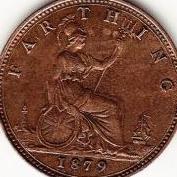
Zo Arms Posted December 5, 2021 Posted December 5, 2021 The coin in my last post arrived last week. As did this one. This is, I believe, the one I was hoping for. 322A. 13 + J. R17. Opinions please. Quote
Zo Arms Posted December 5, 2021 Posted December 5, 2021 And the previous coin on top of the 322A for comparison. The colon dots after the G are noticeably wider, which I think confirm the obverse 13. Quote
Bronze & Copper Collector Posted December 9, 2021 Posted December 9, 2021 That looks like an F-322a. Uneven berries... See attached image 1 1 Quote
Bronze & Copper Collector Posted December 9, 2021 Posted December 9, 2021 (edited) Can't upload more just yet I have one raw in my album (that is the specimen that I have posted) and another entombed by ANACS as AU50. I will eventually post the reverse of the raw specimen and also obverse and reverse of the ANACS example. Edited December 9, 2021 by Bronze & Copper Collector Quote
Bronze & Copper Collector Posted December 9, 2021 Posted December 9, 2021 (edited) ANACS specimen Edited December 9, 2021 by Bronze & Copper Collector Quote
Bronze & Copper Collector Posted December 9, 2021 Posted December 9, 2021 (edited) Duplicate post Edited December 9, 2021 by Bronze & Copper Collector Quote
Peckris 2 Posted December 9, 2021 Posted December 9, 2021 2 hours ago, Bronze & Copper Collector said: How that can be described as AU in any sense of the word, is quite beyond me. (Not criticising the coin itself, you understand...) Quote
Bronze & Copper Collector Posted December 10, 2021 Posted December 10, 2021 4 hours ago, Peckris 2 said: How that can be described as AU in any sense of the word, is quite beyond me. (Not criticising the coin itself, you understand...) Just commenting and/or observing and nothing else. This can be applied to any similar instance as well. Firstly, this was a US TPG grading a non-US coin. Secondly, most of the criticising comes from collectors who specialize in their own countries coinage and have become accustomed to their native countries grading standards and terminology. Neither is ABSOLUTELY CORRECT nor ABSOLUTELY INCORRECT. Aside from nuanced grading being somewhat subjective, it also signifies the importance of buying the coin and not the slab (or the number on said slab). Too many buyers (investors) purchase the number and NOT the coin. Collectors mostly will purchase the coin and not the number. This was given the LOWEST of the four AU grades. Those being AU-50, AU-53, AU-55, and AU-58. Additionally, although ANACS is highly rated and considered to be amongst the top three TPG's, it not as well regarded as PCGS or NGC. For what it's worth, I prefer my raw specimen to the stabbed example for eye appeal. Again though, this is strictly subjective to my thoughts. Truly, after all is said and done, "Beauty IS in the eye of the beholder". Quote
Peckris 2 Posted December 10, 2021 Posted December 10, 2021 11 hours ago, Bronze & Copper Collector said: Secondly, most of the criticising comes from collectors who specialize in their own countries coinage and have become accustomed to their native countries grading standards and terminology. Neither is ABSOLUTELY CORRECT nor ABSOLUTELY INCORRECT. It's not that, at least not from my point of view. It was merely a comment on the degradation of the English language. I have no quibbles with it being graded 50 (which is shy of VF, I think?). It's just that no-one who has any respect for language could POSSIBLY say it was About Uncirculated!!! Quote
Bronze & Copper Collector Posted December 10, 2021 Posted December 10, 2021 (edited) 1 hour ago, Peckris 2 said: It's not that, at least not from my point of view. It was merely a comment on the degradation of the English language. I have no quibbles with it being graded 50 (which is shy of VF, I think?). It's just that no-one who has any respect for language could POSSIBLY say it was About Uncirculated!!! Understood. I suppose it much would depend upon the degree of latitude allowed by the term 'about'. A Scenario: One could, under extreme conditions, be permitted to say a coin is about Uncirculated. The coin was removed directly from a mint set and accidentally dropped in the street. It was run over by a multitude of vehicles and flattened by a bulldozer. The coin NEVER circulated. Is the coin in question UNCIRCULATED with Post Mint Damage? Or is it ALMOST UNCIRCULATED inasmuch as it never truly circulated and indeed does display indications of not being in the condition it was in when it left the mint? I suppose that a TPG would probably simply entomb it as 'GENUINE with DAMAGE' and thereby be within its rights to collect its fee. I am somewhat reminded of the stamp collector that insisted upon his acquisitions being never hinged. He would then mount them in his collection WITH hinges and label them as 'UNHINGED BEFORE HINGING'. Apropos of misuse of the English language is the (mis)use and overuse of the term 'UNIQUE'. UNIQUE OPPORTUNITIES UNIQUE EVENT etc. Edited December 10, 2021 by Bronze & Copper Collector Quote
Peckris 2 Posted December 10, 2021 Posted December 10, 2021 34 minutes ago, Bronze & Copper Collector said: Understood. I suppose it much would depend upon the degree of latitude allowed by the term 'about'. Agreed. The UK and US have two different grading systems that overlap to some extent. Both use the terms VF and EF for example, though the American equivalents are approximately half a grade lower than the UK equivalent. That's just the way it is. I'd be fine with a US grade of AU being EF by UK standards - it would be logical and perfectly acceptable provided people knew the two systems weren't identical. But to use AU for a condition of 50...! Quote
Bronze & Copper Collector Posted December 10, 2021 Posted December 10, 2021 3 minutes ago, Peckris 2 said: Agreed. The UK and US have two different grading systems that overlap to some extent. Both use the terms VF and EF for example, though the American equivalents are approximately half a grade lower than the UK equivalent. That's just the way it is. I'd be fine with a US grade of AU being EF by UK standards - it would be logical and perfectly acceptable provided people knew the two systems weren't identical. But to use AU for a condition of 50...! Essentially it is a matter of speaking 2 different languages with identical words with similar yet different meanings. You must know how to translate from one to the other. Not much different from the English language used on either side of the pond. And let us not get into the degradation of the language itself. Quote
Recommended Posts
Join the conversation
You can post now and register later. If you have an account, sign in now to post with your account.