

Martinminerva
-
Posts
523 -
Joined
-
Last visited
-
Days Won
31
1 Follower

Recent Profile Visitors
15,477 profile views


Martinminerva's Achievements






-

1849 1 Florin - Victoria 1st portrait; 'Godless' type
Martinminerva replied to Citizen H's topic in Free for all
No. All have the same size font digits. What you might be getting confused about is that some 1849 specimens (not yours above) have the small WW initials next to the date obliterated by the linear circle. These ones are taken from an 184(8) pattern matrix which has had the linear circle re-engraved (and the 9 added), thus obscuring the original WW initials. Or possibly a confusion with 1849 halfcrowns, which are indeed known with both normal and smaller date digits (latter is rarer). -
1848 penny, over date identification
Martinminerva replied to Ianb26's topic in British Coin Related Discussions & Enquiries
Standard 8 over 7. Yours looks like type Da in the varieties noted by Gouby in screenshot from his website below...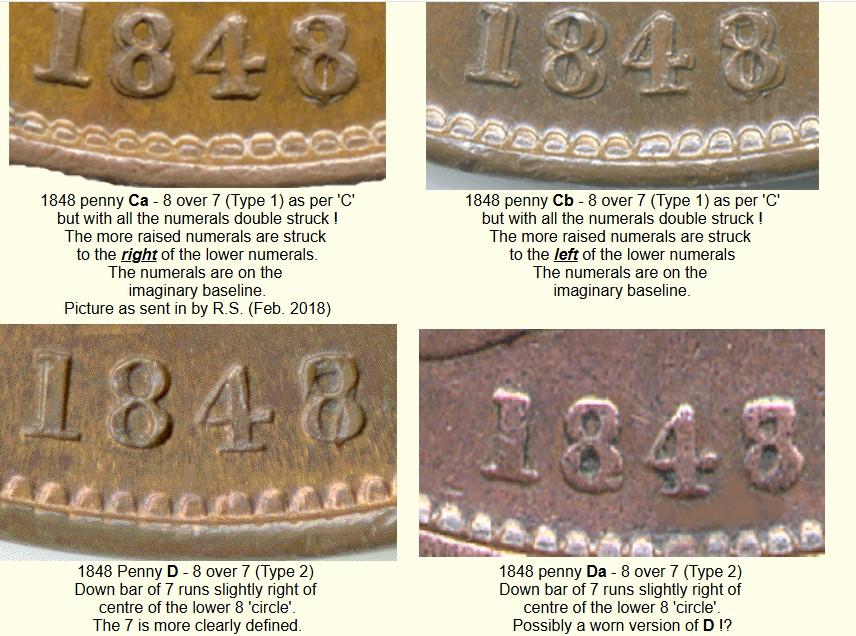
-
Charles II (1st bust) 1 Crown How would you grade this?
Martinminerva replied to Citizen H's topic in Free for all
A solid Fine for me. -
A well known variety. See screenshot from Michael Gouby's website below. Typically a master die in the Victorian period had just the 18.. pre-entered on it, and from that working dies were made that then had the last 2 digits hand entered. (This is behind all the date width varieties for example on Victorian bun pennies). For 1857 shillings, one working die had the last two digits entered with numeral punches from the wrong font thus causing the example above.

-
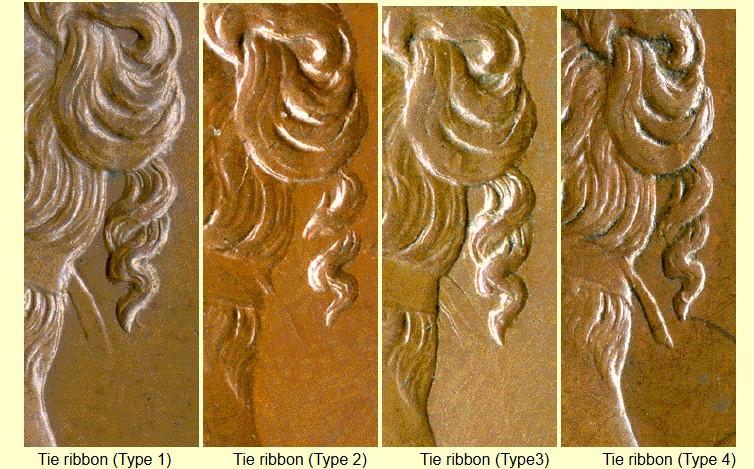
Have a look at Gouby's (brilliant) website if you want to learn more about all the various types of coin varieties, and specifically at this page for this die-clash ribbon issue: https://michael-coins.co.uk/cp1848 ribbon.htm I also insert a screenshot of some of the subtly different clashes that have typically been observed by Gouby based on the impact pressure and transfer of detail for separate clashes.
-
Just because someone has made a random claim on eBay that this is a "rare variety" does not make it a documented fact of any substance. And herein lies the whole problem of so called "AI" - it just regurgitates superficial stuff trawled from the internet with no discernment or discrimination and presents it as gospel truth. Alfnail's quoting Gouby regarding die clash damage above is proper scholarly documentation, actual fact, and derived from many years of human expertise, experience, analysis and real intelligence. Yet AI couldn't manage to reconcile that internet based evidence...
-
It's a farthing. You are probably being misled by the size which is only a bit bigger than decimal pennies today. Victorian copper pennies were huge!
-
Yes, definitely a contemporary forgery (very common) of a silver skin clad onto a base metal core - the core is corroding and bursting through in places which is causing those greyer-looking patches and random protrusions through the silver skin. So, no scrap value at all to speak of, but an interesting bit of social history and probably worth keeping thus.
-
I'm afraid that this coin is basically just scrap - 1723 SSC is a very common piece (unless it is one of the rare varieties like French arms at date or C over SS in the third quarter, which this isn't) and pieces in much better condition don't cost the Earth. With the recent rise in scrap price, yours would be worth way more as a lump of silver than its recent "collector" or "book" value for a coin so poor (and I doubt anybody would want to buy it as a coin to collect), so, sadly, scrap it and put the money towards buying a better piece, be it a nicer one of these, or anything else that takes your fancy.
-
I see London Coins sold this piece below a decade or so ago, concluding it was a doctored piece (is it???) with the H presumably added post-mint. Maybe this is the one Freeman saw and then had second thoughts? Did any forum member buy it, perhaps? Seemed a fair price for such a curio!
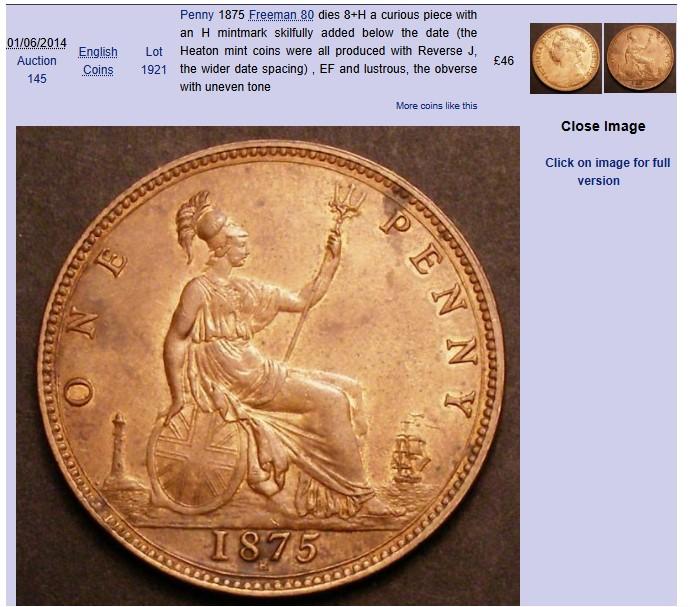
-
Not quite all, though... Eg. the mule 1860 halfpenny listed above as 260A does not appear in the 1986 or subsequent editions, instead there the one given 260A is the missing knot 1*+A, but non-mule, and 260B its proof. Wonder why he never mentioned again such a mule piece? I believe a few are now known?
-
Halfpenny ID check
Martinminerva replied to mrbadexample's topic in British Coin Related Discussions & Enquiries
Yep - both types of 3 exist overdated, and yes, Bee's is a small 3 and Pete's is a large 3. Think they are about the same rarity. -
Perfectly normal. As Secret Santa said in your other posting, for the years 1861 to 1866 especially, there are all sorts of date widths. This 1864 is a scarcer date and has the crosslet 4 which is a bit scarcer again than the serif 4, but the lowly condition of this piece means it has very little collectors value - perhaps 2 or 3 pounds absolute max. Don't spend it all at once!
-
1956 Thin Flan Thruppence, not Gurnsey
Martinminerva replied to DrP's topic in British Coin Related Discussions & Enquiries
Would need to see a picture. An awful lot of so called "thin flan" 20thC coinage is post mint damage/tampering as the coins have been submerged in acid either deliberately or else in acidic soil conditions before being discovered as detector finds. I myself have unearthed many such pieces. The giveaway signs are that the surfaces are mottled, stippled or porous where the acid has eaten away constituent parts of the metal alloy. If the surfaces are anything different from a normal circulation piece, then I would fear that is what you have... -
Shilling Grading / value
Martinminerva replied to Peter bliss's topic in British Coin Related Discussions & Enquiries
Silver is doing well for scrap price at the moment on the back of gold, so this sixpence would scrap at between £1.00 and £1.20. Don't spend it all at once!! It has no extra numismatic value in this lowly condition.