

Rob
-
Posts
12,935 -
Joined
-
Last visited
-
Days Won
371
Content Type
Profiles
Forums
Events
Downloads
Store
Gallery
Articles
Everything posted by Rob
-
over 500kB. If not, leave the thread and come back into it, then the 500kb limit per post will reset.
-
Not a clue about these, but given the abdication date it doesn't sound right. What mint is it? Weight? Edge? The portrait doesn't seem to match the 1808 coins exactly, but I haven't checked all the different mints. The eyelid is too long for a start and the front cuirasse strap could be a bit too long. Usually the other 3 are slightly longer. It's almost certain the Chinese will be making these, so anybody know if this is one? You might be better off posting on a US forum as there are a lot of collectors of 8 Reales over there due to the Hispanic connection with the US. If it is a copy, it won't be the only one.
-
Which coin would you prefere
Rob replied to ozjohn's topic in British Coin Related Discussions & Enquiries
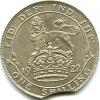
The big problem with the first few years of the 500 coinage was the indifferent strike frequently seen with practically as struck VF detail not unknown. It isn't until 1923 that you get a consistent strike. -
If it is any help. Jackson Kent did a 10 year study of the early milled coinage in the 1950s & 60s in an effort to establish whether the number of harp strings had any relevance - his conclusion was nothing to learn from them. i.e. they were random in number with no patterns apparent, from which you can reasonably expect a deviation around the most commonly occurring number. That isn't to say there is no relevance, just that none has been established to date.
-
The number of strings varies as they were entered separately. This is one of the pitfalls of references when they go into detail because the assumption of many is that it provides a true and full picture - something they manifestly do not. I don't know whether this is a common variant or not, so can only suggest locating as many images of the coin you can and work out the answer yourself. The old ESC was full of holes, and the new one has expanded on this considerably, but the number of holes has also increased to take account of this extra information. At the end of the day, you have to take what is written on board, but always keep an open mind so that when you spot an inconsistency you investigate and customise your reference to reflect the updated information.
-
Last Silver Coin in Australia for Circulatation
Rob replied to ozjohn's topic in British Coin Related Discussions & Enquiries
1963 decimal patterns -
Normal for Bury
-
It's a pity ebay don't offer a drop down menu that includes copies as a reason to report an item. I can't see a way to inform ebay that describes the problem, but I guess that is just the way they like it - no hassle and fees received.
-
I don't know what the regular mail insurance limit is in the US, but suspect it will be aligned with this country where the maximum insured value is £250. Over that and you are using a courier (including Parcelforce) which is considerably higher, or if you have separate insurance, you can send it regular mail. Prices can escalate. If I want to send a higher value thing to the US with a courier, the price is in the £30 area, but can be more depending on value. For imports from the US to me, $30 is a minimum charge whichever auction house it comes from. They won't send it on a wing and a prayer as they are responsible for it getting to you, so arses will be covered.
-
Buggy - has there been a recent "upgrade"?
Rob replied to Peckris 2's topic in Forum technical help and support
No. -
Brilliant.
-
It's always worth delaying publication until you are satisfied the article is complete as you inevitably find something that casts doubt on your findings to date. As for publishing images, the catalogues are already deemed to be in the public domain, so you are unlikely to run into copyright issues by illustrating these. If the source is given, then the auction house is being given free publicity. Images taken from articles on a website would be different. All studies use the author's images where possible.
-
It affects both sides, but tends to be more obvious on the obverse because there is a greater expanse of flat areas and less clutter in the design. Here's one with it on both sides.
.thumb.jpg.6b025c68d0caa34b1ebee744125ce257.jpg)
-
Haymarking. Probably flecks of oxidised copper from insufficiently mixed metal. Copper is the metal usually added to get the correct silver fineness. Copper (II) oxide is black.
-
The sub groups are determined by the punctuation. Unless you can identify or eliminate saltires and/or apostrophe contraction marks, the coin must remain a generic type 5. If it only has a single saltire on the reverse, that makes it a reverse (i). Best bet is to identify the bit after HENRIC.
-
Shillings & Florins in circ. after 1971
Rob replied to Viccy Penny's topic in British Coin Related Discussions & Enquiries
I think the left's reaction to the Thatcher years was a whinge in the realisation that the cozy life in the union-run country of the 1970s was disappearing in a puff of smoke. People complain about Thatcher in the 80s, but what about the 70s where a walkout was determined by a show of hands. The example where Derek Robinson shut Longbridge with a clearly small minority favouring a strike - yet the vote was deemed to be passed, that and similar actions set the seeds of Thatcherism because it was clear the country was in danger of being run by the unions. From my own experience, I was given a warning for working too hard when at the post office after graduation. I was told in no uncertain terms that it took 10 minutes to load this van, 20 for that, 45 for another. And the funereal pace of the mail bag folding area would have embarrassed even the most lethargic, with a rate of 2 per minute, the bags neatly folded with such perfection that it would have put many a laundry to shame. They could have relieved the boredom by doing a bag every 15 seconds, but that was the agreed rate. Only available to permanent staff, the list of people putting their name down for this jolly was lengthy. That was my life in the 70s, and I didn't like it either. It is the difference in view of work ethics that explains this country's lack of productivity when compared with other developed nations. Ultimately, nothing happens in isolation. -
Crown cushion ends vary a little. The harp strings are different and partly filled on the bottom coin, the date is differently aligned, the stops by date are a different size. You could check to see if the Garter Star rays are from the same punch. If the central garter is not part of the same punch as the rays, it could be rotated on any die by a quarter turn or multiples thereof.
-
Coin/Token/Medallion Identification
Rob replied to Warhurst's topic in British Coin Related Discussions & Enquiries
Simple. Serving a market using a combination of greed, gullibility and ignorance. The Daily Mail and other rags have been telling the public for years that the coins in their pocket are all worth many multiples of face value. This despite the banks continuing to issue them at face value - and they are hardly slow to make a quick buck. Consequently, many people are now convinced that they should be wealthy beyond imagination. Many buyers want to buy into the dream. Gullible, because many have bought into this dream, and believe any coin to be worth a lot of money without doing any research. After all, with electronic banking, coins are clearly anachronistic, so must have increased in value. Ignorant because mob rule rules. You don't need to do homework because we are all on the same bandwagon - allegedly. -
Will somebody tell him it's a copy (and not silver) please. I did and he said he would look into it, but hasn't looked very hard so far. https://www.ebay.co.uk/itm/unresearched-medieval-hammered-silver-coin/223185588269?hash=item33f6e5d02d:g:kdgAAOSwfr1bv5KI
-
1887 6d's
Rob replied to Unwilling Numismatist's topic in British Coin Related Discussions & Enquiries
Is that not due to the shallow impression of the underlying letter? With only the top of the punch relief entered, you would only see a bit of the punch, but presumably end up with the sides showing as two parallel lines once fully entered. It's the sort of detail that you could only check for by looking at V(ICT..) on an uncirculated example. -
Maximum picture size is 500kB. But if you try to upload an image larger than that and then try a smaller file, the program remembers the earlier attempt and adds it to the total uploaded. Don't ask why. If you leave the thread and come back into it again, it seems to clear the memory and you then have 500kB at your disposal again.
-
Keep the size under 500kB and it should be ok, but best leave the thread and re-enter.
-
Without knowing you future intentions, there's no right or wrong answer. If you have bought it for the grade number with a view to selling it in the future as you think prices are going to increase, then it is clearly an investment decision and taking it out of the slab shouldn't come into it. If you are collecting as opposed to investing, then it is entirely up to you. I have removed many 65 & 66 graded coins from the slab to put the coins in my cabinet, some the 'finest known'. i.e The biggest number on the slab to date from that TPG. As this number doesn't translate across TPGs and in any case is not necessarily reproducible even if the same coin is submitted twice to the same TPG, I don't get too tied up agonising about removing them from the plastic. For me the question is whether the coin is an integral part of the collection, and if so, it has to fit in the tray - something slabs manifestly don't. It's horses for courses as we have discussed many times.
-
How much did they charge for it? Just wondering, because when I wrote my article on the Weyl patterns, they wanted £60 a side for the seven coins in their collection. £420 for images to include in a BNJ article I was doing for free with no chance of financial gain. Didn't take them up on the offer. The pictures of the other 85 coins I was able to locate cost me nothing.
-
1855


.jpg.4631b098623a886014f3547b996823b2.jpg)