

Rob
-
Posts
12,801 -
Joined
-
Last visited
-
Days Won
347
Content Type
Profiles
Forums
Events
Downloads
Store
Gallery
Articles
Everything posted by Rob
-
Mine's a pint.
-
R/I is not particularly rare. There are 3 R overs (I, V & which increase in rarity in that order with R/B undoubtedly the most difficult to acquire. It probably doesn't help that Spink only list R/V which is less common than R/I, so there is an automatic assumption that it is rarer than reality would suggest. I would suggest it is scarce.
-
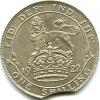
Is normal service resuming?
Rob replied to Colin G.'s topic in British Coin Related Discussions & Enquiries
That looks like a system malfunction at ebay - decimal point's in the wrong place. -
Is normal service resuming?
Rob replied to Colin G.'s topic in British Coin Related Discussions & Enquiries
How very true... I've struggled to get anything like the £30 I'd hope for for a nEF 1887 4s (roman I), but sell bags of junk like 58 1960's pennies for £3.85! At the bottom end it's buyers with a near total lack of knowledge thinking it must be worth more than it is. Think back to the lack of reference material held by most collectors. I would surmise that any thoughts they have about prices are restricted to "if several people think it is worth that much then it must be". i.e.Ebay sets the grade and price. I think that higher grade pieces are the preserve of experienced collectors who may also be wearing rose tinted spectacles at times. If you claim high grade then no one believes you and any grade given will be knocked back a point unless you can build a reputation at which point some of the uninitiated jump on board. Collectors actively seeking the higher grades will not want to rely on the frquently poor images. Better that you have a coin on approval from a dealer or seen in the flesh at a fair. Generally speaking though, mid grade coins (nVF-EF) are the difficult area. You can pick up a middling coin cheaply on ebay because the majority of buyers are in 99p mode, whilst the experienced will want to examine a coin under a glass - certainly so if the grade claimed is EF or thereabouts. -
I'm on a roll too. Just had an order that has netted me a tenner! Sort of puts things in perspective.
-
Well, he did quite well buying the Geo.III 5 guineas in Japan for £84K and selling it in his sale the following May for £180K, so he isn't short of a bob or two.
-
Yes, it's Stephen Fenton, aka St.James's Auctions.
-
There was one in the Crocker Collection 1908 BMC 2214. F 164A. Dies 1*+C. Near Fine, buckled. Rare Sold For: £500 a very ugly coin too! It's at times like this when you really appreciate the aesthetic beauty of the felt in an empty hole in the tray over a piece of mangled/corroded/flat metal. I'd sooner leave the hole unfilled than have to look at that, after all it isn't unique so a better one will come along one day.
-
Is normal service resuming?
Rob replied to Colin G.'s topic in British Coin Related Discussions & Enquiries
I have had problems with a couple of auction houses describing coins as 'Unc.' that patently were not. They all have their shortcomings which makes distance bids a harrowing process and I now prefer to attend sales as I was being forced to adopt my e-bay stance of 'if they say it's unc, then it's probably no better than EF'. The unfortunate thing is that taking this stance means that you don't actually win much in the higher grades. Fortunately I don't live a million miles from most of the salerooms and can make up my own mind about the lots up for sale. Having said that, the lighting and conditions under which the coins are viewed can be diabolical. The first ever time I viewed I put my foot in it. Having given over the list of lots I wanted to see and had them passed to me, a VF 6d fell out on the table. As the guy was only a couple of feet away and busy, I quickly called him back as the coin was obviously not one I had requested (the list was mostly UNCs according to the descriptions). He assured me it was correct and so I had a sort of road to Damascus moment when a bright light shone in the sky, the clouds parted and a big finger poked me in the eye. From that moment I saw the true light and understood fully. Another instance was where 2 pattern 1/2ds were listed which were the only gaps in a long run of Peck numbers I needed to fill. One was painted gold and described as gilt, the second a currency piece and showed no characteristics of the purported Peck variety. An enquiry as to whether a notice would be issued in view of the obvious errors was met with a negative. (Mat was there too for that one and also noticed the Christmas tree decoration). A hammered penny described as from Hertford with a mint reading of HEORT despite the coin actually reading HAESTI (Hastings) with the S on its side as normal for that type and clearly from the hoard of about 100 coins of the type from the toning was similarly dismissed when the catalogue error was pointed out well in advance of the sale. The odd mistake you can accept, but to not issue corrections is unforgivably wrong. -
Is normal service resuming?
Rob replied to Colin G.'s topic in British Coin Related Discussions & Enquiries
The problem I have with W&W is the issue aired on this forum a couple of years ago when everything was described using ebay standard grading or mis-described lots that they weren't prepared to issue a saleroom notice for. When that happens, you only bid in person having viewed the lots in advance. It helps nobody to return lots because they are not as described, so with there being plenty of fish in the sea you don't bid and move on. The lots may have been accurately graded and described in this instance; I don't know, but given the historical baggage I'm not going to bother finding out unless there is a coin that is on the Hobson's Choice list. -
Is normal service resuming?
Rob replied to Colin G.'s topic in British Coin Related Discussions & Enquiries
I didn't bother with them Colin after my last 2 attempts at buying there ended in 65-80 negatives! I didn't bother. I looked at the catalogue, felt underwhelmed, and decided to find something better to do. If by normal service you mean lower prices, then that would be expected because any initial weakness is likely to be in the mid-tier coins. -
Earliest dated coins
Rob replied to Nutsaboutcoins's topic in British Coin Related Discussions & Enquiries
The first dated coins in this country were in fact two pattern shillings dated 1547 with im. Rose. North 1953 is dated MCXLVII and North 1954 is dated MDXL7. An image of the former is shown in Joe Bispham's article in the 1985 BNJ on p.143. The shillings dated 1548 (North 1896) are recorded in footnote 78 as being struck in brass alloy only and so are presumably patterns. There is no mention of a 1548 sovereign in North. -
Royal Wedding 5oz Five Crown Prrof Gold Coin...
Rob replied to Bhoy's topic in British Coin Related Discussions & Enquiries
I would suggest you leave products from the London Mint alone. They are nothing to do with the Royal Mint and typically offer overpriced trinkets aimed at the non-numismatic market and whose likely resale value would be a fraction of the amount paid if purchased directly from elsewhere. Questions regarding these types of items from both London Mint and Westminster Coins frequently crop up on this forum and the answer is the same now as it has always been in the past. If you want to buy gold or silver, keep it simple and get physical quantities of the raw material, not something dressed up as something else. -
Isle of Man Onchan Internment Camp 1d
Rob replied to sweetcheeks82's topic in British Coin Related Discussions & Enquiries
This is a privately issued halfpenny token. It was made by Halliday and the issuer is reported to be William Callister of Ramsey - vide Clay. Davis type 25, see note at the foot of p.247 regarding the attribution. Given it isn't indicated as being rare, yours being quite worn would not imply any significant value. As common mint state pieces frequently go for say £40-50, a pound or two is all I would expect unless there is special interest involved. -
Isle of Man Onchan Internment Camp 1d
Rob replied to sweetcheeks82's topic in British Coin Related Discussions & Enquiries
Many POWs had a desire to get out of their prison camp, so any legal currency would be retained for use on an escape. Having tokens circulating in the camp meant they had a currency which was useless outside. -
Isle of Man Onchan Internment Camp 1d
Rob replied to sweetcheeks82's topic in British Coin Related Discussions & Enquiries
Krause World Coins list the penny at $6 in F, $15 in VF, $35 in EF and $80 in UNC if they are genuine Not my area of expertise, but they are quite scarce, just 20,000 minted The 1/2d and the 6d are even rarer apparently, just 2,000 and 2,500 minted respectively Yours look to be at least EF grade, but a note of caution they could be modern copies, do you have any provenance? Hope this helps David Hi what does provenance mean? I live in the Isle of Man, they were my dads. The Photos dont display the true colour, i took them in bad lighting, they are alot darker than shown. Thanks for your reply. It means some sort of verifiable certification which proves that the coins (or whatever object, as the term is often applied to antiques), are the genuine article from the period to which they are attributed. A provenance is a traceable history of ownership. For example, if an article previously and demonstrably owned by a famous celebrity came up for sale, it is likely to realise more at auction based on that fact of ownership than an identical item previously owned by Mr Anonymous of Bognor Regis. Similarly for coins, examples that have been in the most famous and usually in quality terms the best collections tend to also realise better prices. But in simple terms, a provenance is a record of past ownership by whoever. -
Oddities and Curiosities
Rob replied to SionGilbey's topic in British Coin Related Discussions & Enquiries
There may or may not be. The decimal patterns of the late 1850s have a few varieties where lamination is the norm. Peck records all examined P1981 with this feature - something I am unable to dispute. The solitary F689 also has a laminating flan. In extremis, the result is that the coin separates along the edge leaving two halves. On the example below, there was clearly a large void within the flan as seen by the oxidised patches. The less oxidised area is all that held the two halves together, albeit tenuously.


-
Silver book - Davies or Groom?!
Rob replied to Cerbera100's topic in British Coin Related Discussions & Enquiries
That's exactly what I thought, Declan. It's not a fully like for like comparison. I too would like the option of both. It's horses for courses. Unless you have a book which covers the same period and the same type of material, you will inevitably find that both are required. There is no one volume that will do everything for everybody unless you are prepared to have something the size of the Encyclopedia Britannica and more importantly pay for it. When many people refuse to pay £20 for a book, the chances of them paying hundreds isn't worth the effort contemplating. And whatever format is employed or depth of detail included, it still probably won't satisfy most collectors being too much or too little. All publications are equally valid. -
A little Buying/Selling survey
Rob replied to SionGilbey's topic in British Coin Related Discussions & Enquiries
To only list things that have a reasonable chance of selling, thereby filtering out a huge amount of dross. Ban anything where you can't identify the variety. Place a cap on the number of items of any one type listed at a time. No way of enforcing any of the above though, so we are stuck with having to plough through the mountains of crap to find that coin in Fine. Better still, search dealers' sites where the crap isn't listed. That goes in the 10p bin. -
How much literature do members have and use?
Rob replied to Rob's topic in British Coin Related Discussions & Enquiries
You mean he uses hs where he should be using ns. -
Unfortunately, many Germans seem to be obsessed with cleaning their coins in this manner.
-
Oliver Cromwell Half Crown
Rob replied to HHenry's topic in British Coin Related Discussions & Enquiries
Please post a picture, so we can look at it. Thanks. -
It's a good job ebay don't impose the same demands as this vendor, otherwise we wouldn't have a thread worth the name. link. Black pots and kettles spring to mind.
-
Welcome to the forum. At least you have set yourself a target that is easy to achieve in top grade. You could even do a set for the year you were born as long as it isn't 1923, 1933 (unless you are very wealthy) or 1934. Make sure you only collect uncirculated pieces in top grade with full lustre as they are readily available and the world is awash with lesser grade material from the 20th century. Tread carefully if using ebay and if you are near a monthly coin fair, pay it a visit to get a feel for what is available.
-
If it stays like that for any length of time, even the lesser crap will look good. RESIST at all costs - there is a world outside ebay.


