
Rob
-
Posts
12,800 -
Joined
-
Last visited
-
Days Won
347
Content Type
Profiles
Forums
Events
Downloads
Store
Gallery
Articles
Everything posted by Rob
-
That's just an estimate. The lot could be sold for more or less than this figure. Nothing would stop people asking for £402, but as always, it depends on what someone is prepared to pay. If you paid £1402 it would be up to you, no one else.
-
Spink 2014 gives £425, but you can pick them up for less than this. Typically £275-325 all in at auction depending on condition.
-
Hoping isn't a very sensible way forward. Buy what you can see.
-
Prices. The first melt, the second a tenner.
-
The first one is dire and best put out of its misery because nobody could possibly collect them in that condition, surely? The second is better, but still struggles to reach VF. The fuzziness doesn't help.
-
Given the similarity between your request and the OP, I'm wondering if both of you are chasing the same info. i.e. who else was he in business with and did they have descendants? Presumably you can get all the company details and accounts from Companies' House. Any directors will be listed together with their addresses at the time. Armed with that info you should be able to track down some relations, particularly if they left the company on retirement and continued to live in their homes.
-
I suspect not. It also suggests the fixing hole for the dies in the press are triangular or hexagonal. Given the existence of inverted die axis pennies in recent years, a hexagonal form is suggested.
-
Every other weekend is a free listing weekend, or so it seems. Given eBay's ramping up of fees, it is little wonder that it is so popular. People don't buy so much during the week, so it's a no-brainer for sellers in an attempt to restrict costs. If you had listing fees and only sold 10% or less, your time would be better off driving to the tip. And it would be cheaper.
-
The seller has just changed his description! It did have a 'buy it now' price of £1,000. I wonder if the message I sent him prompted the change? I also wonder if it should have ** after the country of origin?
-
Why? http://www.ebay.co.uk/itm/coin-/121232261134?pt=UK_Coins_BritishHammered_RL&hash=item1c3a01800e This is the crap that clutters up ebay. 2 days to go, and still nothing to see.
-
Advice On A New Coin
Rob replied to evansuk2000's topic in British Coin Related Discussions & Enquiries
£35 is only 3 times melt, so is hardly extortionate. -
Advice On A New Coin
Rob replied to evansuk2000's topic in British Coin Related Discussions & Enquiries
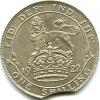
It looks like the collar sprung open at this joint in striking. If you look at image 2 there is a discontinuity in the circumference and a flaw impinging on the rim at this point. That would also explain why it is a bit larger, as the flan has spread due to collar failure. -
Australian Proclamation Coins Contain British Coins
Rob replied to Garrett's topic in Beginners area
Surely that was their problem in the first place? -
Australian Proclamation Coins Contain British Coins
Rob replied to Garrett's topic in Beginners area
That's interesting. So the 2d wasn't legal tender and neither were the 1799 coppers. I see in the last Downies sale, lot 1807 was a Columbian 2 escudos - again based on the above list not legal tender. I presume that if it was legal tender elsewhere but not in Australia, it was still used as currency based on the fact that it had intrinsic value? -
Australian Proclamation Coins Contain British Coins
Rob replied to Garrett's topic in Beginners area
I already do this, but note that typical proclamation coins are typically cartwheel pennies and twopences, 1787 shillings and sixpences, 1799 coppers, together with a few of the 1806 coins. You also get non-British pieces from time to time. These are all extremely common and abundant in high grade in this country, so you tend not to find a lot of desirable material in this section of Australian auctions. Dumps and holey dollars are well known and documented, so instantly noted by the collecting fraternity. The only relatively common thing with any desirability that crops up on a regular basis is an 1827 penny, but then everyone looks for these. Useful info would probably be the cut-off dates used by the various auction houses for what is considered to be a proclamation coin. i.e. at which point do they become 'British' at Noble, Downies, Status etc. -
No chance. The OP was a guest and isn't a member since, so can't be contacted.
-
If anyone requires an assessment of grade when they come straight from the mint, it suggests that the prospective purchaser assumes are despatched from Llantrisant as grapeshot. I fail to see why anyone wants to slab a currrent output coin that comes in a sealed packet from the mint. This really is the epitome of a marketing triumph and the TPGs must be laughing all the way to the bank. I would also question how much attention the graders pay to the coin in any grade assigned apart from MS70, because just about all should be pretty much perfect, as struck. i.e. a no-comeback MS69. Ker-ching, ker-ching, ker-ching etc
-
1805 George Iii Copper Pattern Halfpenny
Rob replied to Paulus's topic in British Coin Related Discussions & Enquiries
The colour of restrikes is so variable that anything describing them is a typical indication only. As for the pricing, the point I am making is that they are certainly one of the commonest, if not the commonest. A comparable one would be the P1260 which is equally common. In the last two or three years, G3 proofs have taken an upward turn in prices realised. In this case, Spink is reflecting the market and the prices paid. I don't think the typical buyer is aware of the relative rarities of the varieties, and even if they appreciate there are differences they are still likely to use Peck rarities instead of Mick Martin's survey. Personally, I would look to pay 60-70% of the 1806 proof halfpenny price listed in Spink for both this and the 1806, but the market doesn't seem able to take on board availability and so is often seen to be behaving in sheep mode. What is unquestionable is that if someone paid 950 for one of these, a visit to see a man in a white coat is probably in order. The cost of said visit is a couple hundred thousand. I am the proud owner of a white coat if anyone wants a consultation. -
1805 George Iii Copper Pattern Halfpenny
Rob replied to Paulus's topic in British Coin Related Discussions & Enquiries
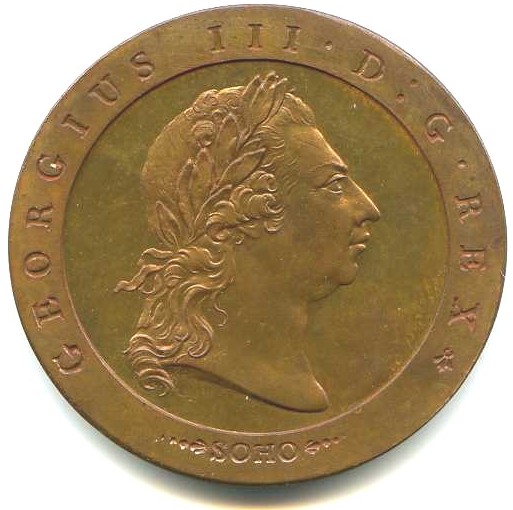
P1309 is a Taylor restrike and probably the most common restrike available. It is certainly on a par with the commonest of the Soho proofs, so a guide would be as for the 1806 halfpenny, which stands at £500-£600 in the new Spink catalogue. -
What have the French done to upset you? Blockaded Calais once too often? The shops closed 5 minutes early in Grenoble today --------- BLOCKADE CALAIS!! A dog had a wee on a Parisian pavement -------- BLOCKADE CALAIS!! An Englishman spoke to me -------- zut alors, BLOCKADE CALAIS!! It's a bit like a case of Pavlov's frogs. Apologies if we have any French members who might take offence.
-
1806 Pennies - Proofs V Currency
Rob replied to Accumulator's topic in British Coin Related Discussions & Enquiries
You also have to beware of those varieties that Peck didn't know about. Missing bronzed and copper varieties are not unknown, just as strikes are now known in metals other than those listed. -
1806 Pennies - Proofs V Currency
Rob replied to Accumulator's topic in British Coin Related Discussions & Enquiries
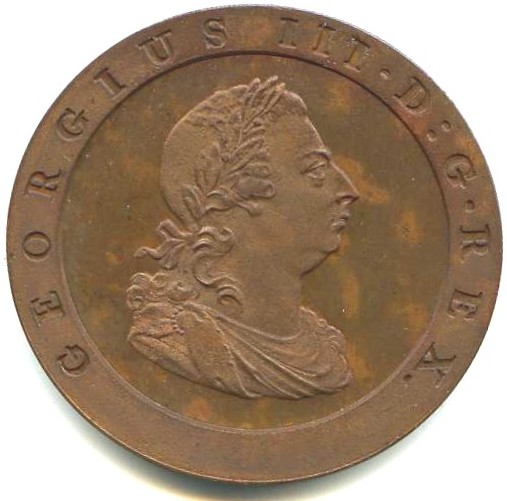
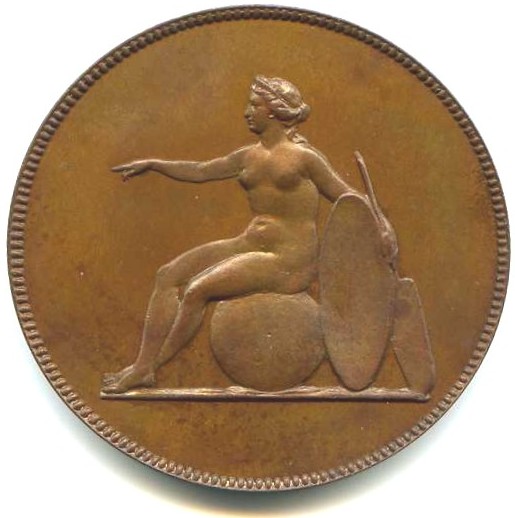
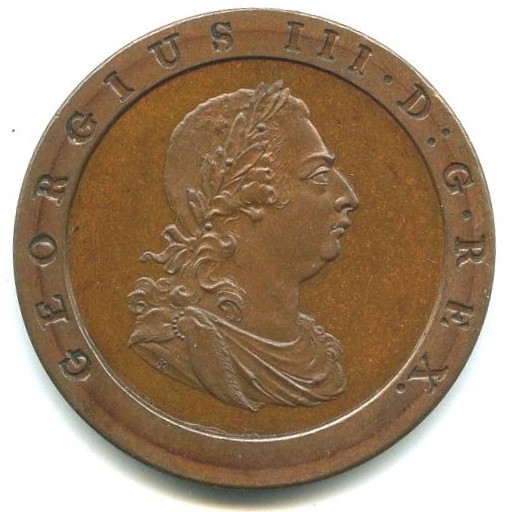
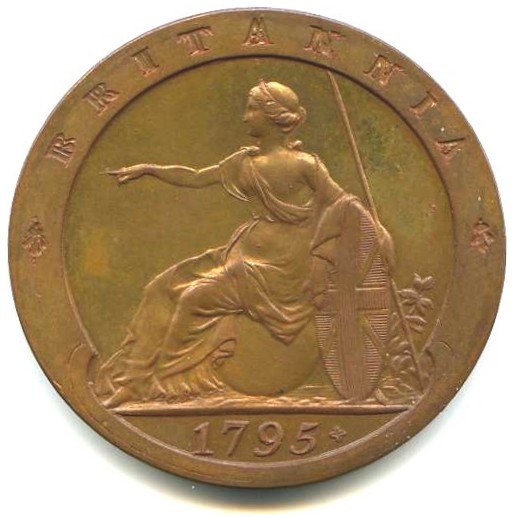
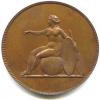
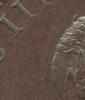
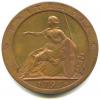
Taylor's bronzing was a bit haphazard. In addition to the P1053 shown above, the difficulties he experienced in quality control are amply demonstrated by the P1161 shown below. Even when it went better, the quality was still not as consistent as that of the Soho pieces with residual speckling. See nude Britannia (image 2). Occasionally it went completely to pot, such that a P1309 which I previously thought to be a copper variety, I now think is one where the mottling is due to faulty bronzing. That despite the total lack of bronzing colour.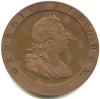
-
1806 Pennies - Proofs V Currency
Rob replied to Accumulator's topic in British Coin Related Discussions & Enquiries
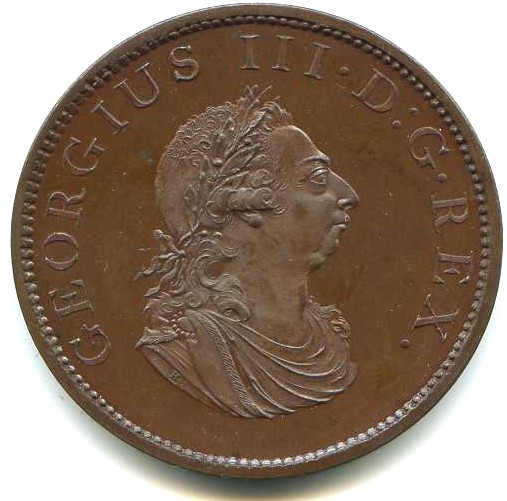
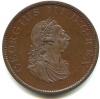
I concur. The bronzed proof halfpenny P1234 is one that is a consistent colour (and relatively dark chocolate-like). See the last image for this, with apologies for the small image due to the 150Kb limit. Pre 1799 soho bronzing was consistently lighter in colour than the 1799 series, which in turn is consistently darker than the bronzed 1805 or 1806 Soho coins. The stain ring seen on the raised rim of the P1153 is a consistent feature of this variety and I assume that it is a by-product of the bronzing process.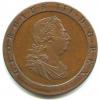
-
1806 Pennies - Proofs V Currency
Rob replied to Accumulator's topic in British Coin Related Discussions & Enquiries
It is a surface treatment. I don't know the full ins and outs of it, but the agent is applied as a powder(?). Taylor produced pieces with variable results. This very late striking of a P1053 (restrike bronzed pattern 1/2d) shows not very good bronzing, even by Taylor's standards, but a lot of blocking of the incuse detail with a red powder. Taylor's bronzing is quite a light colour,as has been mentioned before.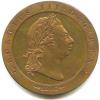
-
Agreed! I'd have been very disappointed if this had been my listing 200997037973 ! Even though the reverse is a little messy, it's still a lesser of the E1 denominations, and in a very collectable grade! I've bought it for someone who wants a wall 'mounted' denomination set...I think this'll do nicely! Edit: re post...very tricky, as some people will be sucked in by 'free' postage, and others won't care about £15, providing the coin's £15 less than they're prepared to pay! That's the point. By expecting either free postage or bidding to a P&P inclusive overall price, they are effectively losing sight of the fact that postage has a cost. Not only that, you also have to consider ebay fees, which when added together can come to some 20% of the total. If you want to rely on the convenience of eBay, it shouldn't be unreasonable to expect to pay 10-20% more than you need to unless you are prepared to do a bit of spadework. If I was listing a BIN, it would need to be priced at what I want for the coin plus total costs. If I wanted to be greedy, then I would list at the above plus a variable percentage. eBay covers several reasons for selling. If it is to act as an arm of an existing business, then it should be cost plus, if it is being used as a means of selling off unwanted items whereby you raise what you can, then there is a greater acceptance by the seller to absorb the overheads. Too many ebay buyers look on it as an outlet for sales to be 'disposing at any cost' only. They couldn't be further from the truth. Cross-subsidies invariably distort a market, whether physical, theoretical or imagined.