
Rob
-
Posts
12,935 -
Joined
-
Last visited
-
Days Won
371
Content Type
Profiles
Forums
Events
Downloads
Store
Gallery
Articles
Everything posted by Rob
-
You can get the featured cleaning sign for 11.99 + vat from Viking. http://www.viking-direct.co.uk/catalog/search.do?Ntt=cleaning+sign&N= That would be a far better fashion accessory to wear stood outside the car wash.
-
You're lucky. I've got 110 gaps in my Saxon/Mercian list
-
The Grauniad always manages to express itself badly. Obviously branching out from its home turf of a near monopoly on spelling mistakes. Apparently the preferred newspaper of the teaching professions........................... God help us.
-
The series is called rip-off Britain. It doesn't really leave much scope for reallocation of blame, which manifestly should be the case for those who spend tens of thousands on 'investments' from the LMO and similar without doing due diligence. They certainly wouldn't buy a car without taking it for a test-drive. To my mind it is simply sellers pandering to the market. People want to be greedy and see unrealistic returns ahead of them, and so the market will oblige. Caveat emptor should outweigh all other arguments, but a programme title demanding that people are being ripped-off can't afford to say the audience is to blame - so there's no danger of an objective discussion
-
I'm afraid we need a bit more than 10 minutes notice, so missed it. There is going to be a rip-off Britain program on 'investment' coins some time soon, but don't know when. I declined to take part on the ground that the programme title precluded objectivity. I don't have access to the BBC's schedule.
-
Obviously the more mistakes the rarer the error, but it shouldn't surprise people that they get through as there is not sufficient flan missing to bugger up the striking process, after all, the attached got though and that is missing considerably more of the circumference.

-
The key is going to be whether the radius of the missing bits matches the coin. There is no reason to assume that only one clip could occur. To have a different radius to the 10p requires you to have a flan clipped in two places and also of the wrong diameter, i.e. a blank in the wrong bucket and with two unusual errors. Do you win the lottery on a regular basis?
-
Tips with hammered coins?
Rob replied to Sword's topic in British Coin Related Discussions & Enquiries
The above is a reasonable ballpark, but some of the provincial coins can go a gram lower. There are also lightweight issue coins for which the weight is around 13g -
-
Tips with hammered coins?
Rob replied to Sword's topic in British Coin Related Discussions & Enquiries
MAG, BRIT, FRAN and HIB can be shortened further. It could possibly be a means of differentiating between moneyers(?) You tend not to see these type 3s with multiple pellet stops, whereas the large upturn in mint output during 'plume' ( a 15-fold increase over heart) resulted in the appearance of a lot of dies with up to seven pellets instead of the previous one or two pellet stops, the latter either as colons or wedge and pellet. To me this only makes sense in the context of increased mint output, i.e. you would need more engravers to produce the dies. There is circumstantial evidence to support this theory in the Royalist provincial coins where I have compiled a list that gives well over 90% correlation between the number of pellets or other marks, time of striking and location based on military activity. All this points towards some form of overall control and personal accountability for dies. In arriving at this conclusion I have made the assumption that old habits die hard, and if some form of control existed before the war, so it would be logical to extend working practices along the same lines to which everyone was accustomed. In that way you can follow the tracks of several individuals around the country. -
There are blue boxes for 1951 too, though I've never seen a crown in one that colour
-
Tips with hammered coins?
Rob replied to Sword's topic in British Coin Related Discussions & Enquiries
That wasn't a bad coin and was on my list to buy if cheap enough. I think you paid a full price for it, but it a nice round coin. It isn't a rare coin. I'd go with VF. I thought there was a trace of a portcullis underneath the bell from a previous incarnation of the die. Traces of a former die are quite common, and in the case of portcullis was used on the previous type of halfcrown issued, being the mark that preceded bell. Not sure what you mean about missing letters as they are all there, though the S is double struck, but this is common and a function of the number of blows required to fully strike up the coin. The date is as per Spink and the number 60 comes from the list of mint marks compiled originally by Seaby. This is a question that's asked on a regular basis. The list has been published in Seaby's and subsequently Spink's annual tome ever since the book was published, and is a damning indictment of laziness on the part of many collectors who don't bother reading from cover to cover. p.535-7 in the current volume refers, -
Strange 10p I found in some change
Rob replied to Sherlock's topic in British Coin Related Discussions & Enquiries
Blocked die, but only worth a couple pounds at the most. There are a few examples shown on this forum elsewhere -
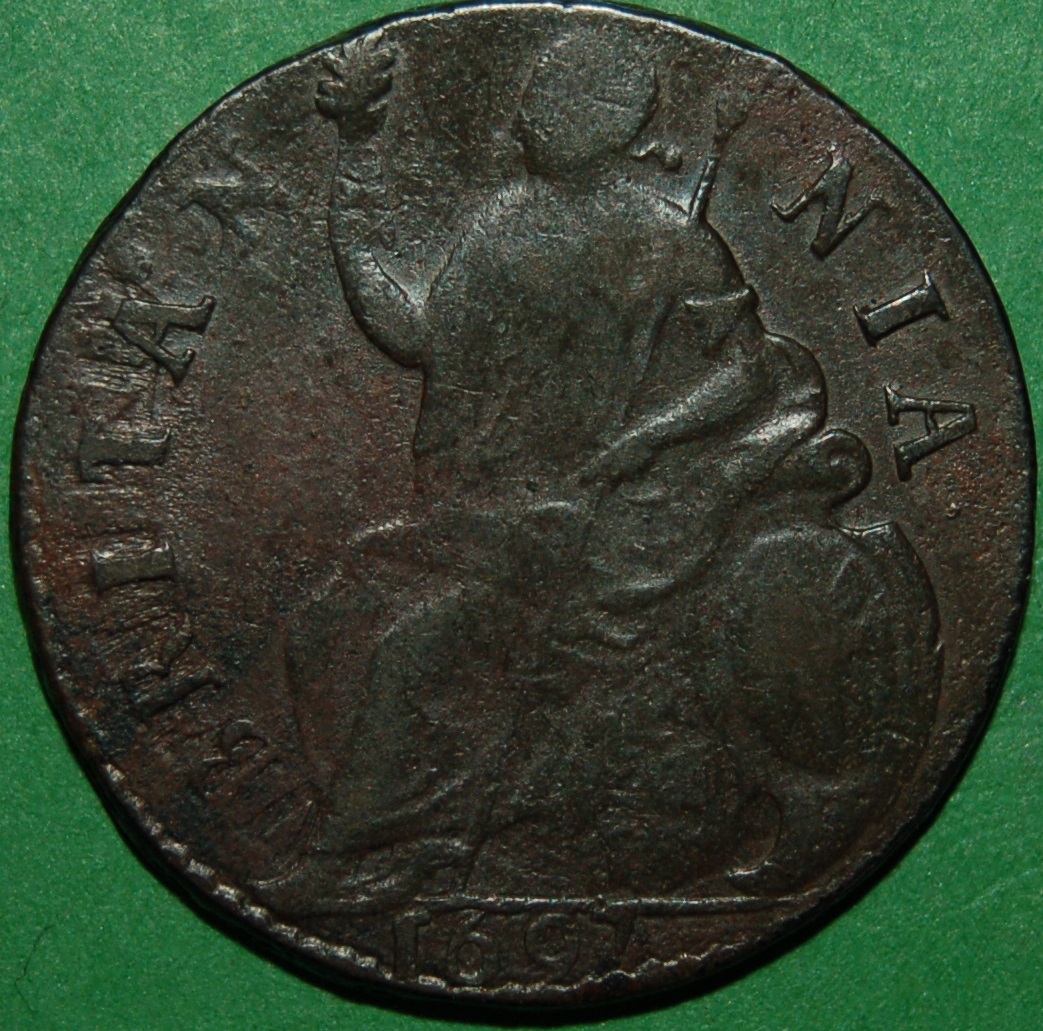
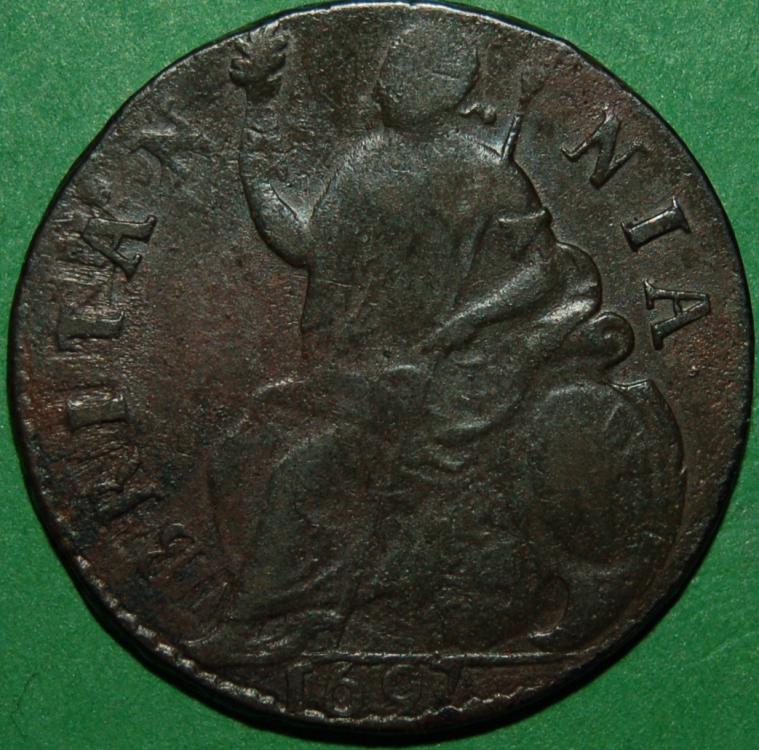
And the reverse. Clearly not a thing of great beauty, but it is what it says on the label.
-
Peck's 1697 I/E in TERTIVS. Also ex Nicholson.

-
And the reverse

-
Nicholson's 1700 GVLIEEMVS

-
Missed a trick by not buying Nicholson's 1719 when it was cheap. This is the third example after Peck's coin and the Rogers coin which surfaced out of Baldwin's basement. It is the example that surfaced in a Brand sale in the US in the 1960s. He had obviously picked it up sometime around WW1, probably in 1912.
-
Let's see your best George II LIMA silver!
Rob replied to Paulus's topic in British Coin Related Discussions & Enquiries
Only have a halfcrown. Sorry about the scan only
-
And the reverse.

-
Actually, both the above ticked boxes. The first as an example of a double obverse, and the second as an example of a George II coin. Notwithstanding that, I have gone overboard keeping the first issue G2 halfpennies with both silver and copper proofs and 1732/1 all falling into the too nice to sell category, a GEOGIVS because I've had it for ages though is only EF, and the 1734/3 retained simply because I have only seen three with the next best only in the good fine ballpark. The 1738 appears to be the second best of seven I've noted so far. There will be more unaccounted for, but it's not that common because I sub-conciously look for them as the variety is clear down to below fine grade. The 1738 in the April 1986 sale at Glens looks to be better from the description with lustre as well. For a change, George I. 1719 first issue halfpenny.

-
Marketing. We all complain about costs relative to intrinsic value, but who is to say that our collections have any premium to this either. There is a market amongst some who feel they are worth more than bullion. The cost of manufacture dictates that the initial retail price must exceed spot. In fact, everything you buy costs more than the spot price of the raw materials.
-
They are buying the label. It matters to some that the genuine Chinese non-circulating bullion is what you have compared to the Chinese bullion copy of the Chinese bullion
-
Didn't pay attention. A lot of indifferent material made a lot of money today.
-
and the reverse.