
Rob
-
Posts
12,969 -
Joined
-
Last visited
-
Days Won
384
Content Type
Profiles
Forums
Events
Downloads
Store
Gallery
Articles
Everything posted by Rob
-
How much literature do members have and use?
Rob replied to Rob's topic in British Coin Related Discussions & Enquiries
I hadn't thought about doing Peck. The problem with Peck is the amount of material held in museums. Very often there are no examples available, but if you don't know where the coins are you are on a hiding to nothing. DaveG was able to do his in depth study of 20th century coinage bacause there is so much material around and it is cheap to acquire. Hoovering up adequate quantities of pre-decimal research material is by now financially impossible. Just acquiring the coins for my article on the Weyl patterns cost a 5 figure sum for 14 pieces. The total population is around 100 coins. To get all those not in museums would have cost about £100K at yesterday's prices, more today. It isn't going to happen. That is why I thought I'd start with Davies which has greater depth than ESC, but is modern enough to mean there is a good supply of (and interest in) available material. -
How much literature do members have and use?
Rob replied to Rob's topic in British Coin Related Discussions & Enquiries
Right, a partial solution to the question of updated references starts here. Yesterday I completed the acquisition of all Peter Davies' unsold stock of BSC together with his artwork and notes for varieties not covered in his first edition and I also have the rights to do a second edition. Anyone requiring copies of Davies' work, please contact me. I think that a more useful initial publication would be an addendum incorporating the recent discoveries together with as large a number of legend or date varieties as possible given the demand for such items. I would restrict it to design differences and punched errors that have been corrected rather than the multitude of varieties arising from refurbished dies (such as double or triple cut letters which I believe are the product of trying to reinforce the die in too hard a state. I would also include patterns produced outside the RM. I would also keep the format previously used as far as possible to give continuity. This would mean that the existing copies of Davies would not become irrelevant as the original book is in any case good for at least 95% of all the coin types covered in the initial publication. Given the number of legend errors that have been corrected I estimate that this would give a book of similar size to the existing volume. The question of whether it should be hard or softback is open to debate. Obviously hardback is preferable because the cover would protect the contents, but this comes at a cost. There is a much greater interest in Davies varieties as a result of auction catalogues including the references in lot descriptions and this should also increase demand for varieties. The problem with references and the level of detail is that each collector has different collecting aims. As it would be impossible to tailor a book to an individual's taste, I feel that all that can be done is to produce as much detailed information as possible, whilst leaving the individual die studies to the specialist who is interested in individual punch identification or double and triple cut letters. I would not propose to include prices other than to note what an example of a singly recorded variety made at auction as any pricing is applicable only to the date of the sale, and in any case is adequately covered by Spink, CCGB etc. The pricing could be replaced by any notes of interest. I am not going down the rarity route because I don't have access to sufficient collections to make a meaningful assessment. A similar volume covering early milled prior to the 1816 recoinage is also a possibility as this would expand immensely on the contents of ESC. Thoughts anybody? -
CGS grading service
Rob replied to HistoryTreasures's topic in British Coin Related Discussions & Enquiries
Or a bit of chemical help along the way. Whilst no one disputes the ability of coins to acquire really attractive toning in time, the American fad for 'monster toning' seen amongst some collectors has resulted in a ready supply of chemically assisted toned products at grossly inflated prices. Caveat emptor. -
Or the supply of really large accumulations required to do such a study ran out. How many people would be likely to store 10 or 20000 pennies - a dozen maybe? Once they finished there was no ready supply of fresh accumulations to process, so the studies ceased.
-
CGS grading service
Rob replied to HistoryTreasures's topic in British Coin Related Discussions & Enquiries
I've had a couple dozen NGCs that were incorrectly attributed and which I cracked out. Checking the label is a really good way of getting a bargain, because they get it wrong on a regular basis - usually failing to identify a rare feature. My 1839/41 proof halfpenny in the unlisted varieties section springs to mind as an obvious failure; or Hus's 1844 1/3 farthing described as a half by PCGS despite not having the words HALF FARTHING in big friendly letters on the front (with apologies to Douglas Adams). -
CGS grading service
Rob replied to HistoryTreasures's topic in British Coin Related Discussions & Enquiries
7, 70 or 700 point grading, beauty was, is and always will be in the eye of the beholder. If I like it I will buy it and if I don't I won't. The problem with collecting by numbers is the conumdrum posed by what to do with the VF coin that is as good as they come - but if you get it then your average score is dragged down and that's an egotistical dilemma. Going to a 700 point system would unquestionably be wholeheartedly embraced by the number collectors because it gives x9 more chances to claim the superior coin. -
This is silly. It is probably cheaper to buy up all the grotty 1887 sixpences than it is to make the casts and manufacture replicas. Bizarre.
-
1889 Small Jubilee Head Shilling query
Rob replied to Rob's topic in British Coin Related Discussions & Enquiries
First of all a scan isn't the best, but the detail as described does show in the hand. As to how much of the old character remains after modification depends entirely on how well the old figure has been filled and the new one cut. I don't know how they filled the original hole. It may have been by pouring a miniscule amount of liquid metal into the hole or alternatively it was done by packing the character with a solid piece of metal and hammering it into the die until compacted. Thinking out loud, I would have expected them to heat the die to such a temperature as to soften the metal and fill it with liquid at this temperature - maybe hammering it home with a small flat tool, but I've no idea whether this is what was done. Alternatively they could pack it and melt the metal locally on the die if the technology existed for such fine welding. When the original character is filled, it frequently leaves a thin line or the remnants of a thin line at the junction between original and new metal. This can show up as a slight depression or a raised line or anything in between depending on the quantity of filler used. This is seen on my 1675/3/2 halfpenny in the confirmed unlisted section where the base of the filled 2 is a slightly raised line. When the new character is punched in, the depth of the hole and the quality of the fill will have a bearing. If the new character is deeper than the original, then you will obliterate any trace of the original. If the new character is shallower than the original, you can get an impression of the original superimposed on top of the new character detail. For an example look at the 1807/6 proof halfpenny thread. In that instance, the outline of the 6 is seen above the new 7 as a result of the filled die not having been smoothed out properly. The 7 is also seen with 6 detail on the top of the 7 relief (i.e. the 6 wasn't filled to sufficient depth or completion to eradicate the old character and so you see the traces of the original design as well as the new digit. It's quite obvious on many overstrikes if you take the time to look carefully and relate the position of the various marks. 1889/8 halfpennies spring to mind where there are 4 dies I think with the overstruck digit. My 1862/26 1/2d is another example. In the hand it's bl*****g obvious even if scans don't show a feature up well. -
1889 Small Jubilee Head Shilling query
Rob replied to Rob's topic in British Coin Related Discussions & Enquiries
Here we go. The outside angle of the 7 is clear in the hand as are 2 blobs at the right hand side limit of the upright, a raised portion just to the right of the ball on the narrow section of the tail and a small protrusion at the left hand limit of the top bar. For those collectors of all possible die varieties, the potential cost of completion just went up a bit.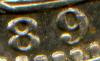
-
CGS grading service
Rob replied to HistoryTreasures's topic in British Coin Related Discussions & Enquiries
TMA -
CGS grading service
Rob replied to HistoryTreasures's topic in British Coin Related Discussions & Enquiries
NGS? NGC is the other main TPG in the States. -
I'm not sure either of them is a proof yet. The first looks a better candidate than the second but neither coin has the clarity of detail of either my coin or John's which you will note come from the same obverse die. The number of dies used is an issue here. You would not expect there to be more than 2 or 3 dies used over the period in which the sets were struck and so any new dies that don't correspond to confirmed proof dies give rise to concerns. Nicholson's proof 1/2d is struck from different dies to mine & John's and neither of your two coins are from either of our confirmed proof dies.

-
Old 1933 Penny Article
Rob replied to Accumulator's topic in British Coin Related Discussions & Enquiries
£7000 hammer, but lot 275 was made up of the penny plus a proof set 1/4d - 2/6d and so no price is available for the penny as a stand alone item. OK, thanks Rob. I suppose it would be possible to roughly estimate by gauging what the proof set would have gone for on its own. Not so easy. There aren't any other KGV proof sets in the the catalogues immediately before or after this sale which matters because prices were on a substantial bull run in the 70s. Proof sets only come up every year or two even today and then you have to take into consideration things such as the 1934 which has no florin and the wildly different prices for sets with or without a crown. -
1889 Small Jubilee Head Shilling query
Rob replied to Rob's topic in British Coin Related Discussions & Enquiries
Thanks. It's just that mine has a larger 9 in the date when compared with the 1 & 8 and traces of a horizonal and angled line superimposed on the 9 together with a small trace of a protrusion on the left side of the top of the 9 suggesting 9/7 -
Old 1933 Penny Article
Rob replied to Accumulator's topic in British Coin Related Discussions & Enquiries
£7000 hammer, but lot 275 was made up of the penny plus a proof set 1/4d - 2/6d and so no price is available for the penny as a stand alone item. -
Could anyone who has an example please check the date for a 9 over a 7 or 8 and if possible post an image of the date. Thanks. As an afterthought, I suppose that any 1889 shilling could be over a 7 or 8, so please check any you might have.
-
Whilst books of prices satify the considerable demands of the the market, to be honest, the production of a price guide is almost irrelevant in today's environment. There is ample data available for prices realised in sales, but the spread of these prices for what is ostensibly identically graded pieces makes choosing a number akin to pinning the tail on the donkey apart from when you are talking bullion. Overhyped prices on ebay compared to just about any other auction would lead to too high expectations on the part of vendors for lower grade material, but equally a high grade or esoteric item will typically not realise its full typical rostrum auction value on ebay because of insufficient trust in the vendor to be honest when grading. When prices are written down they are effectively cast in stone for some collectors as the maximum price to pay which is a little meaningless with regard to what the market is saying. There are just too many variables when assessing grade and condition to ascribe a concrete price. Should price guides reflect the OTT prices paid on ebay for ****, as after all it is the going rate for some people. People complain Spink prices are too high relative to the market, yet I can think of many instances where the prices are too low if trying to reflect reality. There is no right or wrong number that any guide can give and it would be disingenuous to suggest otherwise.
-
Proofs...ummm...they have always been out of my reach...or what do I actually prefer?...an Unc currency or FDC proof? I will stick to what I know until I have Robs millions....and then it would probably be hammered gold and sorting out the best in the world copper 1672-1724 currency of course If only. Though if I did have millions, I'd be into proofs, patterns and currency, hammered and milled of all types big time. Or to put it another way, if I liked it I'd buy it even if I had a nice one already. Current funds don't always run to a type example, let alone one in top grade.
-
If you're going into proofs and patterns then welcome aboard. Sometimes it feels a bit lonely as virtually the only collector of these items on this forum. Come on all you admirers of said items - fill your boots instead of just window shopping, there is enough material out there to go around.
-
That's more like it. Even I could get enthusiastic about a penny with that depth of strike given I need a KN for the collection. The regular offerings are depressing. I've just thrown a handful of KNs that were better than the current ebay s***e. Having said that, it's still got a few marks at the bottom of the obverse and a funny stain on the head.
-
The other problem with it is that coins of Derby, Nottingham and Tamworth are usually inscribed REX SAXONUM (King of the Saxons) as opposed to REX TO BRIT (King of All Britain) because the area was under strong Danish influence and the acceptance of Aethelstan wasn't whole-hearted. There is no way with Edward the Elder having conquered Northumbria in 917 AD that his successor would then strike coins reverting to the viking style of reverse with all its connotations.
-
Something not right here. The obverse read AEDELSTAN REX TO BRI which is similar to the Circumscription Cross issue of Aethelstan (924-939) though it usually reads BRIT. The reverse is a Viking imitation coinage style for St.Peter's Coinage of York, but the sword is pointing in the wrong direction. Dave Greenhalgh does a copy of a St.Peter penny where the sword is facing the same way as yours, but there are detail differences. A mule of the coins of opposing forces in battle is highly contrived. Don't forget Aethelstan routed the Irish of viking descent and Scots et al at the battle of Brunanburh. I don't know where it comes from, but it doesn't make sense and has to be a modern concoction. Aethelstan was king of Wessex, but the York coinage was struck a decade or two earlier. The obverse legend reads King of all the Britons, which is assumed to be following the defeat of the northern forces in the middle of his reign. The actual date of the battle is uncertain. This is more than a decade later than the period in which St.Peters coinage imitations were produced.
-
The grade isn't affected becasue there is no more wear after stamping the initials than there was before. There are a few collectors of countermarks or business stamps, but your normal currency collector wouldn't want one with the stamp unless really rare. So a reduced resale value would apply in the case of something as common as this.
-
How much literature do members have and use?
Rob replied to Rob's topic in British Coin Related Discussions & Enquiries
Usefulness has never had a unit cost. You either need it or you don't. -
1954 Penny Tin Foil Impression
Rob replied to Coppers's topic in British Coin Related Discussions & Enquiries
Not sure about that. Whilst there are apparently accurate mintage records available for every other year and denomination, we only ever read that as far as 1954 is concerned, there is "only one known". Not even sure why that was produced or where it is now ~ can somebody enlighten ? Same applies to the 1952, of course. I don't think the location is a problem for these rare coins as discussed in a thread a year or so back. The numbers produced and reasons for doing so are a little more problematical however. I'd also like to see a better image of the foil impression for example which fills the screen and is taken perpendicular to the coin face as images exist of the accepted unique item, so it would allow corroboration. The only reason people take angled views noramlly is to eliminate flash reflection, but you can easily cover the flash with thin paper to eliminate this.