

Rob
-
Posts
12,948 -
Joined
-
Last visited
-
Days Won
375
Content Type
Profiles
Forums
Events
Downloads
Store
Gallery
Articles
Everything posted by Rob
-
I agree Dave, trouble is they would f*ck it up! Look what the French have done to Roty's beautiful Sower It's a bit like replacing artistic competence with a join the dots book.
-
We're never going to agree on this. It's just a shame - to me - that the wider British public seems to have had its natural insularity reinforced over the decades by outsiders such as the egregious Rupert who promote xenophobia. For once, he is not the main culprit in my eyes. The seeds of anti-European rhetoric were sown long before he became the owner of the gutter press. It goes back to the decision to join the Common Market, which in a short time morphed into the European Union. That is not what people signed up to. At the moment we have a group of politicians that are self serving. The vast bulk of European citizens are nationals, not Europeans. The system cannot work until someone from Paris or Rome or wherever stands up and says that people elsewhere are being severely disadvantaged to the benefit of their home town/area/country(which should have been abolished by this point). It could even be argued that the same people in the best areas of the EU should be proactive in simultaneously lowering their own conditions whilst raising others'. It ain't going to work because nobody wants it.
-
As I see it, the EU forms a powerful enough block to over-rule our politicians, but has no interests in promoting the aims or desires of the British public. Everything is subservient to the self-promoting Euro-politician who have Europe-wide aspirations instead of national ones. Same species of animal, just a bigger version.
-
I'm only interested in a new issue if it was engraved by a new designer. Unfortunately the Olympic 50ps had 26 out of 29 designs by previous unknowns. If the new coins aren't by new designers, I don't need any examples - says he living in hope. I usually end up a year in arrears anyway before I find out who did the work.
-
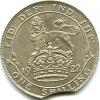 Wonderful.
 -
Crosses Scratched in the Fields of Hammered?
Rob replied to Coinery's topic in British Coin Related Discussions & Enquiries
That doesn't explain why there are also J1 shillings with crosses in the field too. I've even seen the odd Chas 1 shilling with a cross, but generally speaking it ended with J1 -
She wouldn't dream of giving eBay listing fees. Free listings only for the missus with all expenses covered by the minimum acceptable price. Now, if it was possible to align eBay fees with the customer service provided by bypassing FVF and Paypoo fees.............
-
Thanks. I will experiment for the future.
-
I think the situation might have resolved itself. A bid has been placed by the person who was unable to do so in the past. I suspect it was possible all along as I haven't been able to change anything yet.
-
I'm soooooooooooo happy that all I require is an example which is at or near the top of those available (by my own assessment).
-
There are divergences in both directions.
-
Still doesn't explain why someone in Canada is allowed to bid on an item that is not permitted in the US. It can't be the not allowing international postage thing that's to blame as there is no box to tick and Canada is (and always has been) an international destination. Additionally, she successfully sold to a US buyer a month ago. I know why I can't be ar*ed with eBay any more.
-
Interesting Mary Groat - Home-Made Dies!
Rob replied to Coinery's topic in British Coin Related Discussions & Enquiries
Perhaps I should have said does it ring normally when compared with others? -
This is seriously pissing me off. Because someone has bid on the item in question, I don't appear to be able to edit the description or item at all. I was going to add the ongoing conversation to the bottom which would have allowed people to see the relevant email address and also convey the information that it was available off ebay. If you can't see a listed item, it is hardly depriving eBay of business, so they could have no reason for getting uptight. It might come to removing the listings and giving up with ebay for good. If all this is because I haven't ticked a box saying I want to sell the item I have listed, they don't deserve any business. As Tom earlier suggested, it says she doesn't allow international postage - according to the revise item link when looking further down the listing, but why? It doesn't give me a box to tick in the international section. I can't allow what ebay don't offer.
-
Interesting Mary Groat - Home-Made Dies!
Rob replied to Coinery's topic in British Coin Related Discussions & Enquiries
Does it ring? -
Not sure. I've tried searching for her items from ebay US and ebay Canada. Neither show her items in the listings which could be ebay assuming she doesn't want to sell abroad, but then someone has bid on it from Canada, so he must be able to both see and bid on it. Confused! Ebay's option of either collection in person, or a flat postage rate to all buyers means that you are either going to price postage too high for a uk buyer, or ship abroad at a loss. Neither of these is palatable for one or the other. Sorry, eBay is too complicated and S**T
-
I think the difference between 65, 66 & 67 is far greater than that between 60, 61 & 62. Those who collect by numbers will often refuse to countenance owning such low numbers, which equates to reduced demand and hence price. The coins may be more impaired, maybe not. It might be just down to whether the TPG thinks a coin needs to be 'conserved' (i.e.cleaned). The one that is really out of kilter here is the US grade of MS60 (or 61 or 62), where the coin often has a few hairlines and light wear to the high points. This should negate any chance of a 'mint state' attribution, but it doesn't. All of this discussion is simply muddying the waters, because the one thing that hasn't been mentioned is what individual members' comparative grades are when comparing a coin to the grades assigned by the various TPGs - and they are the only ones that really matter. The best that can be hoped for is a grade range from one TPG equating to a grade range from a second. The individual collector can assign his own mental note of what to expect, but what it's called is completely irrelevant. And I might add that all this has b****r all to do with dipping, which was the original question.
-
Clearly a misprunt, but I concur wholeheartedly that the grade range is a bit fluid to say the least.
-
The wife listed a few things on eBay, but someone contacted her from the US saying they couldn't bid from the US because she wouldn't sell to the US (which is crap). She has had US bidders on her items before and they have been able to bid and pay ok. Presumably this is eBay throwing a wobbler because you can sell books but not bog-roll to the US, or vice-versa if the book is a bible. However, I can't rule out the person asking the question being the problem and trying to get it delisted, so they can buy the item off eBay on the cheap. (I can always sell things via the website when eBay becomes dysfunctional if all else fails). Hopefully someone who sells on Ebay has a few ideas given eBay's dedicated policy of not doing customer service. Ta.
-
For All You Decimal Fans
Rob replied to davidrj's topic in British Coin Related Discussions & Enquiries
Forget the R numbers. All are guesses when it comes to populations. Nobody has done a proper study in most cases, with everyone relying on what has been written before. i.e. they may, or may not, be R18. Edited to add that in this case R18 is probably correct. They are certainly commoner than R19, but I don't have sufficient records to make them R17. -
...and The Daily Mail, which does all the European thinking for a vast swathe of the population. At least they do slightly more thinking on Europe than the 3 'main' parties Should be 4 main parties. Lab & Con only discuss if pressed very hard. Lib Dems reject criticism & UKIP reject anyone who doesn't criticise. And so the debate stagnates. Most discussion takes place amongst the general populace.
-
For All You Decimal Fans
Rob replied to davidrj's topic in British Coin Related Discussions & Enquiries
Surely the fact that the pieces are not the best should be a good negotiating tool? TBH, I would be surprised if anyone wanted them at all with the obvious corrosion/wear. I'm not saying the decimal point should be shifted, but a hundred or two off the price would not go amiss. -
...and The Daily Mail, which does all the European thinking for a vast swathe of the population. People who subscribe to and read the tabloids get what they are told they deserve.
-
For All You Decimal Fans
Rob replied to davidrj's topic in British Coin Related Discussions & Enquiries
There was a considerable amount of interest in decimalisation in the 1840s, 50s & 60s of which the 'Godless' florins were the first issue proper. There were also a number of florin patterns which you will be aware of and other cent(s) pieces. Then in the 1850s, John Wyon became involved with the production of a series of decimal patterns struck in bronze, of which these were part. A decade later there was again a move to instigate a Europe wide currency resulting in patterns for 1 Ducat etc produced by the Royal Mint. There are some really nice designs hidden away within the output which those who restrict themselves to currency will never encounter. With the exception of the florin, no decimal currency was ever released, but thankfully a handful of all the different designs survive. -
For All You Decimal Fans
Rob replied to davidrj's topic in British Coin Related Discussions & Enquiries
They aren't the best examples. Make an offer for £500-550 for the 2c and £600 for the 5c if that makes the budget easier. I don't need either having better examples of both, but thanks for the heads up.