
Rob
-
Posts
12,974 -
Joined
-
Last visited
-
Days Won
386
Content Type
Profiles
Forums
Events
Downloads
Store
Gallery
Articles
Everything posted by Rob
-
Sorry, can't remember what dot to dot refers to - a clue would be good. All 10 pences have a beaded circle of dots inside the rim which can be joined using a fine pen. The larger, old style coins are easier to work with. Here's one I did earlier.

-
I want a mint state Godless and haven't seen one in the past 6 months. I thought I just wasn't looking hard enough. Hello Potlings. There was a really nice 1856 slabbed PCGS 65 in London Coins 117 (2007) which I stopped bidding on and have regretted ever since. I haven't seen one like it since. Super coin with a greenish tone.
-
 You often get people with chequebooks at fairs, particularly older customers. The other option for the buyer is to take what potentially is a very large wad of cash. To take cards on the spot you need some means of connecting to the card processor which involves a card reader which you can plug into a phone with an internet connection. Many dealers don't have a website, so card payments are not something they would consider.
 -
It's just a variation on a theme. None of us has the ability to save people from themselves. If you don't want to see people being ripped off, all you can do is ensure you don't engage in nefarious activities yourself and casually point things out if engaged in an exchange of views. What you can't do is stop CGS making a business out of grading and slabbing. Every business on this planet provides a product or service that customers perceive as being too difficult or time consuming for them to do, or else they have convinced themselves that they need whatever is on offer. All of us rely on others to provide the items or functions that we are not self-sufficient in. Being charged £200 for something that will return a tenner and feeling a t**t is the best education anyone could get. Less useful would be you to save someone the grief this time round, only for them to make an even greater mistake the next time. Being told something isn't as educational as a kick in the b******s.
-
Dealers might accept cheques from people at fairs, but only ones you know could pass a cheque over and take the goods with them. Everyone else waits.
-
Spink give £275 fine and £700 in VF (which doesn't come into it). It doesn't make fine in my opinion, so work down from the first figure to say £200 tops. Based on prices, this is one of the commonest varieties of 1/4 noble. It would be a rarer type if the pellet in the centre was replaced with an E.
-
Not entirely! The banjo player is my best mate's daughters boyfriend so they all know my secret...if you know what you're looking for, which of course most of you won't, you can see my hair bouncing around far left through most of that vid. They will be back at the Prince Albert Stu, I'm sure, so we should organise it... Given you didn't show your face, even deciding which hair was yours in that company was a big ask.
-
Welcome. Florins are not the easiest to collect if you want mint state pieces. If you do - then the best of luck. If you don't, you should do ok.
-
Perhaps I could pay you $1.75 plus postage to have a look at them after you? I'm just saving up a few images from eBay past sales, and I'd feel confident in saying the better ones are cast complete with the full edge attached to the obverse, with the reverse inset into it. That's me spent up for the month. Can't afford anything until Slaney 2 now.
-
Just ordered one each of the two varieties of Northumberland currently available on Alibaba. At $3.50 for the pair including postage it seems to be the easiest way to reverse engineer them.
-
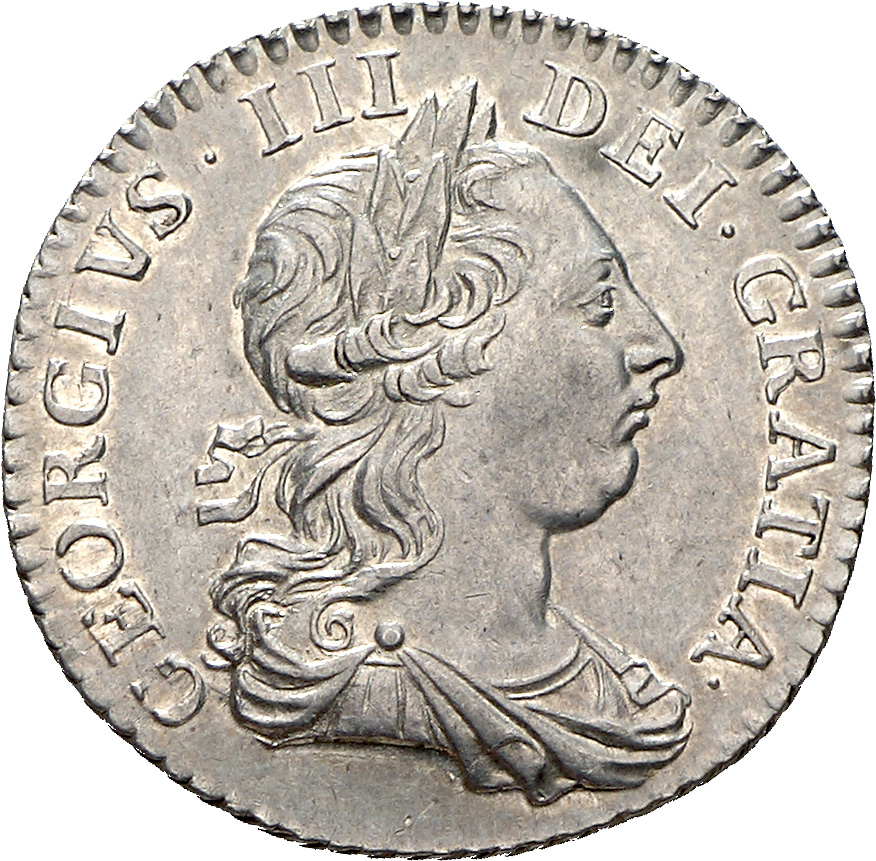
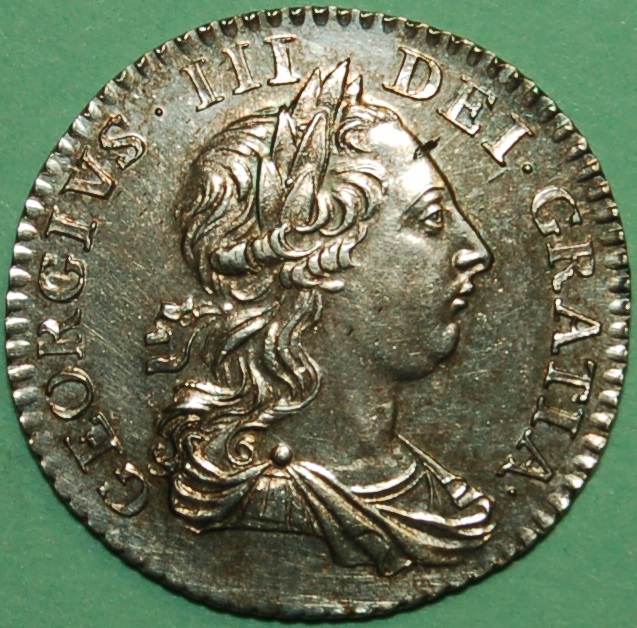
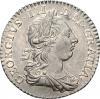
Here's another I've borrowed with the owner's consent for the purposes of this exercise. There is a fine, but sharp flaw leading out from near the base of the first G which crosses the first depression up in the drapery folds before ending at the vertical straps. That is on my coin too, but doesn't appear on the obvious fakes. Trying to sort out when that appears will help with the chronological indicators. There is also a flaw which forms across the tops of the right hand letters in reverse from AIT, then dips slightly to cross the A at the inner apex of the two legs, then out to the top of the R, continuing in an arc to join the teeth and on my coin ends at the tooth to the left of the stop. This is seen on most examples if I recall, but this last one is not on the attached image, suggesting an early strike..
-
One thing that stands out on the obvious fakes on the previous page is the shape of the 3 top laurel leaf tips. All appear to be slightly rounded whereas the ones that purport to be ok are quite pointed.
-
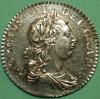
The problem with the image taken from Greuber is that I have to try to hold the page flat whilst taking the image. As it is bound, over 100 years old and in immaculate condition, I don't want to wreck the binding. I've got a Northumberland, but isn't the best, struggling towards aEF. It has a broken G, O and R, but is also slightly mistruck below the clasp and has a haymark, which when taken with the milling (middle one of the three edges above), inclines me to believe it is kosher. Mistriking could lead to defective letters. Pics attached.
-
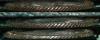
There might be some mileage in checking the edges. Every shilling I possess from W3 up to the 1787 issues with the exception of my 1750 has evidence of apparent double cutting on a short section of the diagonal milling. As this is different on each coin, I'm assuming that it is due to the way the edge was put on. I don't know for certain, but think it was put on by rolling it using Castaing edging equipment or similar where the blanks were rolled along a strip containing the edge required. We know the lettered edges used on the larger denominations were done in this way because you see overlaid letters on the Anne pattern halfpennies (P708-11 and other edges not listed in Peck). e.g. My lettered edge halfpenny reads DECVS•ET•TVTA[M]NNO•REGNI•DVODECI+•+• with only the left hand limb of the M present. These are all unique to the coin in question, so it is not unreasonable to assume the diagonal milling would be any different if applied in this manner and this is what I see on at least a dozen coins over a 100 year period. So the next step to pursue this would be for others to confirm what I have written above, and if anyone has an obviously dodgy Northumberland shilling, to check the milling. Hopefully you can see what I mean with the attached image. It is inconceivable that the copies were made after the edge was applied using the traditional method, so any known dodgy piece should have an edge that is consistent across the copies. It may have a slight mismatch in position relative to the two sides between batches, but the milling profile should remain constant between copies.
-
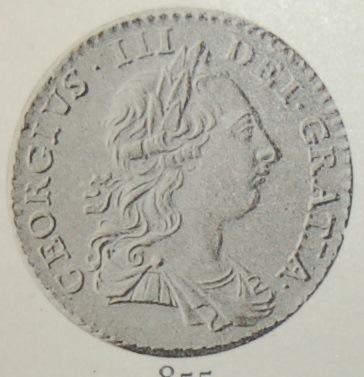
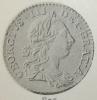
Unfortunately I only have two hands which makes keeping the book open a bit problematic, but this image from Greuber shows the BM's coin in 1899, so the most obvious feature is the die filled R at 9 o'clock. As we can safely assume that this predated the modern copies, it suggests that a blocked R is the first thing to appear (and one would assume stayed for the duration)
-
The most glaring problem is that they look cast even before you get into discussing the minutiae of the fine detail.
-
It's RICARD ON LVND with a ligated AR, but there is so much crud on it that making a sense of the letter shapes is a bit too much like hard work. The reverse looks cracked. Is it like that all the way through?
-
I think it's later than a 5b. I'd go 5g(?) based on the shape of the h, X, crown and rounded chin. What's the mint and moneyer as this will give a good indication of type? Is it yours and if so, is it full of soil which might come off in a gentle wash?
-
Doesn't all email go over the web?
-
I think it might be the normal clearing period of say 3 days as I've had to wait that long to pick up my lots which I won and paid by transfer.
-
We could probably do with a restricted access list of ids where a rip off attempt has been made. I've got a short list of my own where the same person has attempted to pay and the card has been refused inbcluding some where various ids are linked. A good indicator for ebay sales is where their id has been changed in the day or two before the purchase. It is always worth delaying shipping these and contacting paypoo at the same time.
-
'Extremely rare' £2
Rob replied to goomolique's topic in British Coin Related Discussions & Enquiries
Maybe it is part of the QE equation. It would be one way of trying to reassure the pessimists that money is being put into circulation to aid market liquidity, but on the other hand, with nobody accepting them, effectively results in no increase in the money supply - which is of course. not inflationary. -
It has been cleaned at some point irrespective of whether it is genuine or not. Jewellers' rouge in the reverse legend. That might suggest a genuine coin, as modern copies are unlikely to need cleaning.
-
Leaving aside the obvious problems with the item, this listing finished in December. Why is it appearing now?
-
I like how a lot of the Scottish tokens show the city arms. Nice uniface piece!! Is the reverse making reference to any particular figure?? From the death covered mountains of Scotia he come. What a legend. There was a Richard I penny, class IVa that is Ex. W. J. Conte that I missed. It got bid up to near £500 so too much anyway for me. I missed out on an Henry III penny 1b at London (again!). They raised the estimate this time around and it wasn't as good as the last and I was being way too tight-fisted in my pre-bids -- But actually I don't think it was a very good sale on the whole. Anyone agree? That was the one I came second on. As a Richard I it was very good, but when a bid of 460 is nearly 600 with the juice and postage then, well, they aren't that rare and the obverse was slightly double struck. Never mind, another will come along. Apart from that, I was underwhelmed with the offerings.