
Peckris 2
-
Posts
3,662 -
Joined
-
Last visited
-
Days Won
175
Content Type
Profiles
Forums
Events
Downloads
Store
Gallery
Articles
Everything posted by Peckris 2
-

How to tell if coins have been cleaned.
Peckris 2 replied to Coins Of the UK and US's topic in Beginners area
I'm not seeing the images in any of your posts. All I get is a large black square with an X top right to close it, and a small broken square in the centre.
-
Interesting posts, though absolutely nothing to do with Brexit!
-
British Coin Type set.
Peckris 2 replied to Coins Of the UK and US's topic in British Coin Related Discussions & Enquiries
I picked this up for about £200 over 20 years ago: I wouldn't rate it as a thousand pound coin but should be well over what I paid!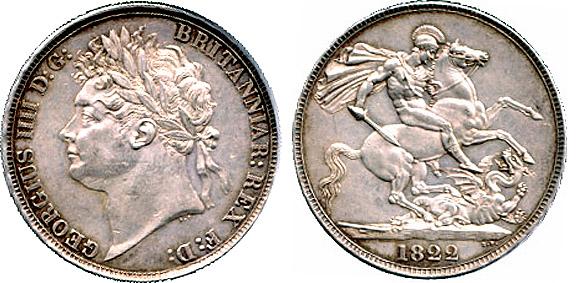
-
Thorburn Collection of 1887 coins
Peckris 2 replied to Mr T's topic in British Coin Related Discussions & Enquiries
Hi. It's this one, identified by @1887jubilee as one of many (minor) patterns of 1887 silver: It's the 6d on the left - note the far 7, and the first 8 with a higher 8 beneath it referred to as a "horned 8" on one example in an auction lot..thumb.jpg.a0ccb57e1a58da43bd448c766ce47842.jpg)
-
British Coin Type set.
Peckris 2 replied to Coins Of the UK and US's topic in British Coin Related Discussions & Enquiries
George IV crowns aren’t so very hard to find and are much cheaper than William IV (the hardest). -
The 1897 dot penny, and the 1946 ONE' penny were given prominence in an early issue of Coin Monthly (beginning of 1968?), and are arguably the most collectable - ironically caused by their comparative lack of rarity therefore giving collectors a better chance to own one.
-
How to tell if coins have been cleaned.
Peckris 2 replied to Coins Of the UK and US's topic in Beginners area
There's any number of online HEIC > JPEG converters. -
Type collections don't just contain common coins!! (I speak from experience..). Also, I do have date runs for a few favourite series, e.g. George V halfcrowns 1927-1936, and bronze pennies 1895-1967, though I don't lose any sleep at all over the odd gap such as 1914 in UNC, but I would love a high grade 1946 ONE' penny so I do take your point about filling gaps. But as I say, I really don't lose sleep over most gaps I have.
-
British Coin Type set.
Peckris 2 replied to Coins Of the UK and US's topic in British Coin Related Discussions & Enquiries
how weird, I'm sure I just replied to this, but where is my reply??? -
British Coin Type set.
Peckris 2 replied to Coins Of the UK and US's topic in British Coin Related Discussions & Enquiries
Surely they must exist? I do remember the Sandhill cases from the 60s, which held each denomination for a particular year. However, if you picked up a few of these cheap for 60s dates (you will want a 1965 which will hold from Crown down to halfpenny, and a 1966 to get the standard halfcrown down to halfpenny), you could adapt them to hold denominations for each monarch from 1816. Otherwise you might have to bite the bullet eventually and get a cabinet, or if that proves too expensive, you could go for Lindner trays instead. -
1972 proofs compared to other proof sets might pay an interesting look - same situation.
-
Spring in Queensland
Peckris 2 replied to ozjohn's topic in Nothing whatsoever to do with coins area!
hey, we won didn't we?! -
USUKCoinFan
Peckris 2 replied to USUKCoinFan's topic in British Coin Related Discussions & Enquiries
Can you please post pictures? It might not be a crown but a coronation medal for example, or a crown struck for one of the colonies. Or even a private mint. -
Do remember this: it's far better to have one UNC coin of a particular type, than a date run in F (for example). Just saying...
-
How to tell if coins have been cleaned.
Peckris 2 replied to Coins Of the UK and US's topic in Beginners area
Google "convert HEIC to JPEG" -
How to tell if coins have been cleaned.
Peckris 2 replied to Coins Of the UK and US's topic in Beginners area
If a coin looks bright and shiny, don't immediately assume it's been cleaned. Here's one way to tell: IF the fields look bright and shiny but the design and legend are not, then it's unlikely to have being been cleaned. However, if the legend looks bright but the field between the characters does not, then it could well have been cleaned. Remember that cleaning will affect the highest parts more than the lowest, especially between the legend. -
I meant printings, not editions. I know about the 1985 edition, but I imagine there may well have been more than one printing of the 1970 edition?
-
I actually have the 1970 edition - I wonder if those errors were corrected in later printings? I bought mine new and I don't remember seeing that insert.
-
George V reverse ghosting
Peckris 2 replied to Peckris's topic in British Coin Related Discussions & Enquiries
Yes - 1920 was the last year they only used the deep cut obverse portrait, which 'sucked' metal away from Britannia, and caused a 'ghost' of the portrait outline which you can see clearly in the top example; it's more common to see between 1911 and 1920 than fully struck up reverses. In 1921 about half the pennies use a shallower portrait which partly alleviated the problem, but it wasn't until the Modified Effigy from 1926 that they reduced the effect to small enough not to worry about. -
Unfortunately, no. Nothing of interest there.
-
Halfpenny ID check
Peckris 2 replied to mrbadexample's topic in British Coin Related Discussions & Enquiries
I've never heard of anyone differentiating between types of 1865/3 - have you ever found a seller who does? -
That's a ridiculous price for what is regarded as the easiest halfcrown to find in top grades of the 1920-26 series.
-
The 2023 50p 20p 10p and 1p are all considerably under 1m minted, so expect to see them on eBay at absolutely crazy prices.
-
Here's what I did in Photoshop:

-
1. Crop the picture so that only the penny is showing. 2. Enlarge it enough for us to see the detail (use a graphics editor or the free one that comes with Windows) 3. Save the jpeg so it's a file size 500k or less.


.jpg.3a54645d7f04e0a1a5c55af9429041c0.jpg)