All Activity
- Past hour
-
 I’ve been on this forum for many years, dodging many people like you, thereby avoiding losing my privileges on here! But, I have to say, you are 100% the kind of game-playing arsehole that a forum of even-tempered, socially-skilled, intellectuals could well do without! I hope you tire of this site soon, and migrate asap to these other sources that acknowledge and endorse your approaches so much more congenially.
 - Today
-
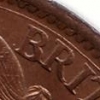
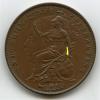
 I think a unrecorded confirmed overstrike variety on a penny post 1864 is an important find which will surely generate interest?
 -
Michael Gouby has confirmed the unrecorded overstrike. The BNS also have the file.
-
🤷♂️
-
I have sent you an email. Thanks
-
 By whom ?
 -
I am incredibly thrilled to share that this coin is now in the process of being formally recorded as a new die variety, with a full technical write-up and formal publication to follow. I want to thank everyone who engaged in the debate; the scrutiny forced a much closer look at the visual evidence. This is a wonderful reminder of how meticulous, independent observation can uncover historic details that are easily overlooked. I'm excited to share the full write-up soon!
- Yesterday
-
 The Standard Guide to Grading British Coins has been in print since 2009, initially as a colour hardback and then since 2014 as a black and white (greyscale) paperback. Some have criticised the black and white images over the years, and rightly so, but re-printing in colour was very costly and I always felt the price of the finished product was too high. But I always felt it deserved to be in colour again, so now, for the first time in about 13 years, a colour version of The Standard Guide to Grading British Coins is available. Price is £20.95 (£2 off the normal £22.95) and it can be pre-ordered here, with delivery later this month and free postage within the UK: https://coinpublications.com/product/the-standard-guide-to-grading-british-coins-colour/

-
- 1
-

-
Stuff to make us Laugh vers.2.0
alfnail replied to blakeyboy's topic in Nothing whatsoever to do with coins area!

- Last week
-
I found my first 1946 ONE' penny today, in the rummage box at Dervaird Farm, Glenluce. It was obverse up on the bottom, looking like it might not have been looked at in years. One of those sublime moments. In view of your message above, I have to thank you for making it an even more desirable coin than it might otherwise have been😉
-
Update on the imminent next chapter; On other forums, I have received nothing but positive feedback about this coin from respected members whose judgment I value. In fact, to date, not a single person has challenged it. Across these platforms, potentially thousands of people have seen the coin by now, and no one has come forward with an alternative technical explanation to my theory—or even attempted to do so. Ultimately, individual opinions do not matter at this stage; the coin is now out of my hands. The entire matter is being approached objectively from both a historical and a scientific perspective.
-
In the last 24 days there was only a single post other than this thread in this section of the forum, imo this thread counts as numismatic research and all the information is relevant to the subject.
-
looks like someone was trying to make an undated one .......
-
Thank you for your help
-
Rare ? No chance there was about 60 million made
-
The problem is the banks no longer take them for exchange, so if impaired in any way, their value has actually reduced to the scrap cupro-nickel price. As with many commemoratives, they were hoarded, so there is no point in getting a worn one if you want it in decent grade. If I can get £3 for a really nice one, I'm happy. Most go in the rummage bin, or the big smelter in the sky.
-
Technically yes, but nothing out the ordinary. If a die is filled with grease (because they are stored that way before use to stop oxidation), then it won't compress when striking coins leading to weak or missing detail. This happens frequently as they use a lot of dies. If the flan is slightly thinner at one point, then it likely means it has been cut from the edge of a sheet, which depending on the amount of metal left for the last sheet say in the batch, could simply run out of metal to use. The sheets for making flans will be squeezed between 2 rollers to get the right thickness, which eventually must result in insufficient metal to fill the gap. It has curiosity value for many, but is a feature that's regularly seen. Someone might pay you a pound or two for it plus postage. For added zeros, put it on ebay and say the decimal point wasn't struck up. I'm sure someone will fall for it.
-
Hi sorry does that mean it’s a mint error
-
Hiya - thanks guys. Rare in the sense that they are no longer in circulation and therefore not legal tender. I know many were made at the time though. yeah when I filtered eBay to items that had actually sold, it seems they don’t go for more than £3-£10 unfortunately. oh well….
-
Or to put it another way. Face value + (£1/ebay price).
-
It will either be the dies blocked with grease, or more likely given the weakness to both sides, a weak strike or a non-uniform/standard thickness flan. Weight?
-
If mint 'error' or just worn? I think it's probably been weakly struck with the result that some detail is not properly formed.
-
They aren't rare. I have no idea what crazy nonsense is on eBay for them, I suspect it's people asking silly prices, money laundering, the usual rubbish (but not actually genuine sales). We have that one valued at £1 in normal used condition in the Check Your Change app: https://www.checkyourchange.co.uk/the-app/