
jelida
-
Posts
1,899 -
Joined
-
Last visited
-
Days Won
115
Content Type
Profiles
Forums
Events
Downloads
Store
Gallery
Articles
Everything posted by jelida
-
F over E?
jelida replied to absence of uniformity's topic in British Coin Related Discussions & Enquiries
Not if use of the alternate letter was intentional, as I explain above it’s just part of day to day maintenance of a die. And also difficult to prove it’s not just partial die fill of the lower limb of the ‘E’ . But it’s a grey area in that some collectors enthuse about mis-strikes and die flaws, incidental dots and dashes and the like. To my mind a true variety is a deliberate planned change in the design on the die, the flan (weight, metal composition, polishing ) or a significant accidental change through the act of man. Obvious date width differences might just creep in in the later years when die to die differences were rarer. And not all variations even if rare attract a premium, desirability to collectors plays a major part along with whether published or acknowledged by an accepted expert in the field (Freeman, Gouby, Sessions et al). Jerry -
F over E?
jelida replied to absence of uniformity's topic in British Coin Related Discussions & Enquiries
Personally I don’t consider the ‘ONF’ Penny a true variety, it is simply a case of die fill and I don’t have one in my collection. However as you say it was described in Freeman - though not deserving of a Freeman number- many years ago and this seems to have lead to it becoming collectable. Jerry -
F over E?
jelida replied to absence of uniformity's topic in British Coin Related Discussions & Enquiries
Die letter repairs such as this are fairly commonplace in the early years, they on occasion used a suitable punch eg F, L, I to restore a filled die when the full letter was not deemed necessary. Gouby covers these with examples in his book. When clear these are interesting but not especially desirable unless an erroneous letter/number has been used - P /E, R/B, G/C etc. Jerry -
Yes, I would have to doubt the existence of a 1903/2 penny at present particularly as the author didn’t show a photograph. I’ll have to find the original article-it might have been an April Fool! Jerry
-
Don’t forget that with commission and postage the purchaser will have paid over £80. But these sort of scarcities rarely appear on the market attributed and most of us find them unattributed at coin fairs, Ebay etc when prices will tend to be lower. The LCA example is the only advertised example I can recall. The value is only what two interested buyers would offer on the day. Would I pay £80 for the LCA coin? Probably not, as a better one will turn up eventually. But £40? Maybe. The 1903 ‘open 3’ and 1911 ‘Gouby X’ are available in low grade much more freely now than twenty years ago, and the prices have fallen dramatically. But for VF and higher there will be a lot of competition; most of these C20th varieties are only really rare and valuable in the higher grades. Low grade ‘H’ and ‘KN’s are cheaper now than they were when I collected as a kid in the ‘70’s. I will try and scan the articles I mention. Jerry
-
These figures are taken from a series of articles published in ‘Coin Monthly’ in August, September and November 1972 and possibly other months as my photocopy only covers up to 1946; ‘Major Varieties of UK pennies 1902 - 1967 giving estimated mintages ‘ by V R Court. I probably have the originals in my workshop, and could check over the next few days. There are also articles in ‘Coin Monthly’ in 1976 and 1977 by A R Alexander which you may find interesting , though like the above mostly dealing with 20th century pennies. I also have a photocopy of an article by Mr Alexander where he discusses a 1903/2 penny he has recently acquired. Not heard of since, afaik. Again I am likely to have the original magazines in store and will see if I can find them. I would think that the 1890 penny is worth the money if it floats your boat. Jerry
-
Me too, over the years. But when you spot a genuine rare variety there is usually little doubt, they shout out at you. As you have shown they are out there but everybody is looking at EBay hoping to strike lucky. I have actually done very well at coin fairs. Jerry
-
I see he has revised the description to ‘not validated’ . I suspect others have offered their own ‘validations’. Jerry
-
Thank heaven the vendor confirms that it is genuine, not a replica! I rest assured 😄. https://www.ebay.co.uk/itm/198243354927?_skw=hammered&itmmeta=01KN2QEJGWGHJW8JGVRHXGCNZK&hash=item2e2839892f:g:EjYAAeSwwP5pzBu5&itmprp=enc%3AAQALAAAA8GfYFPkwiKCW4ZNSs2u11xCdMdsLZrzlKxQyLy1byZLX53r1elvuJN%2FF39HjSTeEV6eWM8XGXpL0nqXXF2nnpzem946gkjE36Mqqfd%2FcS%2FY04ocGPDJeJHJTgnZZRWylpSn3UcChX1ZfxgnWVN0cucnA4xdSNuaHzpYUrwuRDjrkDQveuTwjgPZTedsF7la4rPTS5YtWSWqxbPAxvxFqI824RBtL8fvyDZrLL5rlJgQl%2FHSHTi3ISEmZV2bPtZ5l17h3SfKg%2BBD9rdJz%2Fx44Kdm9o0hbtItqnP5YB%2FWs3MuUlSAXLUKm7Xq9x5WiQnvyig%3D%3D|tkp%3ABk9SR4aputeoZw Jerry
-
Super happy with my new coin!
jelida replied to absence of uniformity's topic in British Coin Related Discussions & Enquiries
You will have difficulty finding any die detail specific to the Heaton mint other than the letter ‘H’ as the working dies were prepared at the Royal Mint from their master dies and sent to Birmingham for striking. The Heaton mint did not develop their own dies. And don’t confuse differences due to die wear, depth of strike, clashed dies etc as differing varieties. It’s a potential minefield. Jerry -
Super happy with my new coin!
jelida replied to absence of uniformity's topic in British Coin Related Discussions & Enquiries
It could be a filled die but I am not convinced of the presence of an ‘H’. Either way, I would want a clear cut example for my collection rather than one that will likely remain uncertain. In terms of grade, don’t confuse the UK grading system with the US Sheldon scale; their AU is more akin to our EF and their EF40 is about our VF. The book you need is https://coinpublications.com/product/the-standard-guide-to-grading-british-coins/ Jerry -
For me the new posts are at the top, below any ‘sticky’ posts so it must be possible. Or you can always click ‘unread posts’ top right. Jerry
-
Note the publisher, Chris Perkins, has just posted on another thread on this topic, there are a few copies of the current Freeman available on the link he provides. Essential reference, and not expensive. Jerry
-
It doesn’t really cover the varieties at all, more to do with the history behind the coinage and details of its manufacture. Michael is still advertising it on his website Michael Coins. For pennies he has a book purely on the Victorian penny series and it’s worth enquiring as to availability, that does cover the varieties. The latest Freeman also covers most significant varieties but not the minutiae. Also possibly out of print, but these do appear occasionally on EBay. Don’t forget that the commoner issues are all still ‘varieties’ and by no means all are easy to find. Jerry
-
Don’t be afraid of acetone, it would be my first port of call unless the adhesive is water soluble. Acetone won’t alter the coin in any way. Jerry
-
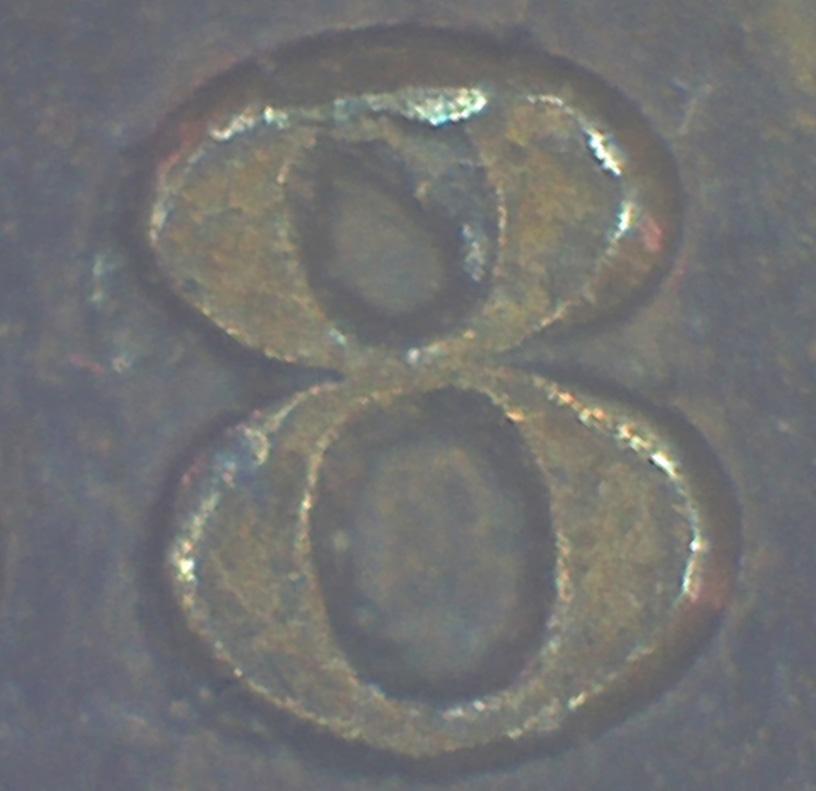
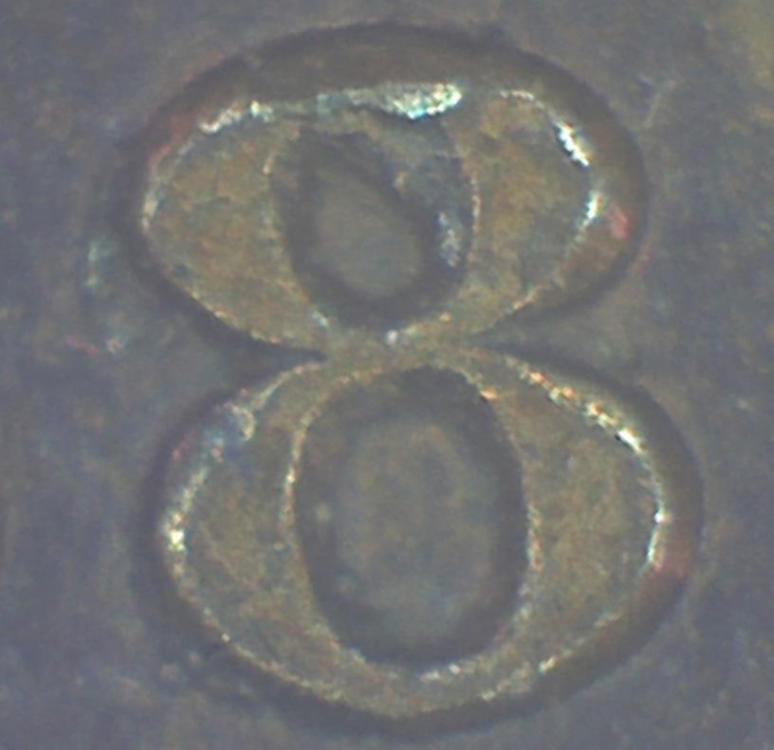
Just revisiting my 1858 5/3 or 5/2, perhaps this was Bramah 25B. Pic attached. Note the limb to the left of the top loop of the 8. Jerry
-
Yes, some people continue to describe an 1858 5/3 for various nondescript overstrikes, doubling etc but it has long been suspected that a genuine 5/3 doesn’t exist. Perhaps likely candidate for Bramah 25B 5/3 is what Gouby describes as 5/? with the protrusion on the left within the lower loop of the 8. There has been suggestion that 25B is over a 2, though of course 1852 pennies were never issued and the survival of an 1852 die for six years until use is also unlikely. That doesn’t eliminate the possibility of an erroneous digit punch being used in a die repair though. Jerry
-
Show us clearer pics when it arrives. Definitely worth a punt at that price. Jerry
-
Somewhere between 2 and 3 grand I suspect, but could go higher on the day. It’s very difficult to predict for these serious rarities as it depends on the bidding of two people who have a gap to fill and really want it. Jerry
-
Well done, another nice spot. In general misplaced repairs with the correct letter/digit are not as heavily collected as those where the wrong letter/digit has been used, but do still carry a significant premium. Gary is a member of this forum, and is a very experienced bronze and copper collector 😉. Jerry
-
The lack of H was the first thing I spotted! And with the gap between R and I of BRITT this looks a genuine one! Stunning purchase, GF details for me, probably previously cleaned but still one of the better ones. Bosh ! Jerry
-
And welcome to the forum. It is good to question any anomalies you may spot as true new varieties are still out there - at least three genuinely significant new Victorian pennies have first been described here over the last decade or so. Don’t be afraid to keep posting and show any interesting acquisitions. Jerry
-
Buy the coin if it ticks boxes in your collection, but not just because of the doubling which is so common as to be normal especially in the earlier years of this coinage. Jerry
-
Hello Jackie, I’m afraid I have to disagree with AI, this doesn’t appear to be a deliberate design and I doubt that it is a coin. As a detectorist, as well as obsessive collector, I have over the years found similar items, some are welding spatter and others the result of molten metal spill. A couple look like silver and are certainly white metal. The pitted surface is the side that landed on the ground, the other is the result of solidification, possibly with some crystallisation . My thoughts anyway. Welcome to the forum, don’t be afraid to post your queries. Jerry
- 1 reply
-
- 1
-

-
Good spot, and an absolute bargain penny. The half is probably Rhuddlan too, the reverse reads OND.ON for SIMOND.ON.RVLA. Found a nice cut half of SIMOND detecting years ago. Jerry