Coinery
-
Posts
8,039 -
Joined
-
Last visited
-
Days Won
137
Content Type
Profiles
Forums
Events
Downloads
Store
Gallery
Articles
Everything posted by Coinery
-
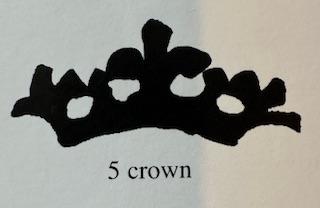
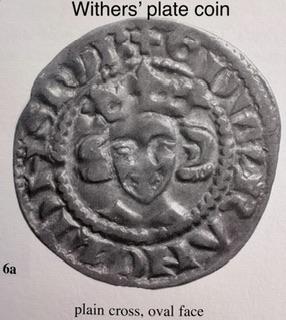
My thoughts: Essentially we have the Class 5 crown (image here from Withers’ Galata Guide to The Pennies of Edward I and II, 2006), common to Classes 5, 6 and the early 7s. Simply put (I think?), if a coin has crown 5 with a pellet on the breast it’s Class 5, and if it has crown 5 with a rose on the breast, then it’s Class 7…all other coins are Class 6 (as I best understand it). So onto Class 6 and some of the things I’m trying to reconcile? Firstly, Withers haven’t divided Class 6a into 6a1 and 6a2, unlike Blunt and North (North in his interpretation simply suggests there is a variety of 6a), which does make some sense given the following. Withers’ Class 6a (or Blunt’s 6a1) is primarily identified by the plain/greek cross and obvious crude workmanship and bust which has almond eyes - the Withers and Blunt images appear to be exactly the same coin for this type (believed to be a best known example, though I’ve yet to see the reverse), with my own (newly acquired) coin from the same die, the only other example I can uncover (so other known coins or images greatly appreciated). There is just one possible anomaly with 6a which I haven’t yet cleared up? The North 6a plate coin looks to be what Withers’ might be calling (at least in their text) a 6b? Essentially they are saying there exists ‘a London [6b] die with B of hYB punched over the initial cross,’ unless of course this also happened in another die they’ve seen? I managed to find a clearer online image of this error on a different coin (highly likely from the same die as North’s plate coin?), appearing to have been sold by Spink, who themselves attribute it as 6a. Maybe it’s a typo in the Withers book, with the line intended to go under the 6a text, or that there is indeed another die with a similar error but on a 6b coin? The North plate coin, and the Spink error-coin image, certainly appear to be 6a coins? Other than this the 6a (or 6a1) looks to be relatively straight forward. However, the difference between the other class 6 coins becomes slightly more tricky, with 6a2 and 6b both sharing a cross pattee initial mark. Withers and North go nowhere near the eyes for 6b, but Blunt states clearly that the two faces used on 6b coins now have pellet pupils, leaving (as far as Blunt is concerned at least) all the almond-eyed cross pattee coins to the rank of 6a2, or not belonging to 6b at any rate. Blunt also marries 6b with long, sloping shoulders and a better bust styling (I agree). However, where does this leave Withers’ 6b plate coin (rounded chin)? This would surely be a 6a2 under Blunt’s assertion? Unless of course these are pellet eyes, and where it gets complicated for me, in view of the example that follows? I’ve seen our own @descartes old 6a2 coin (changed hands again quite recently), which was validated by DG as such, but this appears to me to have something more transitional than almond eyes, certainly less almond than the Withers’ plate 6b coin? All very unclear, and maybe the reason Withers stayed well clear of it? I think the 6b (and the 6a under Withers) is a clear class with its new, stylish bust, long sloping shoulders and pellet eyes, but 6a2, where that one slots in is not so clear for me, even when taking the lettering into account? Anyone want to chuck something in the mix? I’d really like to wrap my head around this one, once and for all!

-
 - Henry viii is a groat - All the coins marked XII are shillings - The Elizabeth I coin is also a shilling - The William and Mary (Maria) coin is a half crown. - William IV also a half crown I’d be very happy to be left that lot edit to add: these are all eBay coins, really, that’s if you were looking to sell? Provided you title them correctly, you will likely reach their true market value on that platform. Of course if they were top grade, you’d want to approach things very differently. Good luck, whether you sell or start to collect.
 -
Ah, OK, thanks Rob, thought we were getting somewhere then…a big ask I guess when considering the sheer volume of the series. Nice coin though
-
So, just had a better look and only just put it all together…all the class 3 Newcastle coins are Es, and all the features of the obverse in combination with the full reverse legend corroborates this. So are we thinking then that this is the 3E from the ‘63 sale? Does it say anything else or suggest a collection? Much appreciated, Rob, as always
-
Thanks, Rob. I’ve not had a chance to fully study the coin itself, it was a quick ‘must-have’ buy. A brief look at the reverse legend of the coin suggests it’s actually a 3E, so could perhaps allude to the ‘63 sale? The only ticket with anything on the reverse is the bottom one in the images. The Seaby ticket is the top right, then, I’m guessing?

-
I don’t suppose any of these tickets leap out at anyone for provenance do they?


-
Yes, I was the underbidder, it would’ve been a very cheap coin for someone otherwise. I’d spent a bit already and equally had my eye on some other things, so couldn’t really chase it too far.
-
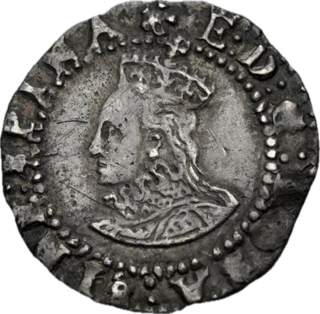
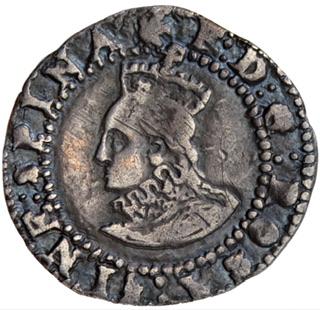
Matching dies for your acorn/eglantine penny, @jelida, sold this month in the US.
-
Ah, ok, many thanks for that…was looking on Richard’s site, too, but didn’t see that example!
-
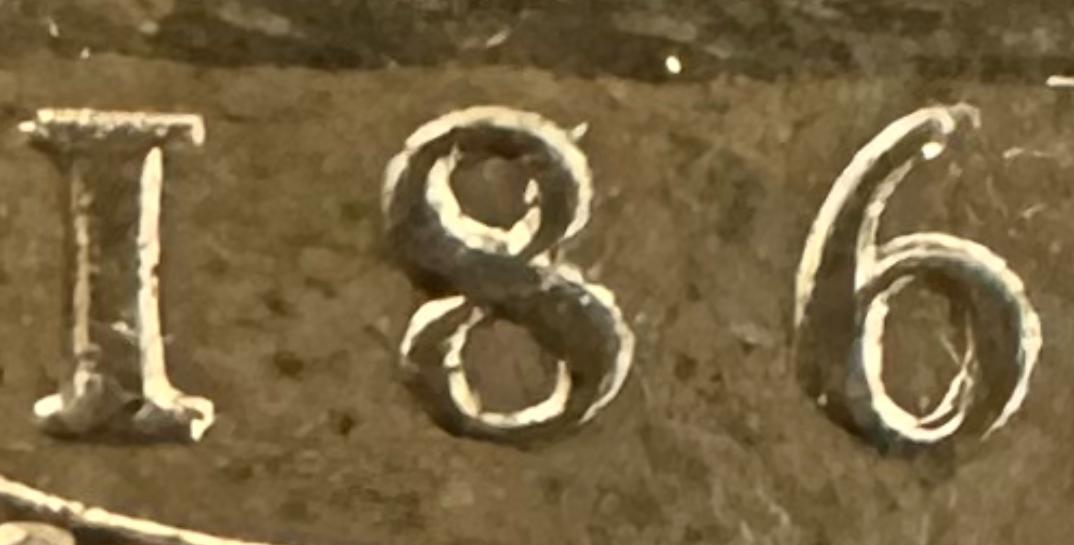
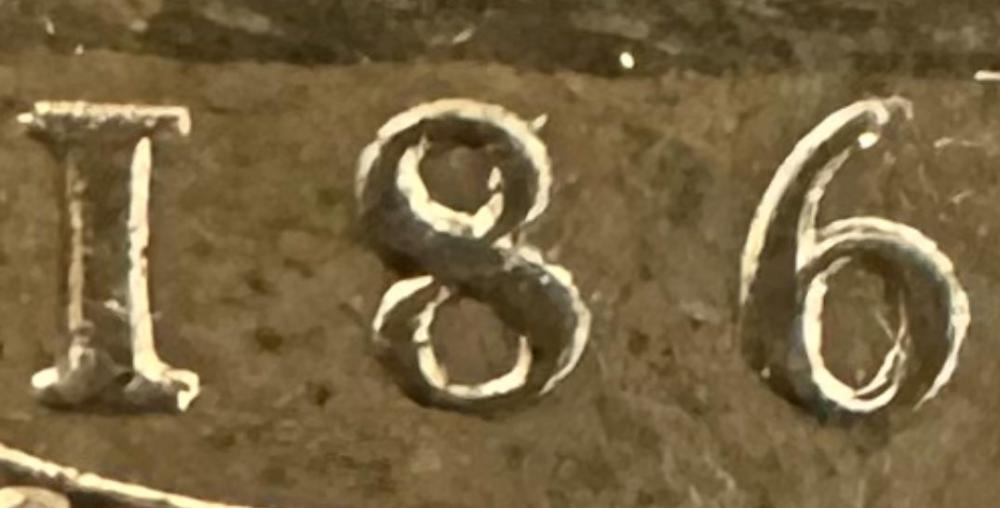
Just picked this 1861 penny up…is it 8/6 or just wishful thinking?
-
London Coins Catalogues
Coinery replied to Rob's topic in British Coin Related Discussions & Enquiries
Absolutely ridiculous isn’t it? What a nonsense! -
London Coins Catalogues
Coinery replied to Rob's topic in British Coin Related Discussions & Enquiries
I love their search engine for past lots, but really struggle with their online layout for upcoming auctions. For me their online experience falls FAR short of the competition. -
It looks like such a perfect ‘bead’ relative to the condition of the donor coin that I’d personally be thinking it was an old ‘spatter’ of something unconnected with its minting…soldering, braising, weld, etc.?
-
Thanks, Peck, appreciate you commenting…not my natural playground at all, and all the more difficult to judge from a poor image. I’m looking forward to taking an in-hand photo!
-
Firstly, can I ask what you think the reverse grade of this coin might be (Sellers pictures, I haven’t seen it in-hand, yet)? The obverse looks a clear unc to me, but the lighting/lustre reflections (or not) on the reverse are making me wonder whether I might have to downgrade that expectation overall? You’ll likely have made thousands more predictions of grade from seller photos than I have, so I’d really appreciate your insights. Oh, and secondly, I don’t suppose anyone recognises it for a bit of provenance, perchance? The reverse, with its die-crack and ‘straight-edge’ toning at the second N of penny, through to the ship, is reasonably distinctive.


-
Ah, yes, I see what you mean. It’s turned into a very interesting read
-
Wouldn’t we have to take the Julian Calendar into account, which starts a new year on 25th March?
-
Reminds us that we’ve come a long, long, way since then…I think? 🤔
-
Ah, just got a fix…it looks like there’s been some updates or other? If you’ve got a tab opened that’s displaying correctly, or click on the home link or pre-dec. link on the broken page, and then re-add it to your home-screen, everything should work as normal…hopefully
-
This is happening on my mobile! The strangest thing is if I use one of my old pre-dec. opened tabs and refresh it, it refreshes as normal, whereas clicking on my shortcut I get this:

-
Anyone else having issues with the forum uploading?

-
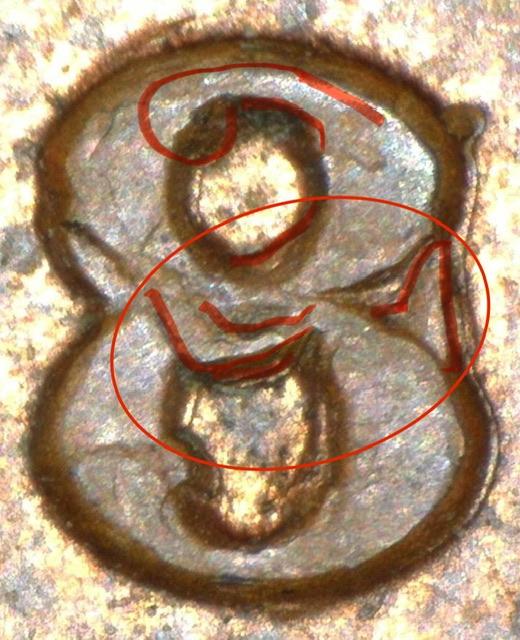
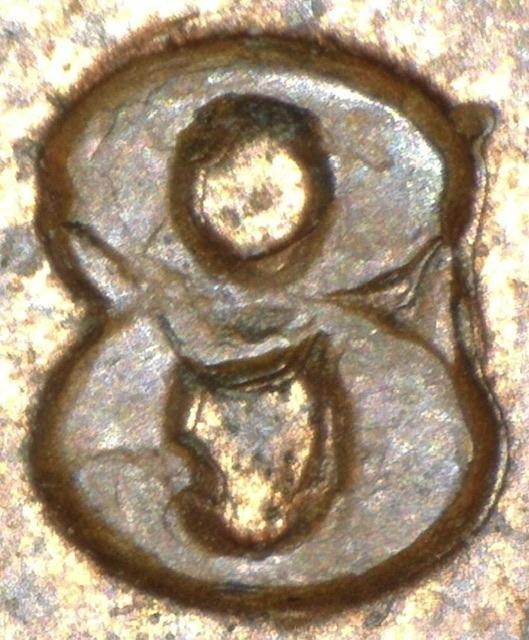
Interestingly there’s an image on the other thread that makes me see a three for the first time, and a clear rear serif of a four! Here’s a proposal…what about an original three, with a four inserted the following year, BUT it broke up during the insertion (bits in the red circle), making the die irreparable/useless until the next useable digit came along to cover up the mess, which could only be an eight or a nine?
-
Yes, that’s the diagonal I was referring to. You know what, that vertical line is far too straight in your example to be anything connected with the ‘curved’ numbers. Has anyone ever considered it might be a four, and that the remaining bottom loop and part serif is nothing other than a poor repair of the eight with an old, possibly broken punch? I’m sure you’ve all been over it a million times already. I guess it’s going to sit on the unidentified variety pile for some considerable time, maybe even forever?
-
So what do they do, then, with the old digit ‘hole’ left on the old die, before striking in a new digit? With hammered coins the old digit is just crudely overlaid as best as is able. Now, the reason I ask is because, according to the lighting, I see digits at three distinct depths, the 8 at the intermediate (middle) depth, a higher (deeper on the die) bottom section of a three (but having the wrong serif when briefly looking at other 1853s), and lower (shallow on the die) diagonal stroke, extending out of the eight, not correlating with very much, except maybe a seven? Was there ever a satisfactory outcome to this overdate or has it remained a mystery?