
Peckris
-
Posts
9,800 -
Joined
-
Last visited
-
Days Won
53
Content Type
Profiles
Forums
Events
Downloads
Store
Gallery
Articles
Everything posted by Peckris
-
Thoughts on Grading
Peckris replied to Bill Pugsley's topic in British Coin Related Discussions & Enquiries
I would hope they gave it authenticity! I bought it at Warwick & Warwick in the 90s, but I can't remember what grade they said. I personally think it's more than Fair, but not Fine. But CGS would be stricter I'm sure. -
but is relatively cheap compared to prices for slabbing. the modern coin collector is spoilt for storage solutions, everything from envelopes of plastic and paper to slabs and coin cabinets........so ultimately the collector will choose their own method. i recognise the merits of slabbing for maybe long term preservation but only time will tell if its completely safe. But Bills main sales pitch is around grading and how the traditional raw market have over/under graded over the years. but then so have the tpg's...there are many examples of tpg's having got things wrong on this forum and elsewhere and so is as questionable with slabs as any raw coin based solution to grading. So the problems for me with slabs...... firstly the desire to have a coin with a numerical advantage over another ( no matter how small) when that numerical advantage actually can mean so little to the coin and its appeal to a seller/purchaser/owner, but can make a huge difference to price. secondly, tpgs only offer another view on grade, grade is very subjective, and whilst tpg's can offer benchmarks to use for justifying grading in their systems.......its still just a view......and who's to say theyve got it so completely right?...maybe all the traditional dealers have got it right and tpg's havent......lets not be hoodwinked here by selling an idealism when good old fashioned grading of f,vf,ef and unc may very well be sufficient for general use with eye appeal to the prospective purchaser. thirdly, the notion that a slabbed coin can increase the value of a coin, well maybe to those who already collect slabbed coins...but for those of us looking at slabbed prices from a raw coin point of view......the prices are ridiculous.....witness Bills recent ebay acquisition of a churchill crown that for the same sum of money could have maybe allowed him to buy 30 or more of the same coin in the same grade. To summarise......ive collected raw coins for over 45 years, i went the slabbed route for a while. i guess im the opposite of Bill.......i learnt a few things though from slabbing.....theyre overpriced..theyre only another storage medium and theyre just another view on grading. Ski "30 or more in the same grade?" - Sorry, did you not read the preliminary comments on my purchase. I am not a novice collector and I believe I noted I had looked at over 100 Churchill Crowns (possibly more). None of them had achieved the quality for the 'overpriced one' that I bought. I look for the finest known - or if I cannot get it the next best possible. I already had a CGS 80 Churchill Crown but a CGS 82 to me was better - because I had not come across one as good! If you can get 30 of the same grade as CGS 82 then it would be worth buying them, paying (currently £11.99 each) to get them graded and then selling them for £30.00 each. If you found one was a CGS 85 or better I would pay £50.00 for it! Make your money back in no time. There are others who value the CGS process (we trade a lot with each other) and I suspect will continue to use it. There are a vast majority that do not like the process of slabbing at all. So be it. My purpose is to explain why I collect CGS encapsulated coins and open up the possibility to other collectors. People will become weary of my explanation of why CGS - I have had coins slabbed by other companies and I have looked at many more of the same. I buy and have bought raw coins from everywhere and the only 'standard' I have come to accept is the CGS process. Even dealers who I believe consistently grade well make mistakes (as I frequently do) - I have opened a thread on Grading as a separate topic in this forum by the way. You are right, each collector will chose their own method of storage. I have used most (although I have never lacquered a coin) and ended up preferring paper coin envelopes and CGS Capsules (and I have explained why in other posts). I have no shame in wanting a 'numerical advantage' for my coins. I want the best possible collection I can achieve. That goes hand in hand with my love of coin collecting. If I have two coins of the same type I tend to keep the best and sell on or trade the other - so why would not knowing a 'numerical advantage' be any different? "Overpriced" - interesting! I do not think the CGS service is overpriced and others obviously do not either. Having recently examined the prices offered by US companies - when you take into account all cost elements, I believe the CGS service is excellent value for money. There are indeed many cheaper ways of storing coins but none come with third party archival pictures of the coins, an optional remote logging of the coins so graded with online access and a download of that information AND with this third party verification the potential for reduced insurance costs. Some people use the archival pictures to show their friends and family their coin collections without having to remove it from any Bank Vault or secure store - so a CGS capsule is not just a means of holding a coin! Bill, if I kept my coins in a bank vault, I would have no problems with them being in a slab. But I'm of the old school that likes to take the coins out every now and then, and hold them carefully and admire them in a good light, and then put them back. As for wanting the "best known example", or the ego boost of my coins being part of the "Xxxxxxx Collection" ... well ok, that's your world, but it isn't mine. Sure, I like to have good examples of the coins, the best I can afford. But not the "best known example". What's the point of that? If a coin brings me pleasure, and is lovely to look at, I simply don't care if there are better specimens out there. I suppose what I'm saying is that there are many different kinds of collector. We know your enthusiasm for CGS grading and slabbing, I don't really think there's any more to say on the subject. We should all be the collector we want to be, "live and let live".
-
Thoughts on Grading
Peckris replied to Bill Pugsley's topic in British Coin Related Discussions & Enquiries
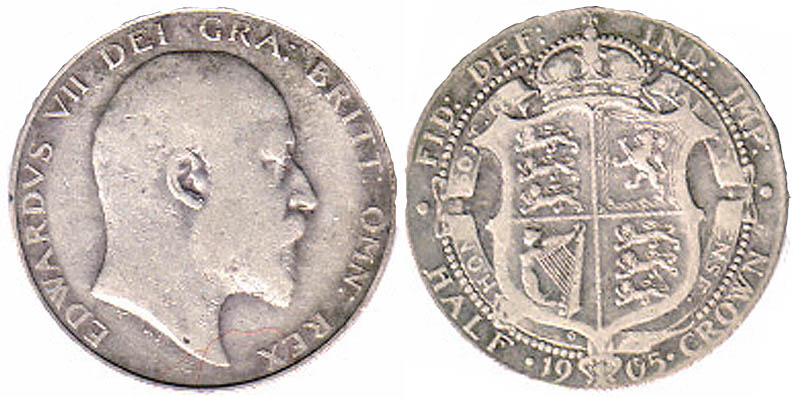
You see that frequently where there are large price differentials between grades. If the seller can manage to inflate the grade by a fraction, it could make the difference of several hundred pounds for a 1905 HC, whereas for a 1902 HC it's just a few quid and probably not worth the effort. How would you grade this, out of interest? I'd grade it as SBTM or slightly better than mine! I've always rated it as Fair+, but I've seen them seriously graded as Fine (CC for example). I suspect CGS would say no more than Fair.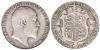
-
Thoughts on Grading
Peckris replied to Bill Pugsley's topic in British Coin Related Discussions & Enquiries
You see that frequently where there are large price differentials between grades. If the seller can manage to inflate the grade by a fraction, it could make the difference of several hundred pounds for a 1905 HC, whereas for a 1902 HC it's just a few quid and probably not worth the effort. How would you grade this, out of interest? -
NEW Photobucket and Ebay
Peckris replied to numismatist's topic in British Coin Related Discussions & Enquiries
Me too, I really hate Photobucket. Dropbox is a good sync'ing service which you keep a separate folder for on your own computer. One of the things you can do (they supply the folder when you download and run the free software) is put photos you want to share in its 'Public' subfolder. Dropbox then uploads the picture(s) and you get URLs which you can share with people. You only get 2 (2.5?) GB of free online storage, but they boost that by 500 MB every time you recommend Dropbox to someone else and they start using it. I'm on 3.2 GB at present but I have no idea where the "point 2" came from! Another site which seems to me to be friendlier than P'bucket, is Image Shack, where you can upload pictures, get URLs in various formats, and choose whether you want the pictures to be public or private. -
Me too - I'm sure he is slowly getting the message!
-
Cleaning Coins...really that bad...?
Peckris replied to Colin88's topic in British Coin Related Discussions & Enquiries
Yeah, but there other sides to that particular coin I found a Julia Domna denarius on an archaeological spoil tip (which meant I could keep it) which was rather grubby. I soaked it overnight in vinegar, it cleaned up a treat, and I sold it to a dealer for what was a "nice little earner" to an impoverished student in the 70s! -
The 'lustre' component of the grading would take this into account, the point was made to me that there wasn't a specific category for 'eye appeal'. I also asked about the location of marks, dings etc, and yes, if there are problems in the middle of the face, for example, rather than half-hidden in some design detail, then these would count as more 'serious' problems and the coin would score less. Would it though, bearing in mind lustre has absolutely nothing whatsoever to do with toning. You can have a deeply-toned coin with obvious full-lustre underneath. My point is you could presumably have two full-lustred CGS coins, one with ugly toning, and one with beauty personified, and they would both come out of the computer with the same grade? You can also have coins that have SOME lustre, which are way uglier than some coins which have no lustre, but an overall dark patina instead. Lustre is sometimes overrated. I wonder if anybody had the idea of slabbing a coin in bakelite? I suspect you were only joking Derek! However, I'm sure that coin collecting back then was for historical and artistic reasons, and there probably wasn't much monetary value above the intrinsic metal and there were certainly no forgers around faking numismatic as opposed to currency pieces. So the whole notion of TPG's would have resulted in raised eyebrows and a very quizzical look.
-
Cleaning Coins...really that bad...?
Peckris replied to Colin88's topic in British Coin Related Discussions & Enquiries
A coin that's been cleaned well, should not be detectable, so you need not worry about those. Coins badly cleaned : Polished : silver coins are highly reflective in an unnatural way, copper/bronze looks like it's been cleaned with Brasso or similar (has a bright, pinkish appearance). Buffed : coin has lots of fine hairlines, especially in the field or flat parts of the design; rubbing marks will be evident. Over-dipped silver : coin has a overall dull, flat, non-lustrous appearance, with no original toning. Any coin that has an unnatural appearance, e.g. rainbow toning, has been treated in some way. You will be able to tell after a long time of seeing coins - experience is the best guide. -
Victoria young head 1882, 1864
Peckris replied to Allwin collector's topic in British Coin Related Discussions & Enquiries
Well that's interesting chaps, because the latter specimen is from the much vaunted Edinburgh collection (although clearly one of the less spectacular items), was graded at "A/Unc toned" and priced at £1250.00. Somebody must have bought it for at least relatively near the asking price, as it's no longer on sale. Personally, I don't think it's either as good or as nice as the earlier one still on sale now. Incidentally, I agree with lower EF for the latter, and about GEF for the former, although no trace of lustre on either. Hmm. If you look at the first penny, there is some flattening of the laurel leaves & the folds in Vicky's bodice, and her eyebrow is half gone. That's why I wouldn't rate higher than EF. -
Cleaning Coins...really that bad...?
Peckris replied to Colin88's topic in British Coin Related Discussions & Enquiries
And there are dealers (I've met 'em) who don't know the difference between 'cleaned' and 'mirror finish', of which there are a LOT in the 19th Century. Good way to tell : The mirroring is all on the surface - e.g. the highest points of the design, the upper surfaces of the legend - while lower parts (e.g. between the letters, or lower parts of design) aren't so bright? The coin has in all likelihood been cleaned, and badly. The mirroring is mostly in the fields and between the letters, while the raised (highest) parts aren't so bright - most likely this is a genuinely mirrored finish, maybe an early strike or using up proof dies. -
Victoria young head 1882, 1864
Peckris replied to Allwin collector's topic in British Coin Related Discussions & Enquiries
The grading sounds courtesy of CC too - I wouldn't rate it higher than EF maximum myself It's what known as a "rarity default enhancement", or "sellers privilege" Peck........ ......and yes, I've just made up those BS phrases !!! Just as a matter of interest, how would you grade this one:- That again I would grade EF, though it's a much clearer picture than CC's. -
As someone established in a recent thread, 'cabinet friction' is a myth traditionally perpetuated by some dealers to account for very slight wear on a supposedly UNC coin. Some of us who own cabinets and love our coins have never seen this effect even after many years. Most antiques are neither unique nor entombed. Actually, I was only responding to the Coin News article (above) that said how slabbing would protect a coin and its value for years to come. As Dave said, people have collected coins for centuries without slabbing, and there has always been provenance - just ask Rob. Yes, but neither an artwork nor an antique is housed in a plastic slab, which was my point. Unless you're Damien Hurst, of course!
-
This was my favourite : "Mint State Also Uncirculated. A coin in the condition in which it left the mint. Never circulated. IN THE BEGINNING there was the word Uncirculated, and it was good. Then, over time, God created adjectives to modify His word. At first he proposed but two: Choice and Gem. Apostles, like Q. David Bowers, hoped to affix a third: Select. However, Select failed to adhere. Then, when God's adjectives proved inadequate, a numbering system was devised. This numbering system the Apostles borrowed from the Order of Large Cent monks. Up to 1976, Mint State numbers for Large Cents included 60, 65, and 70, with 70 meaning full mint red. These numbers were pressed into service on other coin types, then modified and augmented over time. Mint State was called 60; Choice, 65; and Gem became 70. Later, 70 transmuted into Superb Gem (a glorious new adjective). Finally, the ultimate grade of 70 evolved to mean God's Own Perfection. Intermediate numbers therein followed: 63 arose earliest, in the later-1970s; a few years on followed 64 (when 65 proved too weak to distinguish the fine quality shifts in a Mint State coin). Eventually, all eleven integers found their way into the numismatic liturgy: Mint State 60, 61, 62, 63, 64, 65, 66, 67, 68, 69, and (now rarely seen) 70. IT CAME TO PASS that other disciples hit upon the idea of adding a small 'PQ' to the number to signify Premium Quality. Still others bethought they could see thine selves reflected in the field of certain Morgan silver dollars. With this, prooflike was born. Eventually, those wanting separation from the rabble of everyday prooflike collectors enlarged the term to include 'deep mirror' prooflike as well. And so, from its lowly beginnings as a single usage, the grade Mint State--in the case of silver dollars at any rate--has come to include one of sixty-six possible permutations. Is that, or is that not, progress?"
-
Yes, but neither an artwork nor an antique is housed in a plastic slab, which was my point.
-
Victoria young head 1882, 1864
Peckris replied to Allwin collector's topic in British Coin Related Discussions & Enquiries
The grading sounds courtesy of CC too - I wouldn't rate it higher than EF maximum myself -
As someone who remembers the CloudCuckooLand absurdities of the late 60s (in hindsight), then the answer is patently NO, not necessarily. Damn right, Dave. And do we see art buyers demanding a picture be authenticated and sold in a plastic tomb? No, we do not. Antiques buyers? Nope. Stamp collectors? Nope. It seems only coin collectors cannot be 'trusted' to do their own research, and hence are 'sold' the notion of slabbing. Even the idea that 'slabs give confidence' is a piece of hype that on closer scrutiny (i.e. comparison with just about any other sphere of collecting), simply doesn't hold water.
-
Maybe I'm showing my age (shaddap Dave ) but what's Casdon Soccer? Sort of like Subbuteo?
-
Victoria young head 1882, 1864
Peckris replied to Allwin collector's topic in British Coin Related Discussions & Enquiries
NOW they show. What the f.......?

-
Victoria young head 1882, 1864
Peckris replied to Allwin collector's topic in British Coin Related Discussions & Enquiries
To give you some idea of what a high grade (and therefore valuable) 1864 penny looks like (courtesy of Google Images) : This is weird - both attachments are there when I "Edit" the post, but they don't show when I "Save Changes". What's going wrong? -
Unidentified shortcross halfpenny...
Peckris replied to Mr_Stephen's topic in British Coin Related Discussions & Enquiries
Richard the brutal terroriser of French towns, never in his own kingdom, "lionised" by later generations, and a right bastard by all accounts -
I'm sure Mrs Peter would have something to say about that At the risk of sounding stupid how does a coin end up with a reverse which wasnt used for another five years Not stupid at all. We had a long thread a year or so ago where we discussed this very thing. There was no firm conclusion reached, but the mystery is how there are both extremely rare 1922 and possibly unique 1926 ME pennies with that reverse. There was a new reverse introduced with the 1925ME halfpenny, and they also experimented with a modified reverse on 1925 sixpences. So the big question is not WHY, but WHEN. The main 'why' is - if that reverse was being experimented with as early as 1922 - that it didn't get put into general use until 1927. However, bear in mind that no pennies were minted in 1923,24,25, and there was only an interim low mintage in 1926. It's quite possible that with all the work being done to get the 1927 issues ready, the penny reverse was made low priority. Halfpennies were a higher priority with continuous demand, hence the 1925 reverse, and farthings weren't affected. So I'm guessing they experimented with pennies over a long low-demand period.
-
Oh wow, oh wow, oh WOW Mind you, have you tested it for gold - I believe there's a gold one out there somewhere?
-
Old penny
Peckris replied to Allwin collector's topic in British Coin Related Discussions & Enquiries
Me too. That well and truly trumps my ABU 1951 brass 3d and GEF 1888 sixpence in a 20p box at the Midlands Fair. -
It would be very very very difficult to choose just one. But the GEF (AUNC?) 1797 twopence would make a strong case for itself as it's probably my favourite design.