
1949threepence
-
Posts
8,081 -
Joined
-
Last visited
-
Days Won
262
Content Type
Profiles
Forums
Events
Downloads
Store
Gallery
Articles
Everything posted by 1949threepence
-
It would appear that a certification service began with ANACS in 1972, but that actual slabbing did not start until PCGS commenced operations in 1986, and NGC followed in 1987. So you were spot on Peck. link Here's an original holder:-
-
Just noticed this. I never realised slabbing had been around that long. Always thought it was a very recent development - this century even. Well, you live and learn. Thanks Peck.
-
adding a link to posting
1949threepence replied to blakeyboy's topic in Forum technical help and support
Let me know if you have any issues and I'll walk you through the process. -
Thanks Stuart. I may well give that a whirl.
-
People were paying for "rolls" of 1967 pennies etc. Crazy when you think about it now.
-
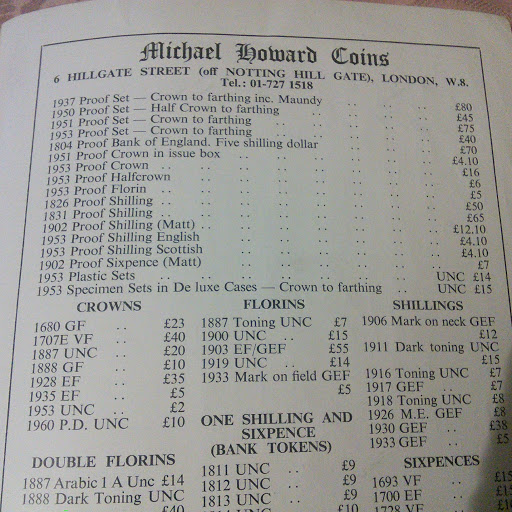
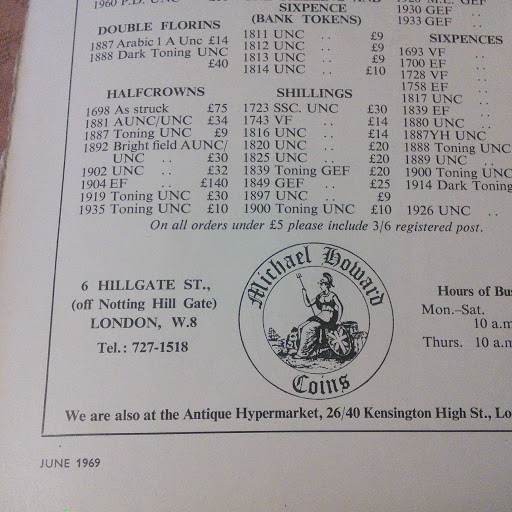
Using an inflation calculator that £140 in 1969 would be £2190 today. The 1953 plastic sets you could probably get for the prices asked then, in absolute terms today. After inflation £14 in 1969 would be £219 !!! Late 60's coin boom. I suppose the other factor which pushed up prices was sheer availability. No internet then, which made collecting more difficult.
-
Penny reverse ID please.
1949threepence replied to mrbadexample's topic in British Coin Related Discussions & Enquiries
Definitely Freeman 73 and Gouby j. Gouby ja is a variant of Freeman 72 and doesn't have an H under the date. With apologies for the quoting issues. Not sure what's gone wrong. -
Here's an ad for Michael Howard Coins from the June 1969 edition of Coin Monthly:-
-
Penny Acquisition of the week
1949threepence replied to Paulus's topic in British Coin Related Discussions & Enquiries
Nice one Richard. -
Thanks Jerry.
-
Not sure how common it was, but I understand it was done to preserve lustre. If so, it's not worked in this case ! Frightening what used to be recommended for coins.
-
Thanks a lot, Paddy. Very useful observation, work & info. Much appreciated.
-
Thanks Jon. I can't see any trace of anything in particular. The obverse seems quite shiny, and I'm not entirely sure whether in a natural way or not. There's no trace of lustre on the coin, which you might normally expect for one in a decent state of preservation.
-
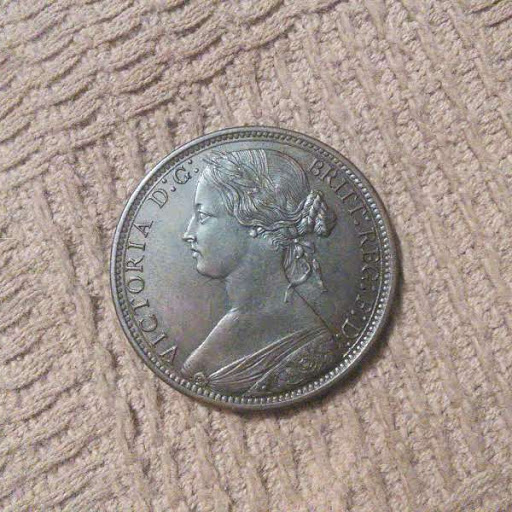
Curious to know as can't find too much definitive information on post lacquering appearance, especially of bronze. The reason I ask is that I bought an 1866 penny in 2010 as a BIN from e bay, which the seller said at the time "showed signs of old lacquering". Because the coin was otherwise decent, probably about GEF, and had no obvious issues, I bought it for the £50 asked. It was then put away in my collection and largely forgotten about until today, when I read something about lacquering of coins, and was reminded. Does anybody know what - typically - should be looked for to establish evidence of lacquering? Thanks in advance. The coin itself is as shown:-

-
Penny reverse ID please.
1949threepence replied to mrbadexample's topic in British Coin Related Discussions & Enquiries
Yes, the little inwards dink at the bottom of the bust shows that it's clearly obverse 2. -
Yes, very much agreed. It would be great to actually visit an actual coin shop. Not sure how many are left these days. Can't be that many. There used to be one in my home town of Chelmsford, but that's long since closed.
-
What about NGC?
-
If that's how CGS are viewed by one of the top auction houses internationally, then they're better to be steered clear of.
-
Penny reverse ID please.
1949threepence replied to mrbadexample's topic in British Coin Related Discussions & Enquiries
Yes, that does appear to be there on Jon's obverse pic, Jerry. So that is kind of tipping the balance towards Obverse 2. Not sure about the ribbon, although I definitely take zookeeperz' point. -
Penny reverse ID please.
1949threepence replied to mrbadexample's topic in British Coin Related Discussions & Enquiries
I don't know - it's not easy to distinguish between the two, especially on worn examples. Here are Obverse 2 and Obverse 5 copied from Gouby's book. Might help to see the two side by side:-

-
Penny reverse ID please.
1949threepence replied to mrbadexample's topic in British Coin Related Discussions & Enquiries
Jon, that reverse is almost definitely G. You can always tell because on all reverse G's the date numerals are closer together, compared to D & F, and often the final "1" is either sloping, or otherwise a bit wonky. Sometimes very close to the 6. If that's paired with obverse 5, you have yourself a Freeman 28 - rarity 18. -
Penny reverse ID please.
1949threepence replied to mrbadexample's topic in British Coin Related Discussions & Enquiries
I've noticed that as well, Terry. -
Penny reverse ID please.
1949threepence replied to mrbadexample's topic in British Coin Related Discussions & Enquiries
From Freeman's description, the main indicators for obverse 6 are:- 1/ The topmost part of the head is only 0.9mm from the linear circle instead of 1.5mm as on obverses 1 to 5 (although I can't measure it) 2/ Parts of the left and central leaves of the first group are incompletely struck and the former leaf points to an area distinctly to the right of the upper dot after the G of D:G, whereas on previous obverses, it pointed either directly to it, or minutely above it. 3/ The B of BRITT is almost in contact with the head. 4/ There is no L.C.WYON and unlike obverse 5, no recess into the outline of the bust where the signature previously appeared. Hope this helps Jon - but as I say, I'm never 100% confident on all of the 1861 combos myself. -
Penny reverse ID please.
1949threepence replied to mrbadexample's topic in British Coin Related Discussions & Enquiries
Think it's obverse 6 Jon, which would make your coin a Freeman 29. Although I stand to be corrected. The 1861 obverse/reverse die combinations are quite difficult to get your head round. -
And this lot wanted trump in !!!!!
1949threepence replied to copper123's topic in Nothing whatsoever to do with coins area!
The only link I can see is that the Russians allegedly wanted Trump to be elected. Quite how that translates down to this guy's level, I don't know. Necrophilia is not confined to Russia or Russians.