

Rob
-
Posts
12,931 -
Joined
-
Last visited
-
Days Won
371
Content Type
Profiles
Forums
Events
Downloads
Store
Gallery
Articles
Everything posted by Rob
-
Well, part 6 is in September.
-
No, there's more. I'm waiting for 2 or 3 to appear as a minimum. Unless some deal has been done off-market, in which case I'm going to be p'd off.
-
It isn't English or Hiberno-Norse. Try somewhere in Scandinavia as I think it is an imitation that is a cross between an Ethelred Last Small Cross obverse and a Cnut Quatrefoil(?) reverse. I don't have any books on these.
-
We woke up this morning and it was raining a little - maybe a few mm. Lots of nice black clouds around earlier this evening and tonight the rain is not heavy, but has been steady for over an hour.
-
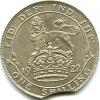 K could be Henry Kettle & Sons of Birmingham, active until about 1830
- 9 replies
-
- 1
-

-
- 1821 coronation medal
- 1821 coronation medaliallion
- (and 10 more)
-
I was in contact with him before I started dealing. Ask a simple question and you would always receive a few sides of A4 by return. The list appeared once I could be of some use.
-
Ouija board required I'm afraid. A great deal of knowledge has been lost and needs to be reassembled. On the plus side, his wants list is a good proxy for what is difficult to find.
-
You might have the answer once DNW have finished selling off John Hulett's collection. An undated example wasn't on his wants list for James I sixpences implying it is probably not documented anywhere, or he had one. However, I do know that he had a large number of oddballs accumulated over the years and wouldn't bet against him having found one. There wasn't one in Shuttlewood.
-
I can't see anything there. Just a thought, but do you know it is a 6d for certain? The shield is proportionally the same on both 6ds and shillings.
-
Was there one in the Bole collection? That would be the first place to look. I'll get the 6 catalogues out when I have cleaned up and have a gander.
-
I stopped watching just before half time because we seemed to have stopped trying.
-
Good goal by Trippier, but why when they have taken the lead do England act as if it is job done? Maybe they don't want it badly enough? Maybe they think it is their divine right to be in the final?
-
Difficult to say what it will go for. Looking at the link above, I'm surprised Heritage don't give an estimate, as any large number would surely increase the number of eyeballs, human avarice and envy being what it is.
-
Darn Horse flies plague this summer
Rob replied to copper123's topic in Nothing whatsoever to do with coins area!
Year on year problem. I always end up with a massive lump to show for it. One of the rare insects that are more than just a nuisance. -
Just keeping tabs on it now. Random outbreaks will be the order of things until it rains. Although the ground cover is burnt off, the underlying peat smoulders for ages and every so often bursts into flames. A few crews will be on the moors for a while yet.
-
If you look at the last definition, you will see that it refers to what I said. The phrase was probably introduced soon after the introduction of the high five and was used long before the online urban dictionary existed - which is where most people seem to get their info from these days.
-
A high five for the inbred
-
No, the kid's mum.
-
Neither this nor the other one are English, but I've no time to dig deeper. Someone else have a go.
-
This is interesting. The cross in quatrefoil appears to read AELFGAET ON BRI. Aelfgaet is recorded as a moneyer at Dorchester for W2 types 2 (this one) and 4 (cross pattee & fleury). The reading of BRI is ambiguous as it could be either Bridport or Bristol. Bridport isn't currently known for William 2, so this would extend the life of the mint by a few years. A coin of Aelfgaet reading BRIC would positively place the moneyer at Bristol, but for the time being the jury is out. Either way it is possibly unique unless someone can state otherwise. Given the presence of Aelfgaet at Dorchester, Bridport seems the more likely, and it is quite a rare mint to boot. It isn't a piece of beauty, but well worth having.
-
That was the second one. The world is full of nutters. A couple years ago on Winter Hill a kid tried to give me a high six. Mum wasn't amused.
-
Makes sense. You should be paying more if you buy the same coin via eBay.
-
A good cheap compact reference in 5 volumes covering Ed.I to the Commonwealth.
-
The images are too small for me to make out. The second might be Lincoln? Dinner plates make life a lot easier.
-
These are too early to have the mintages documented. The pipe rolls from the early 1200s give considerable information regarding moneyers, their fees and the amount of silver struck, but these are over 100 years before any available records.