

Rob
-
Posts
12,930 -
Joined
-
Last visited
-
Days Won
371
Content Type
Profiles
Forums
Events
Downloads
Store
Gallery
Articles
Everything posted by Rob
-
They could always add in http://www.rpcoins.co.uk/c2%20pics/01874.jpg which I have described as such on the site, but it doesn't come from a BNTA member, so is presumably unwelcome? There are a lot of people who have done a lot of work in this department. The existing thing on the forgery network, SEUK's contemporary forgeries, the ongoing monitoring done by Richard and a dozen or more other people....... Is it just a case of my forgery is better than yours? There are many sites with forgeries listed. Far better would be a list of existing references than reinventing the wheel.
-
Yes, but only the first time. Try to return to the page and you no longer have the chance to close the window down.
-
Maybe you've registered in the past?
-
Any witholding of info regarding copies can only lead to their further distribution by people who have a focussed moral compass unwittingly passing them on as good. For all the people who pass on copies even when told they aren't genuine, there are a good few people who will withdraw them from sale. Restricting info serves no useful purpose in restricting supplies of copies, which ought to be the first objective. If the BNTA had a monopoly, or near monopoly of dealers then it might work, but with the BNTA being no more than a zit on the face of world numismatics, I think it is self-defeating.
-
Not enough time to read without being required to register. Consequently it is only partially informative.
-
First and last both look pretty porous. Not sure about the second because the picture is too blurred.
-
Just a bad case of unwarranted deference on the part of the vendor and lack of familiarity where the TPG is concerned.
-
True. Lack of joined up thinking there - don't need to make silver acetate as we aren't reinventing photography. I was thinking in terms of whether it had been glued to a surface using clear silicone sealant. If it is lacquer, acetone will not shift it very well. If it is the remains of glue, acetone might be ok, It does look like ponded remains though. Whatever was used to clean it previously was probably in insufficient quantity.
-
I was thinking the same, so if it is then it got to that state by being dissolved in something and probably ponded as the solvent evaporated. Get it cheaply and experiment. It is going to be soluble in something whether it's acetone, ethanol, acetic acid or whatever. Best bet is something non-polar.
-
It will be ok. There are many dies used for this and the shilling. Seuk might have done some in depth work on this, otherwise there is the 2004 BNJ which although primarily concerned with the shillings has a lot of info re sixpences in the appendices and the postscript has a list of references pertaining to both denominations.
-
It's a large catalogue of silly behaviour, all of which are used to present a business case. One has it slabbed to try to up the price people would pay. Said slabbing has got the description fundamentally wrong. Another says you need an opinion of an opinion to make sure that opinion is justified. In fact this whole thread is a litany of silly behaviour. We've just moved from a purveyor of rubber entertainment clothing to opinions dressed in plastic. Too many fetishes here.
-
Why would anyone bother to send it off for someone to read the legend for them? The ten or twenty quid would be better spent buying a reading for dummies book. Double that and you could have the reference book for posterity.
-
I've never tried gout, however, I can recommend red wine, red meat, oily fish, cherries, white wine, beer, plus a host of cheese varieties. Water I cannot recommend, as it is a poor substitute for item no.1.
-
Thanks Peter, I'll readily buy the Rotographic publications hadn't seen this one. Easy too to get it sent straight to Kindle. I just bought The Brussels Hoard of 1908. There's an article in BNJ from 1912 but you wonder how much ground an article from 100 years ago is covering and what has changed since then but there's something to be said for tracing the development of classification / understanding of these things rather than just cross-referencing against Spink. It's all a work in progress. A lot of the articles from a century ago are inevitable incomplete due to later discoveries, but in most cases account for over 95% of the material discussed, and sometimes all. The basic classifications of most series were laid down in the 19th and early 20th century. The only glaring shortfall from a 100 years ago was the relative absence of copper references. Montagu published his book in 1885 with a 2nd edition in 1893, but that basically covered what he had in his own collection. It took Peck's tome to get anywhere close to fully documenting the base metal pieces. The majority of silver and gold had been first covered in the 1700s. Snelling is nowhere near complete and was published in 5 parts over nearly a decade, but still mentions most things. Ruding was a step up in gear when published half a century later. It was followed by Hawkins etc. A good indicator of what was perceived to be the best references of any given time is to check a contemporary auction catalogue for the references used as these will be the most up to date volumes available. The classification adopted of any series will inevitably be the most complex to date. Today's nerds collecting by Freeman, Peck, ESC, Davies numbers etc are just the current upholders of this tradition. References are used until superseded by something that is either greater in depth, or can be shown to have corrected a previously held assumption. As you say, it is a perpetual work in progress.
-
I don't understand why people don't just bid what they are willing to pay. If the underbidder stops a hundred quid below where you would go, then it doesn't cost you your max.
-
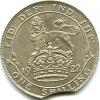
St. George and Dragon designs
Rob replied to Exbrit's topic in British Coin Related Discussions & Enquiries
Read the text -
Any ideas on what this is please?
Rob replied to Debbie's topic in Nothing whatsoever to do with coins area!
Maybe it doubles as a subtracting device because they are complementary numbers, or tells you the change to be given? -
Any ideas on what this is please?
Rob replied to Debbie's topic in Nothing whatsoever to do with coins area!
Do the wheels rotate independently or count sequentially when the handle is turned or is the handle used to reset the wheels after you manually turn them to a given setting? Any holes to insert something anywhere? The numbering suggests it operates in both directions. Something to do with locks where you turn a wheel both clockwise and anticlockwise? -
George III Half Crown - Chinese Fakes
Rob replied to seuk's topic in British Coin Related Discussions & Enquiries
I'd say ok too, but in truth is irrelevant - it looks horrible. Too many contact marks, particularly on the portrait. Joking aside, unless it was dirt cheap, it should be possible to find one looking a little less battered on the obverse at a reasonable price. They only book at £700 UNC in Spink, so a pleasing VF is not going to be more than £100-125. £200-300 you can find a nice one. Alternatively, spend a midge's more and you could get a 19 or 20, neither of which are flagged up in Spink as having copies. -
They do. I phoned up and made a nuisance of myself to hurry them along, then got a phone call on Friday so I could receive the lots by Saturday. It is no longer done by Baldwins and is not so efficient as a consequence. Hopefully they will get up to speed soon.
-
Why did you ask when the numbers changed if you already knew?? Anyway, while I still have the Seaby to hand to answer your question... in 1980 (1979 values) the Mary groats are £35 F and £120 VF, while the 1/6 tokens were £30 - £35 EF. Early 1980 would seem a fair guess then, especially as prices rocketed up just after. Because I didn't know, but wasn't thinking when I posted. I don't have many years of the of the standard catalogue, but by sitting down and ploughing through all the Numismatic Circulars it was possible to make an educated guess. The milled silver at the time was using EMC or ESC reference numbers, but the gold changed over and never used any references other than Seaby numbers.
-
One plus though. Pointless Celebrities has just found another couple of dozen contestants for the programme.
-
The numbers changed in June or July 1978, so they postdate this.
-
That might just be trickery with the toning. Sorry, can't check, it is long gone. Not for the first time I was struggling to take a decent picture.
-
As the title says. I picked up a run of these on eBay recently (lists 26 - 37) Any clues as to when they were issued? They came with an SGC Ltd American mail bid sale from 1980 included, so think it might be around this time. If it helps to jog someone's memory, pointers are as follows. Phone number is 01, so predates 1990. The price of an UNC 1/6 bank token was £35. A Mary groat aVF cost £50 and the reference is S2492. When did the numbers change in the 1970s/80s? Thanks.