

Rob
-
Posts
12,800 -
Joined
-
Last visited
-
Days Won
347
Content Type
Profiles
Forums
Events
Downloads
Store
Gallery
Articles
Everything posted by Rob
-
Well done, that's better.
-
There's nothing stopping you buying one. Prices change over the years, which is something we all have to live with. Prior to when I bought mine in the Andrew Wayne sale, the going rate for a nice one was 1500-2K. I ended up paying just over 2100 all in. some thought that was crazy as only a couple years previously you could pick them up for 1500 tops. Nobody is saying it was silly now as it would likely sell for double what I paid, just as hindsight has shown many similar 'excessive' purchases a decade ago to be quite a good deal. This goes for a few other memorable pieces such as the 1966 Foley pattern five pounds. When Mark Rasmussen sold the Barr collection in 2004-6, his was listed at £200. The one in London Coins last sale went for over £4K. I don't think anyone would complain at that more than 20-fold return, but might baulk at paying such an increase without a great deal of thought. That it is a private pattern rather than a Royal Mint one is irrrelevant if thatis what the market wants to pay. Whilst that example may be relatively excessive, most hammered gold has undergone a threefold or so increase in the past 10-15 years, whilst the cheaper end of the market has gone up by a larger percentage for choice pieces, being more generally affordable.
-
Choice Cromwells are not so easy, whatever the denomination. Given the availability of less than perfect examples, it is a case of supply and demand, which remains unsated. Cromwell is an historically important figure, every crown, halfcrown or shilling collection will have an example, as would a collection with a representative example of each reign or period. It ticks a lot of boxes and adds variety to a collection as it doesn't have a conventional design or legend. In the case of the example in question, it would probably be worth more with the plug carefully removed.
-
Allegedly bent by the plough. That'll be the Plough's landlord then............
-
Just means that nothing will change. The entire hoard will be taken by a museum, and collectors won't get a sniff, neither to see nor research - not that the world isn't already awash with Cnut pennies from common mints. More important will be the number of rare mints that are squirrelled away.
-
Where?
-
1745 Shilling Overdate ?
Rob replied to arthurcrown's topic in British Coin Related Discussions & Enquiries
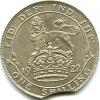
I think it is more likely to be a case of the die being too hard to punch in the new digit. Try hitting a sheet of hardened metal with a chisel and hammer (or an Accrington blue with a lumphammer) and you find that it will bounce off. Until the initial groove is made, the job is a bit hit and miss, excuse the pun. Misalignment is the order of the day. I think the same happens with recut dies if they aren't soft enough. I don't think it would be 1735 which is too distant in the past. -
1745 Shilling Overdate ?
Rob replied to arthurcrown's topic in British Coin Related Discussions & Enquiries
As the reverse dies were current for a few years, it is likely that all serviceable dies were recut with the new date. They used to fill in the old numeral and then recut the new one. Sometimes this is clearly seen as an overdate but at other times not. Overdates are much more common than people realise, it's just that they aren't immediately obvious. If you have a previously used die it will have been hardened for use. To recut the date it is therefore necessary to soften the die before working on it. If the die is too hard it will be difficult to sink the new numeral in the same place every blow. What you will see is a series of glancing blows which result in punch creep for want of a better expression. Using the attached James I halfgroat to demonstrate what I mean, the mark seen is a spur rowel over saltire. The saltire has right angles whereas the spur rowel does not. You can see a series of cuts moving from top left to bottom right. In the hand there are 5 or 6 of these, all slightly offset from the previous one. This was a case of a new die being recut with the new mark. No silver was brought into the mint for coining during the period of the saltire mark because the market price for silver remained above face value based on the weight of the coins, but dies would have been produced in anticipation of work. Rather than throw the die away, it was more cost effective to recut just a small part. Other denominations are also known with an overcut saltire mark.
-
Infinitely better, I'd say!Not perfect though by a long stretch. These dies tend to appear in a fairly knackered state with either a load of rust spots or die fill. They must have been used to destruction, but at some point were new, so someone should have an example of what they are supposed to look like. It's quite possible that the force used in striking was insufficient to fill the die, as a lot of the halfpennies are very weak on Britannia's head and in the laurel area of G2. I think in this series you will need a full lustre example in hand to determine whether the cause for weakness is strike or a filled die unless the weakness is out of proportion to the rest of the design.
-
For what it's worth, here's mine. My reverse also shows lack of detail/die fill on Britannia's head, but the rest looks markedly better.

-
Here the proof that Germans admire the Scots :-D
Rob replied to ChKy's topic in Nothing whatsoever to do with coins area!
Not as far as I can remember, which probably means a skinful on numerous occasions. We had a day out at Andechs 15 years ago when we went south for the eclipse. I indulged and the wife drove. Half a pig washed down with some suitably heavy liquid ballast. Doppelbocks are always heavy and good value on the calorie front and all weigh in around the 8% mark. -
Here the proof that Germans admire the Scots :-D
Rob replied to ChKy's topic in Nothing whatsoever to do with coins area!
I'm sure I could suffer with a pleasurable grin on my face. -
5 Guineas - under £5k
Rob replied to Colin88's topic in British Coin Related Discussions & Enquiries
"Annual expenditure twenty shillings, annual income twenty shillings and sixpence - result: happiness. Annual expenditure twenty shillings, annual income nineteen shillings and sixpence - result: misery" No, it just means you have to save up for twice as long. Assuming the 5K comes from an excess of income over expenditure, then barring a foreseeable change in circumstances, the balance will appear in due course. If you know your circumstances are going to change and you only have £5K in total, to spend this in its entirety on one piece would be reckless in my opinion. I would never suggest you borrow money to pursue a hobby. -
It's a series R sceat. Spink gives values of £50 fine up to £150 VF
-
5 Guineas - under £5k
Rob replied to Colin88's topic in British Coin Related Discussions & Enquiries
Expand to 10K and you have a lot of choice. After all, if someone is willing to spend 5K, then another 5 is not going to cause financial ruin, plus you can more likely pick up a bargain. -
It is easiest to see on the halfgroats. Halfpennies usually have the mark off flan and pennies are just plain uncommon. The mark is also competing with T, cross patonce and a rare rose reverse, which I haven't seen to date. The first two are also muled both ways and are common in any combination, the rose is paired with the uncertain mark obverse, which is itself never otherwise muled. Given rose was a first issue mark at Canterbury, it being muled with the uncertain mark means that should be at the head of the second issue marks. The frequent muling of the T and cross patonce suggests they ran concurrently and may well be the marks of the Archbishop's (2?) engravers.
-
Here the proof that Germans admire the Scots :-D
Rob replied to ChKy's topic in Nothing whatsoever to do with coins area!
Hmm. Methinks that Scottish bagpipes are slightly iffy. That one looks to be sheep/goatskin colour. All the Scottish pipes I have seen are tartan - yet I've never seen a tartan sheep whether fully clothed or au natural. It also begs the question as to who first thought up the idea of taking a goatskin, adding pipes to the legs and tying off surplus holes, then blowing into it and regulating the outflow. I guess that was probably the 10th millennium BC equivalent of the weirdo on the bus? One can certainly assume he sat next to the 'lucky' listener. -
I think it is C over pomegranate, but just need to prove it. I believe the uncertainty arises from the fact that sometimes the pomegranate has a wavy foot and sometimes not. Coupled with the fact that the overmark is not always centred at the same point on the underlying mark it leads to ambiguity in interpretation.
-
Here the proof that Germans admire the Scots :-D
Rob replied to ChKy's topic in Nothing whatsoever to do with coins area!
I'll be with you in 5 Hours, that is -
Here the proof that Germans admire the Scots :-D
Rob replied to ChKy's topic in Nothing whatsoever to do with coins area!
That's not a good sign. -
Here the proof that Germans admire the Scots :-D
Rob replied to ChKy's topic in Nothing whatsoever to do with coins area!
That's a collective you, i.e. all of us. -
Here the proof that Germans admire the Scots :-D
Rob replied to ChKy's topic in Nothing whatsoever to do with coins area!
I've always found an excess makes the extremities go numb. That you also give out garbled messages is a red herring as that happens often. -
Here the proof that Germans admire the Scots :-D
Rob replied to ChKy's topic in Nothing whatsoever to do with coins area!
Biltong is also good. So many good things avaialble. Just indulge if you like something. You are always free to make donations to any charity you like at any time and there's no point in feeling guilty about it, resulting in a period of abstinence. Just think, a bus with your number on it might come to collect you tomorrow. -
Here the proof that Germans admire the Scots :-D
Rob replied to ChKy's topic in Nothing whatsoever to do with coins area!
Chemo might be more effective? -
Here the proof that Germans admire the Scots :-D
Rob replied to ChKy's topic in Nothing whatsoever to do with coins area!
Me too. Available in Switzerland the other day too. Always a good bet. Rhetorical question, but why do they make cars so small? Brought back 150 litres of wine and loads of sausage when visiting last August - and it's nearly all gone

