
Coys55
-
Posts
174 -
Joined
-
Last visited
-
Days Won
11
Coys55's Achievements






-
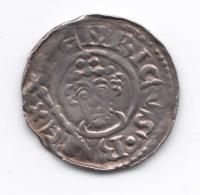
I've experienced both sides of a "lost ticket". In 2014 bought an ex-JP Mass collection (#1275) short-cross penny from eBay and it was delivered with the wrong ticket. The seller said he'd send me the correct ticket so I returned it to him, at which point he told me he couldn't find the original ticket. I do have Mass 574 & 1241 with their original tickets though.
-
I don't know who the merchant W&P was, but here's another one: https://www.ebay.co.uk/itm/135147031137?_trksid=p4375194.c102726.m162918 I found another one, but then couldn't find it again two minutes later...
-

Edward Cont. Sterlings…Does anyone have knowledge of these?
Coys55 replied to Coinery's topic in British Hammered
I'm also wondering about the "rust". If it is indeed rust rather than soil or another type of silver corrosion that would certainly be a highly debased batch of silver. -
Edward Cont. Sterlings…Does anyone have knowledge of these?
Coys55 replied to Coinery's topic in British Hammered
Yes, the Galata Guide has a 9a2 with the ANL error. I'm not 100% sure that is a pellet on the breast though, rather than just a slightly outsized pellet in the beading. The S on the reverse is badly worn, but the one on the obverse does look top-tilted to me. My opinion is that it's a 9a2 rather than an imitation sterling, but I have to admit that I'm not an expert on either series. Surprisingly (to me) though I've just counted 45 long cross in my collection. Only one sterling though. -
Halfpenny ID check
Coys55 replied to mrbadexample's topic in British Coin Related Discussions & Enquiries
Crikey, that escalated. I'm used to seeing that kind of stuff on football forums, but never expected to see it on a coin forum. Nor hope to again. -
The goddess of Waitrose?
-
It has the denomination half-crown on the reverse does it?
-
Spot on. It could in theory be a class 1a2, 1a5, 1b1, 1b2 or 1c, but 1a2 is immediately ruled out because there is no square C or E and 1a5 because there is no stop after LVND. The others rely on observing a stop between S and R on the obverse (present on 1b1 and 1b2, but omitted on 1c). The round C and the R are clear enough, but is the gap between the two letters big enough for a stop? I'm not sure. In the end it doesn't really matter, because the coin is pretty much toast, but I enjoy getting as far as possible with these hopeless cases.
-
Whitman Blue book shelf type coin albums
Coys55 replied to coinkat's topic in British Coin Related Discussions & Enquiries
I had them in the 60's and filled them with pennies and halfpennies collected from bank bags, but everything older than about George VI fell out every time I opened the things. They were basically useless. I never considered using sticking tape though! As King Kenny said, I would have bought them from WH Smith in Basildon town centre when it used to sell useful stuff. The rebranded TG Jones, which no longer sells anything anyone wants or can't buy cheaper elsewhere, is about to close, taking the town centre's Post Office with it. End of an era... -
Impressed name on George IV crown
Coys55 replied to Rambler's topic in British Coin Related Discussions & Enquiries
For now you can just rename your files by changing the jfif suffix to jpg. For the future I recommend changing your iPhone camera capture setting to "most compatible", which means jpg. -
Impressed name on George IV crown
Coys55 replied to Rambler's topic in British Coin Related Discussions & Enquiries
It's probably an advertising or love token, both of which were popular in the 19th century, but I won't click on links like those on a public forum. Could you please upload the pictures rather than links? -
Infantino will be the next president with Trump as his VP.😱 I'm pretty sure the bookies will give you 5-1 on that too; they like nothing more than taking money off mugs.
-
Is there still a demand for bronze pennies?
Coys55 replied to RChris's topic in British Coin Related Discussions & Enquiries
Ah, maybe I didn't refresh the screen a short time after it had finished. I turned the phone over almost straight away and went back to the final. -
Is there still a demand for bronze pennies?
Coys55 replied to RChris's topic in British Coin Related Discussions & Enquiries
Really? That's very interesting. Another case for using a sniping service. -
Is there still a demand for bronze pennies?
Coys55 replied to RChris's topic in British Coin Related Discussions & Enquiries
I followed the bidding right up to the end on my phone. There was little activity in the last hour and none at all in the closing seconds, so no one had put a snipe bid in, at least not a higher one. One other piece of eBay advice I have for sellers is to time it so that the auction ends at a sensible time, say afternoon or early evening at the weekend or early evening midweek. Bidders not using a sniping service are likely to be in bed or watching something on TV at 22:37 and less likely to be following the bidding. Especially when there's a World Cup final on... Maybe it's small margins, but it could mean two bidding against each other vs a lone bidder.