All Activity
- Past hour
-
Halfpenny ID check
Coinery replied to mrbadexample's topic in British Coin Related Discussions & Enquiries
Interesting…as Peckris suggests, then! I found Richard’s halfpenny site, I can’t see that it specifically mentions square/diamond colons? I would’ve expected to find it there if it was a known thing! https://halfpennyvarieties.wordpress.com/home-page-recreated/ -

Halfpenny ID check
DrLarry replied to mrbadexample's topic in British Coin Related Discussions & Enquiries
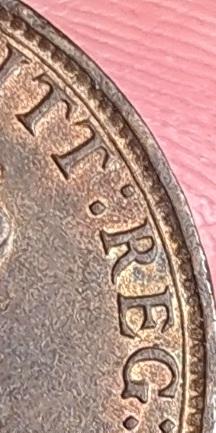
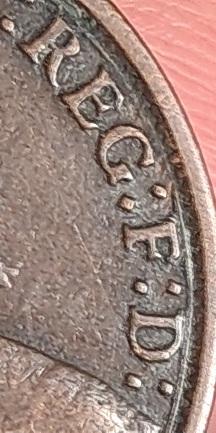
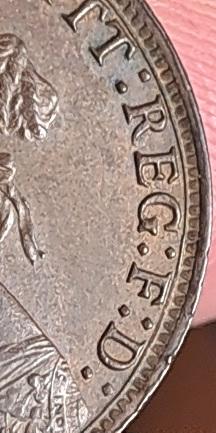
Colons on every British half penny are struck round with a round punch. All four examples have square colons the square/diamond punch is placed consistently. The colons are unique to these 4 examples. The only other examples of a square colon set is the 1864 Canadian half cent. -
Halfpenny ID check
Coinery replied to mrbadexample's topic in British Coin Related Discussions & Enquiries
I don’t quite follow you? Doesn’t Richard also have a halfpenny site, have you taken a look on there? -
Halfpenny ID check
DrLarry replied to mrbadexample's topic in British Coin Related Discussions & Enquiries
Certainly they are deliberate i was surprised to find the pattern and position consistent in even the fine i have. I will contact Michael I just thought I would ask forum members if they had or had not seen this obverse type first. - Today
-
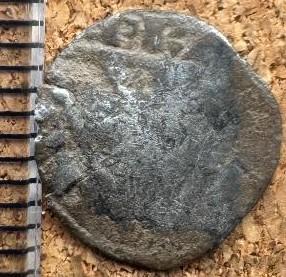
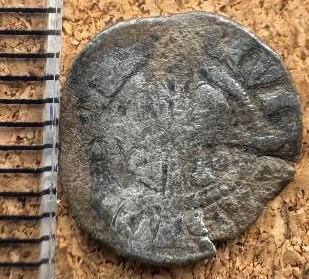
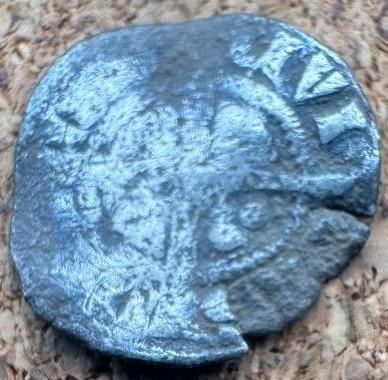
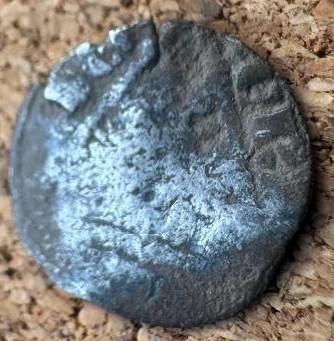
You’ve finally got some scales 😃 Taking your weight, and using the criterion from the North article below, I’d say yours is an early issue (1280-1284?) Dublin farthing - Open Es & Cs and the clear wedge-tailed R of Rex. Whilst the reverse legend is weak, it does appear to me that there are both a D and an I starting in each quarter, making it Dublin (CIVI TAS DVBL INIE). I believe the only other mint for these farthings is Waterford (CIVI TAS VATE RFOR), so you can probably rule that out in this case…I’ll let you to decide what letters you see, it’ll be so much easier for you to confirm in-hand. https://www.britnumsoc.org/publications/Digital BNJ/pdfs/1997_BNJ_67_4.pdf
-

Halfpenny ID check
Peckris 2 replied to mrbadexample's topic in British Coin Related Discussions & Enquiries
As the square colons are both consistent and global, they're clearly not accidental. In the absence of any knowledge from forum members, Michael Gouby would be your next port of call. -
Halfpenny ID check
DrLarry replied to mrbadexample's topic in British Coin Related Discussions & Enquiries
Each of these is a different half penny 1865 the col9ns are completely different to the normal 1865 obverse and those found associated with the two types of 1865/3.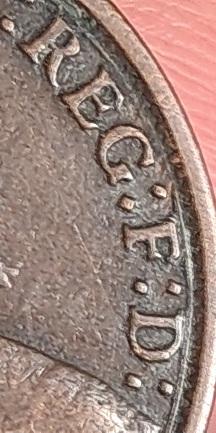
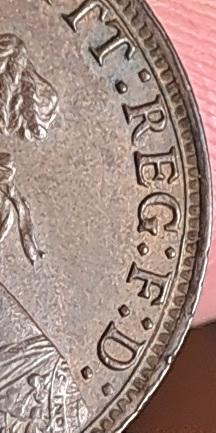
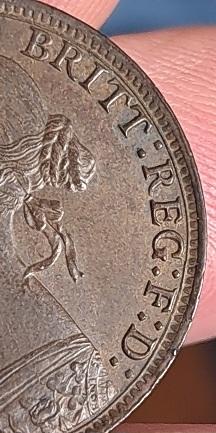
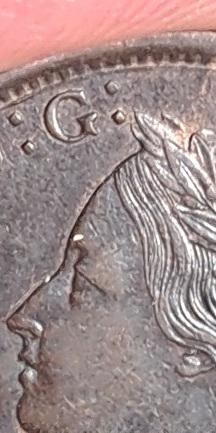
-
Halfpenny ID check
DrLarry replied to mrbadexample's topic in British Coin Related Discussions & Enquiries
Oh yes on occasions I have seen it but nothing resembles this . I have a least 1000 1861 half pennies i always look to see if anomalies are accidental. A strike to a round edge flatens tht normal colon. But in the 65 the square is consistent. -
Halfpenny ID check
absence of uniformity replied to mrbadexample's topic in British Coin Related Discussions & Enquiries
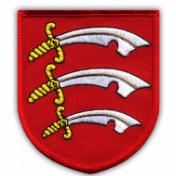
Im making you aware I have seen the same feature on a 1861 Halfpenny. -
Halfpenny ID check
DrLarry replied to mrbadexample's topic in British Coin Related Discussions & Enquiries
Have you posted this in order to make a comment if so you seem to have not made one -
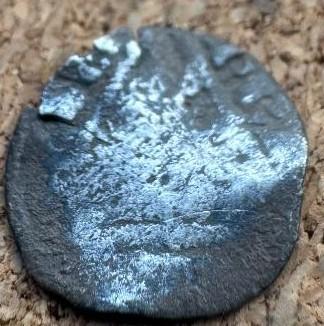
another sift through and I've not had a Hammered coin shared for awhile.... with a triangle shape I'm thinking Ireland coin, solid long cross its weight is 0.3 grms 11mm diameter by chance could this be a Irish Farthing of Edward I 🤔
-
Halfpenny ID check
absence of uniformity replied to mrbadexample's topic in British Coin Related Discussions & Enquiries
I noticed on this halfpenny the features detailed in the attached image. I know its not B/R but I was still interested to identify the possible cause/reason.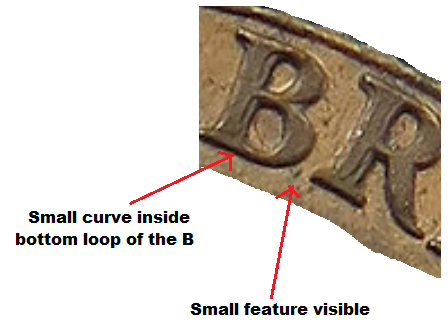
-
Halfpenny ID check
absence of uniformity replied to mrbadexample's topic in British Coin Related Discussions & Enquiries
Attached image is a 1861 HP.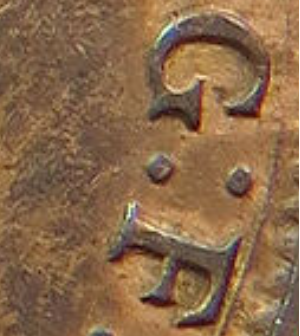
-
"off with her head..." or so to speak 🤣 its a £25 scrap so not so bad. 👍
-
Halfpenny ID check
DrLarry replied to mrbadexample's topic in British Coin Related Discussions & Enquiries
In the past few months I have been working on the identification of an unusual anomaly in the 1865 half penny. I bring it to your attention out of respect to the principle of the group to improve our knowledge. In four examples collected since 2024 the colons are I assume then the die differs from any I have seen since I've been collecting. The colons are not rounded but square/diamond shaped. The closest similar colons exist on the Canadian bronze coins. I'm sure someone else must have noticed this but I can find no other references to this. I have it in coins which are EF to fine and in each case the arrangement of the colons is I think the same. I will post pictures if anyone is interested.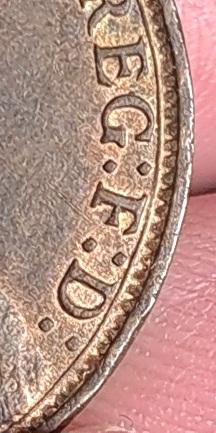
- Yesterday
-
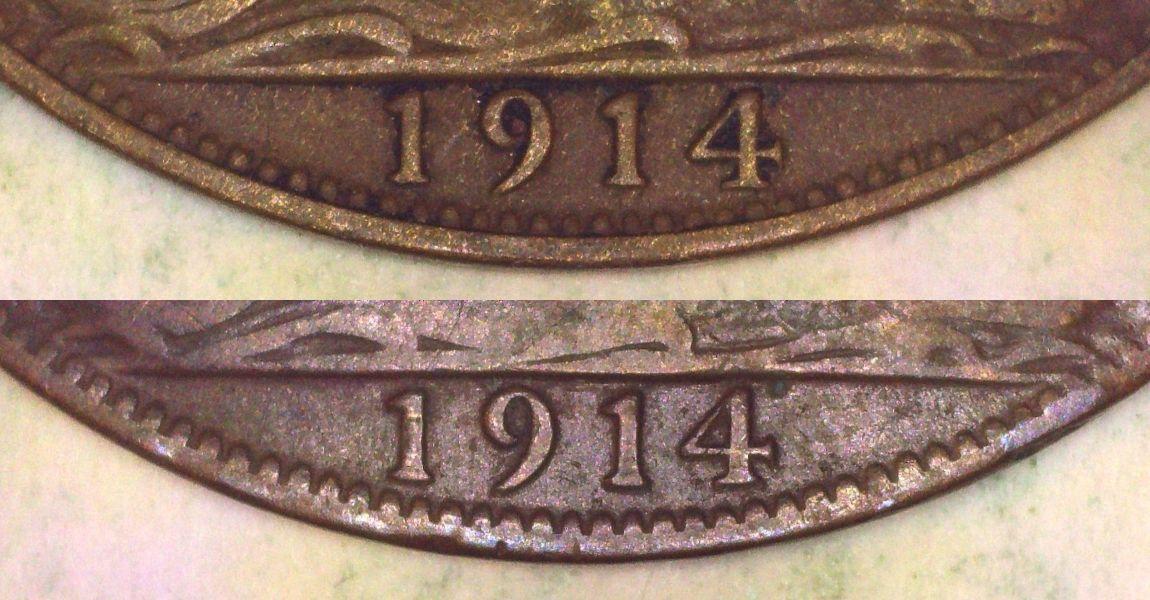
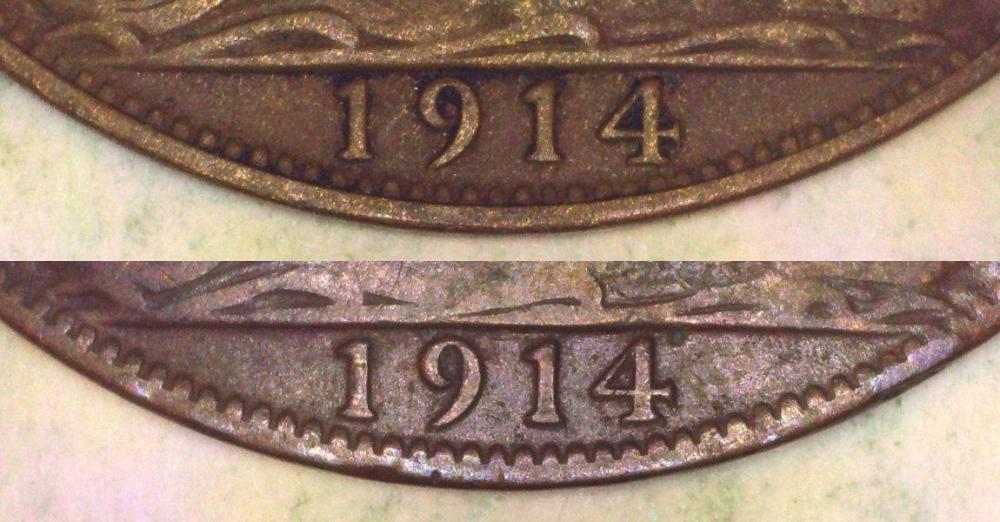
Might just be the pictures but another difference could be the 9 in the top image looks closer to being closed and the other 9 looks more open.
-
Browsing eBay listings the other day I noticed a 1914 penny with the 4 seemingly well to the left of its usual position. Naturally I bought it; it's the lower of the coins in this picture: The numerals look slightly higher on the regular coin, and I'm wondering if the exergue is a touch higher as well. Better examples would be needed to be sure. I don't see any doubt over the position of the 4, however. I couldn't find a similar example currently listed on eBay, but there was one where the upright of the 4 points directly to the tooth, likely due to an anticlockwise rotation of the 4 rather than a lateral movement. It's in the post!
- Last week
-
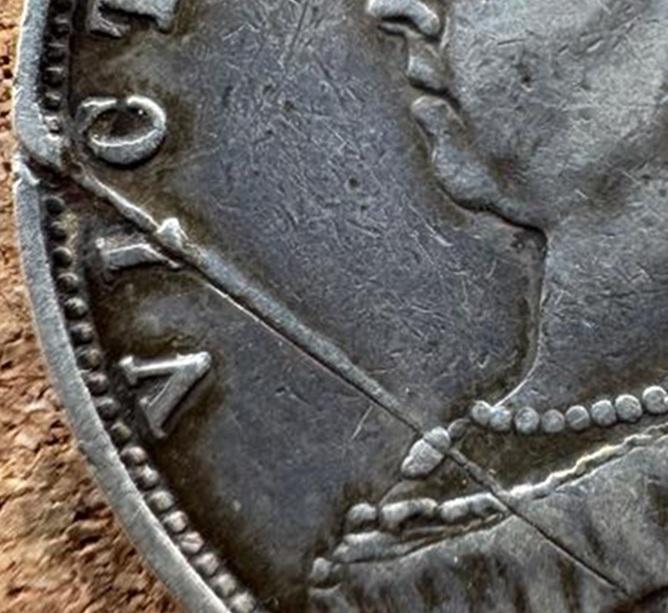
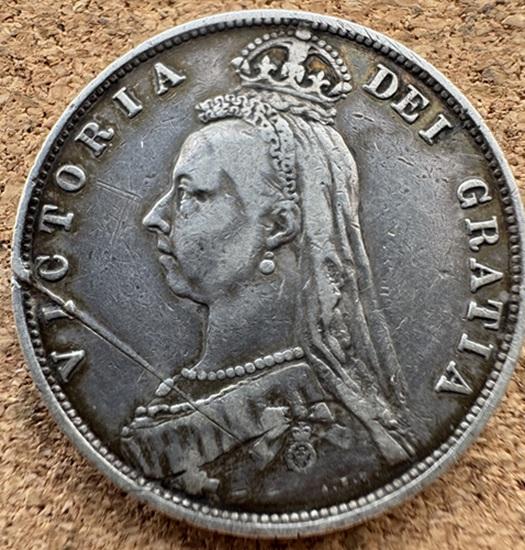
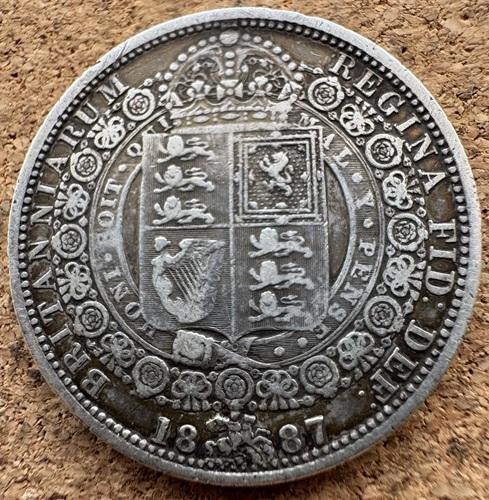
Definitely just post mint damage as Chris says. I think someone back in the late 1800s actually suspected it might have been a forgery (it's not, but many were at the time) and has cut or chopped the flan to test. The metal displacement can be seen along the entire length of the cut on the top side of it (so chopped at an angle upwards from SW to NE) and subsequent circulation wear has smoothed it out a bit including blending it into the beads, and separating off the bottom serif of the I to make a big blob. Not a mint fault, I'm afraid. You're actually not far wrong when you say hit with an axe! More likely a chisel.
-
its to deep to be just a scratch, the additional silver near the edge is bled into the dots surrounding.. I can see about better photos but for now this is the I can manage. 👍
-

Partial Brockage
Citizen H replied to RChris's topic in British Coin Related Discussions & Enquiries
Awesome find, 👍😀 -
Looks like a (post mint) scratch to me. The blob above the C is displaced metal moved aside from the rim, caused by the scratch.
-
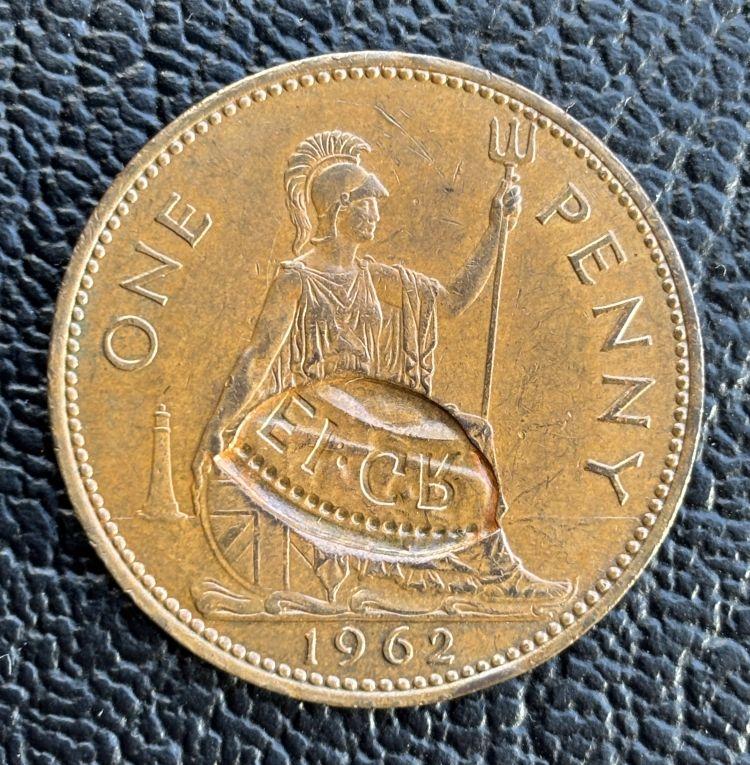
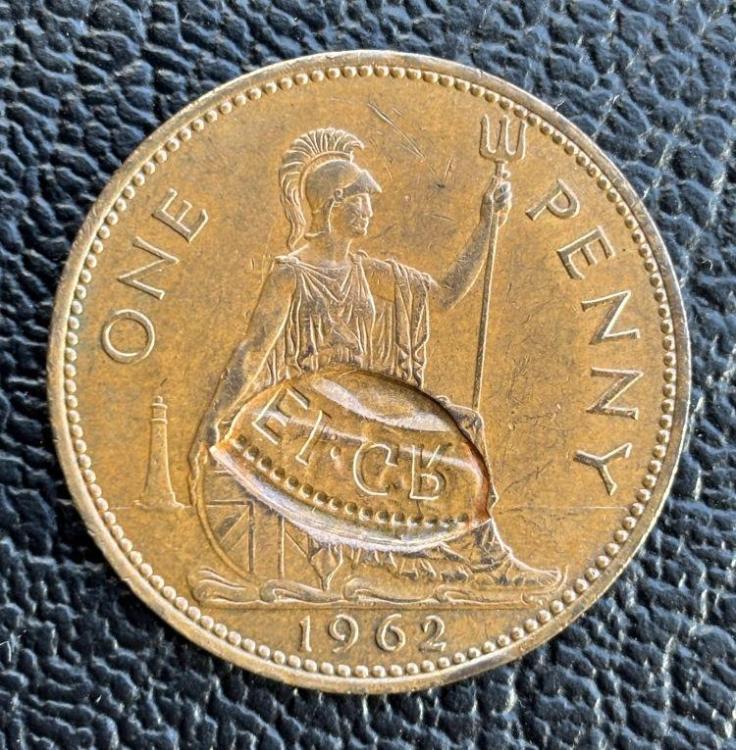
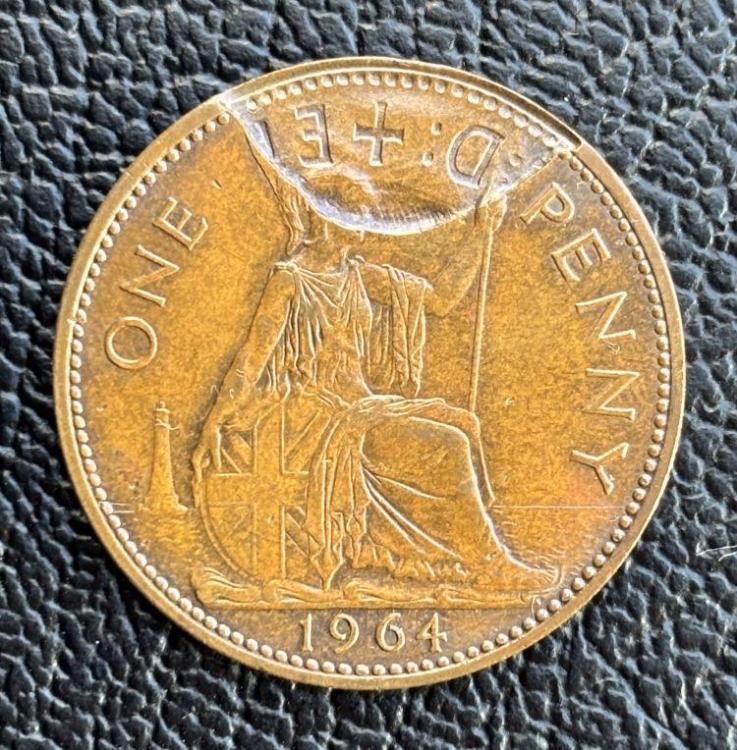
I can only suggest that when a brockage happens, the press is full of unwanted metal which in these cases shattered one of the flans with the remnant causing what is seen. The offending item did not bind to the full flan and fell off. It doesn't look concocted in either case, as the incuse legends are approximately correct for orientation, albeit displaced significantly in the first one.
-
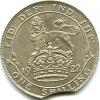
I guess we all come across these... for me its an interest brought on by the unique individuality of damaged to coins that pass through the mint more so than high grade coins .... show me the carnage!!! This 1887 Half Crown (mint casualty )looks like its been hit with an axe.....? above the letter C you can see the blob of silver that happened during the mint process, How ? open to opinions , and Please do show your casualty's
-
I understand how a full brockage happens, but not how a mis-shaped partial occurs. Can someone enlighten me please?
-
Perhaps "shelf" was AI's interpretation of what Arabia was standing on?