
Red Riley
-
Posts
1,780 -
Joined
-
Last visited
-
Days Won
1
Content Type
Profiles
Forums
Events
Downloads
Store
Gallery
Articles
Everything posted by Red Riley
-
You will really need to post photographs and for the first two (and K) a diameter as two types of coin were made to the same design. Not only that, but condition is everything, plus there are 3 types of 1919 penny. C, D & E are commenorative medals and coin K doesn't fit anything I know - could it be 1806?
-
Guinea Weight of Queen Anne?
Red Riley replied to Coin_Hunter's topic in British Coin Related Discussions & Enquiries
She did however have 13 children, so somebody must have liked her (can think of many ribald comments on this particular subject which I'm far too polite to mention). I think if it could somehow be proven that William was indeed gay, it would destroy the Orange movement in Northern Ireland and go a long way to solving Ulster's problems. Those guys are to the right of Atillah the Hun and to see the Rev. Ian Paisley actively marching for a known gay monarch makes me drool in anticipation. Did you read the disgraced Mrs Robinson's views on homosexuality? I don't like to stand in judgement, but if gayness is a sin, what is adultery? Still doesn't explain why the coinage portraits of the luscious Mary II were so unflattering. -
Guinea Weight of Queen Anne?
Red Riley replied to Coin_Hunter's topic in British Coin Related Discussions & Enquiries
Unfortunately mary's husband William batted for the other side... -
Stretched Limos
Red Riley replied to Chris Perkins's topic in Nothing whatsoever to do with coins area!
I don't know about Germany, but you can actually get reasonable money hiring out cars. Years ago I used to charge £175 per day for a wedding which has now got to be a lot more than that and I hear the Rolls Royce boys are now charging nearer £1000. The acme for stretch limos has got to be Ladies' Day at Ascot. Good for the driver too carrying around a lot of over/under dressed lovelies in varying stages of inebriation... -
Guinea Weight of Queen Anne?
Red Riley replied to Coin_Hunter's topic in British Coin Related Discussions & Enquiries
Don't think she was ever a beauty. Some sources say that her elder sister Mary was a real stunner, an opinion which I find hard to square with the frumpy double-chinned battleaxe on her joint coinage with William of Orange. And, she was only 30 when she died - do you think they used the right model? Sorry, that probably qualifies for un-PC comment of the week. -
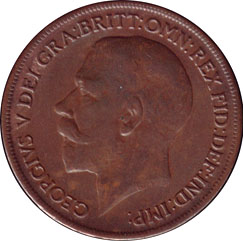
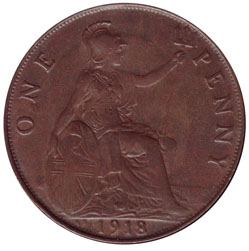
I was just about to reply when Peter jumped in! Confirm it's a penny. All the coins have been cleaned which is unfortunate, so in that condition I would say, maybe £2-£3; probably worth £8-£9 uncleaned.
-
1918 & 1919 "H" Pennies
Red Riley replied to a topic in British Coin Related Discussions & Enquiries
You're probably right. Grade though is generally 'Poor' (reverse legend obliterated). One on left might just creep up to 'Fair'. -
Fake or Rare Variety
Red Riley replied to azda's topic in British Coin Related Discussions & Enquiries
Hi wizkid - sounds like a very worn out Victorian 3d piece minted from 1838 to 1887. They were often attached to bracelets etc, hence the hole which apart from the large amount of wear unfortunately means that it is worth no more than scrap value. If you want a more authoratative answer, try posting a picture. -
Question on toning
Red Riley replied to azda's topic in British Coin Related Discussions & Enquiries
If we are talking about silver, it shouldn't matter as long as the tone is 1) patently natural and 2) is fairly even. Perhaps the ideal for some is an even greyish tone becoming somewhat paler on the high points. -
Don't know whether it's just me, but I actually like that kind of toning on a circulated coin. I would certainly rather have it than the flat dull appearance of a dipped piece.
-
A bit better than that I would say. Probably NVF with the obverse teetering on the edge of VF maybe.
-
The Great Recoinage of 1816
Red Riley replied to Sylvester's topic in British Coin Related Discussions & Enquiries
What amazes me is that with the exception of a few years in which a collective total of over 10 million copper coins were issued, none of them were produced in very large numbers (1806/7 might be exceptions but my books leave the mintages as 'unrecorded'). When the new bronze coins hit the streets in 1860-3, the numbers involved were humungously more than the copper coins they replaced. Since I have never read of small change shortages up to 1860, I wonder why we needed so many more coins starting in the latter part of the 19th century - maybe 10 or 20 times the numbers circulating pre-bronze. Yes, the population was increasing, but not by that much surely? Does anybody have an answer to this? -
The Great Recoinage of 1816
Red Riley replied to Sylvester's topic in British Coin Related Discussions & Enquiries
I have read reports of 1797 pennies circulating up to and beyond the introduction of the bronze coinage in 1860. They and the 1806/7 pennies were known collectively as 'farmers' after 'Farmer George' (George III's nickname - due to his interest in animal husbandry etc.). All copper coins including half-farthings were finally demonetised in 1869. -
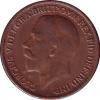
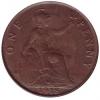
I would give the whole coin a nice GVF (obv. check wear on curl in front of ear and on leaves), but it does look nice and could approach EF prices.
-
Here is the coin. Hope it comes out OK.
-
You could always try having a mad and passionate affair with your secretary (or anyone else's for that matter). That would divert her attention and, trust me, she just wouldn't notice those little brown envelopes anymore!
-
I could have sworn I'd replied to this. I'm sorry Peckris, but I'm afraid my 'any offers' was purely rhetorical, this is actually the best KN I've got! Nonetheless, I did re-tone it as above. My logic was that as the most plausible explanation for carbon spots is that somebody sneezed in the coins vicinity, then if I could control the process I should be able to make nature work for me, and amazingly it did. I even left a little bit of untoned metal in the obverse legend. The reverse is absolutely spot on, but there are one or two small patches on the obverse. I suspect I should have rubbed over the entire coin with solvent before I started. When I get time I will post a photo.
-
Yes, but not for badly worn coins. I did greatly improve a 1918KN in GVF which somehow had lost its tone, by spitting on it and leaving it on the window sill for a summer. Any offers?
-
At the expense of talking to myself, I would add that this is something I am trying at the moment. It was only meant to be 18 months, but the inevitable has happened and of course I can't find the bloody thing! Shame, it's an 1864 plain penny in a high end VF that some twerp had been at with the Duraglit. Sadly I might have to leave it to subsequent generations of numismatists to see whether the 'dirt treatment' really works or not...
-
Try Tourmaline from Alec Tiranti and Co of Theale, Berks. or at least that's where they used to be. Will certainly improve the coins, but you may have to practice a bit first. Alternatively, you could always bury them in the garden for 10 years...
-
1839 Una & Lion £5 Coin
Red Riley replied to Mat's topic in British Coin Related Discussions & Enquiries
Whatever the merits of your argument, and I accept it is not ideal that a major auctioneer should also publish price guides, in the real world regulation or even an investigation into their activities just is not going to happen. If Sotheby's and Christie's are the Tesco and Sainsbury's of the auction world, then Spinks are Patel's Corner Store. In all honesty, I have yet to see anything which I regard as fishy. Incompetence and muddle yes (does anybody remember the 2007(?)Coins of England debacle?), but anything designed to defraud, no. Any investigation would be horrendously expensive and could never be regarded as being in the public interest. Like Rob and most other posters on this subject, I would underline that a 'guide' is just that and cannot take on a gospel-like status. To paraphrase Solon (and I'm not casting any aspersions here!), 'Price Guides are for the blind obedience of fools and the guidance of wise men'. -
1860 1/2 penny beaded border
Red Riley replied to azda's topic in British Coin Related Discussions & Enquiries
It is beaded border but not rare as such. Being the first of their type, many were hoarded and hence the survivors tend to be loaded towards the high quality end. I don't have the latest price guide, but would guess that it is worth £120 odd. Nice coin. -
It's only in Fair condition, to stretch a point we could say NF for the reverse but nonetheless just good honest wear without any damage, so yes, well worth e-baying as a separate item.
-
Its lunacy on ebay
Red Riley replied to azda's topic in British Coin Related Discussions & Enquiries
Yes but... compare the wear on the plaits which is where they go first. I think what you are comparing here is a coin in NEF or EF with one that is probably NVF. By my reckoning the e-bay coin is likely to be the better bet and I don't think £90 is that outrageous for what looks like quite a nice coin. -
1937 three pence piece
Red Riley replied to hoggy's topic in British Coin Related Discussions & Enquiries
I think I go with Peckris on this one. It's quite a soft strike by the look of it but doesn't seem to have too much wear. The obverse is usually more diagnostic but the photo was too fuzzy to see much.