

scottishmoney
-
Posts
1,058 -
Joined
-
Last visited
-
Days Won
5
Content Type
Profiles
Forums
Events
Downloads
Store
Gallery
Articles
Everything posted by scottishmoney
-
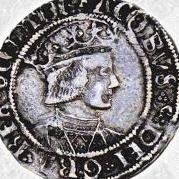 If you are a true collector all that really matters is how much you like the coin and how it appeals to you. I have coins which are in slabs, for instance: Slabbed as VF-30, but then I have seen EF-45's which have much less eye appeal and have been cleaned etc. Anne has not been tooled, cleaned etc. She is all original. I bought the coin, not the slab.
 -
Member's Photographs
scottishmoney replied to Geordie582's topic in British Coin Related Discussions & Enquiries
-
Ian Paisley of Ulster on Youtube.
scottishmoney replied to a topic in Nothing whatsoever to do with coins area!
Even Stalin and Hitler invoked God on their respective sides. Religious persecution in the USSR stopped dramatically during the war. Take the religious element out of just about any conflict and it loses all moral reason. Frankly I believe that the people promoting and enjoying the conflict in Northern Ireland are of a medieval mentality, and would possibly be quite suitable for resettlement in a land of their ilk, more like Iraq. Ian Paisley and his partner in crime, Gerry Adams should be the vanguard of immigration to Iraq. -
Member's Photographs
scottishmoney replied to Geordie582's topic in British Coin Related Discussions & Enquiries
Sorry, she is an Irish lassie. -
Lockdales is still very much doing the slabbing thing. But I believe the difference which drives the hobby in Britain as opposed to the USA is that more people in Britain are collector purists, rather more into the hobby for the enjoyment of it, the thrill of the hunt etc. Whilst in the USA more of what drives the hobby is investment speculation. Being a bit more of a purists myself, I rather prefer a coin which appeals to my sensations rather than a number assigned on a piece of plastic by an anonymous individual in some third party grading institution.
-
There is a marked difference betwixt the Spanish spoken in Spain, and the Spanish spoken in Mexico and the USA which is what I know. I have no problems conversing with anybody from Latin America save Puerto Rico, but Spain has different nuances to sentence structure - actually a bit more formal, much like English and American English.
-
Gees - If Aidan is going to start these threads, I think we should require him to supply imagery of his discussion topics
-
Peter Symes has also written some of the most authoritative treatises of Scottish banknotes, my fave of course, Kirkwood and Sons, Copperplate engravers.
-
Birmingham Workhouse trader's tokens.
scottishmoney replied to a topic in British Coin Related Discussions & Enquiries
The Birmingham 3d's are scarce to find in choice conditions however, I have seen dozens of them, but have only found one which suited my particularly stringent desires for such a piece. In searching through my PC files I tried to find the image of it, but of course I deleted it. -
Neither are they accounted for in "Arian", A history of banking in Wales since the 17th Century by R. Davies, which I purchased specifically hoping for such a listing.
-
Actually, as it is, only banks which had the right of note issue in the Banking Reform Act of 1845 can now issue notes. And as Chris notes, they have to cover note issue with BoE issue to the amount of the outstanding issue. This effectively prohibits an upstart from issuing notes. The only way an entity can issue notes is to be the BoE or to have note issue, inherited etc from the 1845 act. Note in NI and Scotland there are no legal tender notes now, since only coin and previously 10/- and BoE £1 notes were legal tender, now with neither being legal tender, only coin is legal tender, but only to a minimal amount. Legal tender as it is defined in Scotland is any form of payment generally and popularly accepted by the parties of a transaction and not specific to a form of tender.
-
Aidan, at one time these notes were right common. So much so that they were sold as novelties in Chemists shops for 45p in the early 1970's. Actually the inscription you have noticed means "cancelled", they were forced by the authorities to stop the note issues, so as a result they did this to further inflame their cause. But alas, these notes subsequently got scarce, the notes I could pick up as inexpensive novelties became scarce collectors items by the late 1990's, perhaps it was the realisation that these were relics from a more radical era in the devolution cycle in Britain that were overlooked as collectibles. So that now when in the instance you find them for sale, they are right pricey. I had all the bridge notes, the cog railway notes, the castle notes etc at one time, my brother wanted them so I gave all but a castle 5/- to him. Now I wisht I had them again, who knows what he did with them.
-
The above Groat coin was the first of this denomination struck in Scotland, all prior issues were pennies or there fractions. It was struck earlier in the reign, and is in the "heavy" series of coins that were minted before a devaluation later in the reign. The portrait on this coin reflects a more youthful figure of King David II and was more likely struck in the 1350's when Groats were first minted. the legend around the obverse of the coin is "DAVID DEI GRA REX SCOTORUM" which translates to David, by the grace of God, King of the Scots. The outer legend on the reverse is "DEVS PROTECTOR MEVS ET LIBERATOR MEVS" which tranlates to God is my protector and liberator. The inner legend on the reverse of this coin is "VILLA EDINBURGH" the mint name. This coin is particularly rare, it has seven arcs in the tressure around the King's head, the great majority of these coins have only six arcs.
-
Unfortunately dictators such as Robert Mugabe have never heard of Thomas Gresham, QEI's advisor, and his famous quote "Bad money drives out good".
-
I have a David II Scottish Groat with seven arcs in the tressure around the monarch's head. It was listed in the 1888 and 1968 editions of Robertsons book as unique. Now there are believed to be 6-7 examples, mine is probably the nicest example. I paid about £125 for it about 15 yrs ago. The dealer obviously did not know about it being so rare, he just assumed it was the much more common 6 arc variety. How do you establish a price for it if I were to sell it? Obviously these don't sell much, and if I wanted to get a top price for it I would have to auction it through Spinks etc. And then the price would be determined by demand, if or if not there were Scottish collectors in the know.
-
Play money issued by a farcical regime
-
Ecclesiastical Mint English coins.
scottishmoney replied to a topic in British Coin Related Discussions & Enquiries
Archbishop Wigmund, of York, Northumbria ca. 854AD. -
I have one of the wee critters magneted to my ice box. Usually when these are found now they are pretty rusty, the light zinc plating wore off easily exposing the corrosive steel. I have actually had a pile of these once and spent all the rusted out ones.
-
Empire Mints
scottishmoney replied to big jar of wasps's topic in British Coin Related Discussions & Enquiries
At one time I endeavoured to collect a Sovereign from every country that minted one. I know I had Australia, South Africa, Britain of course, but I never got India or Canada. One of my family members has an 1877 Sovereign, which legend has it that it came with the family from Cornwall in 1880. Curiously it was minted in Australia and somehow made it to Britain to be shipped yet again across the Atlantic. The only coin I have that came down from the Cornwall ancestors is an 1862 1/2d. -
Kruggerands, the new sovereign
scottishmoney replied to big jar of wasps's topic in Enquiries about Non British coins
I have a couple of 1978 Krugerrands that I have owned since I was a kid, only recently in the past few months in fact, are they worth more than I paid for them. -
Editing feature has disappeared.
scottishmoney replied to a topic in Forum technical help and support
Which is to say, think before thou writeth, it canna be undone. Like flammers that post and get all stirred up an change the post later. -
This coin is a Scottish Merk from 1668, a Merk was 13 shillings and 6 pence Scots, the rough equivalent of a then contemporary English Shilling. This coin would have circulated in Scotland of course, but occasionally in Northern England also. Many of these coins were withdrawn from circulation in the period of 1707-1709 and melted and reminted as British coins after the Union of 1707. In this condition, the coin is worth betwixt £75-£100.
-
Some provincial banks issued £1 notes, the Bank of England did not get into the act of issuing £1 notes until 1817-1818 or so during the tenure of Henry Hase. During the early part of the 19th century anything that could pass as money basically did, including even foreign coins, coinage was very scarce - the reign of George III saw very light issues of coinage until 1797, and then the early 19th century.
-
Nice to know the newlyweds can afford to fill the Cadillac with petrol
-
17th Century English Tokens 'bout the only page I have up. Just too lazy to do the others.