

scottishmoney
-
Posts
1,058 -
Joined
-
Last visited
-
Days Won
5
Content Type
Profiles
Forums
Events
Downloads
Store
Gallery
Articles
Everything posted by scottishmoney
-
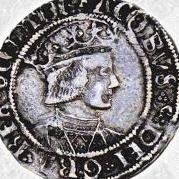 A fascinating momento from Scottish and British history, this AR medal by Nicholas Briot was struck in 1633 to commemorate Charles I's very belated Scottish coronation that year. His coronation should have been much earlier, he ascended the throne in 1625, but he carelessly delayed said coronation until finally giving into demands that it be done in 1633. His introduction of Anglican liturgy into the coronation ceremony did little to endear him to his Scottish subjects, and things went decidedly sour thereafter. On his return trip to London his baggage including many crown jewels were lost in the Firth of Forth, just off of Burntisland. Subsequently alleged witches were brought to trial in London, on charges of causing the shipwreck. Things went down for Charles I from there on, both in Scotland and in England. This lovely medal, with a lifelike portrait of the monarch, was commissioned to Nicholas Briot, a famous and skilled coiner. This medal was struck in a screw press, and is actually much better detailed as a result. One of these medals was struck piedfort in gold, which was presented to the King, he kept it as a pocket piece until his death in 1649. The silver examples like this one were throne to the crowds at the coronation ceremony.
 -
Questions about coins tenderable in the decimal system
scottishmoney replied to LFG's topic in Decimal Coins
Similarly there was a case in Nevada USA where a contractor was paying his employees in $50 AGE's(1oz gold) and only declaring the $50 as income. Of course the feds can create a coin and put a denomination on it, but they do not honour it as such. In fact the $50 denomination is determined to be only a means to make a bullion piece a coin, so it is thus included in anti-counterfeiting legislation. Similarly Maundy pieces were decimalised, but it was really more of a formality than anything else, because know one in their right mind is going to spend a penny coin as such, but rather most of the pieces swiftly make it into the collectable market, having been sold at a profit by their recipients. -
I've found the Russian con man details!
scottishmoney replied to Chris Perkins's topic in Free for all
I think you got taken by a "False Dmitry", there is a ruler in Russian history that is called the "False Dmitry" because he was a pretender, it applies to shady characters now. -
Questions about coins tenderable in the decimal system
scottishmoney replied to LFG's topic in Decimal Coins
Actually given how long it took for the BRM to ramp up to replacing so much new coinage, evidence is quite clear that they wanted as much predecimal coinage as possible to work in the new decimal system, therefore you have the shilling and the florin continuing to circulate until the 5 and 10p coins were downsized. The shilling and florin were very popularly used denominations and replacing their circulation equivalent would have been more than the BRM could have possibly handled with that time line. In reference to what Red Riley has said about the 10/- being the new unit, that was the original intent in the early 1960's, as actually it was easier to account for 1:10, and this was done in Australia, South Africa, New Zealand when those countries decimalised their currencies, but Britain elected to keep the £ sterling. Also Britain actually began the quest for decimalisation with the introduction of the florin in the 1840's, at that time the florin was denominated as "One Tenth of a Pound". Also the tanner was indeed on the chopping block, and yes a campaign was raised to save the coin, so it did remain in circulation until 1980 when it was demonetised, but by that time it largely disappeared as a curiousity, and probably shipped off to far lands like the USA where they were sold at $1 apiece as wedding momentos. -
Questions about coins tenderable in the decimal system
scottishmoney replied to LFG's topic in Decimal Coins
The only predecimal coins that continued to see circulation after D-Day were the sixpence circulating as a 2.5p coin until 1980, then the shilling as a 5p coin until the 1990's and the 2 shilling or florin coin circulating as a 10p until the 1990's when both the 5 and 10p were downsized. All other coins were demonetised in 1971. I believe coins like the Churchill crown circulated(if you can call it that) as 25p coins, but they were not often used in actual circulation. If you have quantities of predecimal coins you can still redeem them, though they might have more numismatic value now than face value. I currently have ca. £90 in predecimal coins still. -
unidentifiable coin?
scottishmoney replied to ren's topic in British Coin Related Discussions & Enquiries
I am about 100km from the border, but near a shopping destination that readily accepts Canadian funds and has for some time now. So Canadian $'s are accepted in banks etc. The change circulates like any other coin, I just got a Saskatchewan commem 25¢ coin on Thursday, but I get probably 25-30% Canadian change in any transaction here locally. Which is kind of cool too, because it is possible to find older Canadian cents, like the 1920 earlier in the week, or 5¢ like the 1961 YH last week. -
unidentifiable coin?
scottishmoney replied to ren's topic in British Coin Related Discussions & Enquiries
United States coins circulated in Canada from well before the Confederation, just about anything that could pass for money circulated there, including some strange things like playing cards during the French era in Quebec. I have never had a problem spending US$ there, and now lately I don't have a problem spending Canadian $ in the US because the C$ is near or worth the same as the US$. I get Canadian change on a daily basis, very common here, yesterday I got a Saskatchewan 25¢ that I had not seen before, usually I get just the moose 25¢ coins. -
An Appeal.
scottishmoney replied to Chris Perkins's topic in British Coin Related Discussions & Enquiries
I have to figure out what I am going to sell, at what price and how. I am going to steer away from eBay, I just do not care for that venue for selling, when I sold Scottish notes they went for under face much of the time with large images and good descriptions. -
Token Georges III 1817
scottishmoney replied to NENES 369's topic in British Coin Related Discussions & Enquiries
But don't doff it off if it is a brass counterfeit, they have a value as a collectors item. There are enough of them that they have a market value and I know of a couple of people that specialise in them. -
An Appeal.
scottishmoney replied to Chris Perkins's topic in British Coin Related Discussions & Enquiries
Everything here is for let 'cept the 1794 Large Cent: 'Merican Coins -
Old silver coins
scottishmoney replied to ~Stig~'s topic in British Coin Related Discussions & Enquiries
Quite a number of the threenubs here have little more than curiousity or even bullion(value of the silver only) since they are quite worn or holed. Threenubs are pretty common coins, and lots of people saved them. I have several hundreds of them myself, and while I would like to get a good price for them I am afraid that I will sell them for a pittance over the melt value. -
An Appeal.
scottishmoney replied to Chris Perkins's topic in British Coin Related Discussions & Enquiries
Hmm, British material is where I am suffering a severe shortage of material to grace my collection, but I have lots of American coins which I would like to divest of to fund my furtherance of my British pursuits. -
1938 Darktone Penny
scottishmoney replied to a topic in British Coin Related Discussions & Enquiries
The only coins darkened by the Royal Mint were the ca. WWI era farthings, because they could be confused for a half sovereign. Anything else would have been a chemical or environmental event after it left the mint. -
After a Churchill Crown.
scottishmoney replied to Hussulo's topic in British Coin Related Discussions & Enquiries
Maybe he would take all of our 1965 Crowns? -
new member saying hello
scottishmoney replied to Richard2's topic in British Coin Related Discussions & Enquiries
'Tis a coin worth soiling the breeches for. -
Alexander III halfpenny
scottishmoney replied to Richard2's topic in British Coin Related Discussions & Enquiries
Scottish coinage had the same value as English until late in the reign of David II(1329-1371), the subsequent coins minted after 1367 were minted at a lower weight, resulting in a star being put on the sceptre to denote the difference. From then on, Scottish coins were devaluated against English sterling, or at times altogether prohibited. When the first weight change occurred ca. 1367 the English responded by tariffing the groat to threepence, so basically a 25% reduction in value. The only time after that the Scottish coinage evaluated against sterling was when "Old Coppernose" aka Henry VIII devalued sterling by debasing it, and the Scots during James V and early Mary responded by tariffing the English coins down. But this was shortlived, during the reign of Mary, the coinage devalued twice, and several times during James VI, resulting in numerous recoinages(all at a profit especially to James VI for the crown.) It was only in 1603 when James ascended the English throne that the coinages were fixed at a rate of Scots £12: English £1, with one minor blip in the 1690's it remained thus until 1707 when the recoinage as a British coinage began. -
new member saying hello
scottishmoney replied to Richard2's topic in British Coin Related Discussions & Enquiries
That is a much better example than I have seen in Spink or Baldwins. Truly one of those "My Gawd" coins -
Alexander III halfpenny
scottishmoney replied to Richard2's topic in British Coin Related Discussions & Enquiries
This is from the second coinage of Alexander III, with the Crowned bust with sceptre variety, there are two mullets of 6 points each on the reverse. It is suggested that these were likely minted in Berwick. This is the most common variety of the halfpenny, being S-5061 in the Seaby catalogue and SA3HD-010 in Coincraft. But that said, halfpennies and farthings from Scotland are quite a bit scarcer than the pennies. Much like in England they were more often than not just cut from pennies, I have literally hundreds of them from England, Scotland and a few from Ireland and Denmark. This piece would grade aFine, about fine, and would have an approximate value of £90-100 in said grade, but maybe a bit higher for the right buyer. -
Millennia Collection/Sale
scottishmoney replied to Hussulo's topic in British Coin Related Discussions & Enquiries
East Anglia, Beonna Penny of 749-760. This is a neat piece with the knot on the reverse. -
The Royal Mint need my Link
scottishmoney replied to Chris Perkins's topic in British Coin Related Discussions & Enquiries
Or have it disintegrate in a million pieces lets say, if you throw it at a wall, much like the real car does. -
The Royal Mint need my Link
scottishmoney replied to Chris Perkins's topic in British Coin Related Discussions & Enquiries
Well CP, I suggest you give them the link they desire, on one condition: They pay the hosting fees etc. for Predecimal.com, or at least give you a per click return. If they contact me, I will give them a link, for the above condition that is. -
I agree with you to a point about the fascination with WWII. Problem is, it is Politically Correct aka PC, whilst the advancement of the Empire into Africa, India etc. is now not. So if you take out WWII, you are left with industrialists or social cause people etc. I do wonder if say hopefully QEII reigns well into her 90's or beyond even, that they will show older images of her, or just keep using the younger portraits. I do hope for Britain that she does reign long - VIVAT REGINA! so the next monarch will be a mere caretaker.
-
Which is where you want to have a rule, that the person must have been pushing up daisies for at least 40 years so you can make good and sure they have historic impact. I doubt Davie and Vicky will have any such fervor in 40 years, they will be long forgotten. I love the image of Sir Winston Churchill and the Spitfires on the reverse of the Gibraltar £50: I believe Winnie is deserving of his place on a British banknote too. Ha ha, just because I would laugh that yet another American citizen appears on a British banknote, the other being Jack Nicklaus on the reverse of the RBS fiver.
-
I would go with a series of great Britons e.g. Darwin, Brunel, Robbie Burns (to keep the Scots happy until they take their ball away). They have all appeared on British banknotes, Darwin and Brunel on the reverses of BoE notes, and Robbie Burns has been on the RBS notes since 1970, and previous to that 1961 on the British Linen Bank notes. And now Adam Smith, a Scot is on the reverse of the £20 BoE note. Actually I like those series, since they are non political, and commemorate people that made Britain great, industrially, financially etc.
-
Here is my entry: