

Rob
-
Posts
12,930 -
Joined
-
Last visited
-
Days Won
371
Content Type
Profiles
Forums
Events
Downloads
Store
Gallery
Articles
Everything posted by Rob
-
could be a coin?
-
All the single N coins are very weak at the top of the coin, raising the question as to whether it is a true variety.Stops or no stops is so common in the series that rarity is a moot point. Spelling mistakes are definitely rarer and should command a higher price than 'normal' coins. GVLILEMVS, GVLIEMVS etc are usually from a single die. I'm sure if anybody had the time and money to buy enough of them, it could easily be proved re the single N.It's like that no-stop after DEI I had, which proved to be a block, after finding a perfectly matching die WITH stop! Spink agreed and said they'd make the change, but never did, of course! Here is what Nicholson had to say about it. Items 102 & 103 refer. http://www.colincooke.com/coinpages/nicholson_part2.html If you look at the plate coin in Peck, the arm is very weak to the point of being absent at the wrist and the place where the N should be. Unless you can find a well struck up arm to set against the adjacent missing N, I'd say it is uncertain.
-
All the single N coins are very weak at the top of the coin, raising the question as to whether it is a true variety. Stops or no stops is so common in the series that rarity is a moot point. Spelling mistakes are definitely rarer and should command a higher price than 'normal' coins. GVLILEMVS, GVLIEMVS etc are usually from a single die.
-
Definitely 7
-
Yes, but Saxby's has always been top of the pile for getting it wrong. What's more worrying is the volume of traffic he receives. Either the world is full of people who haven't a clue (likely), or he has been listing rarities described as common coins (unlikely). Judging by listings of Richard IIIs cunningly disguised as Henrys or Edwards, I'm leaning towards the former.
-
D&H gives the shield side as the obverse as it is the Arms of Bury St. Edmunds and so denotes it as a Bury halfpenny. There are two nearly identical obverses for Bury which are paired with a total of 3 reverses and bear a multitude of edge readings to give just over a dozen varieties.
-
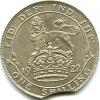
Cypher Halfpenny...?re-Used Die?
Rob replied to Coinery's topic in British Coin Related Discussions & Enquiries
Good. That helps show I'm not just stupid. It stands to reason, but tying it down to a previous die is a bit hard. -
Another unquantifiable designation. Some like brilliant untoned coins, others hate them. Some like toning, others don't. Someone is going to be disappointed with the 'eye of the beholder' qualification.
-
Coin Collection Layout
Rob replied to Accumulator's topic in British Coin Related Discussions & Enquiries
I've got worse. -
Add this to the sub-forum please. http://www.youtube.com/watch?v=kQFKtI6gn9Y
-
Coin Collection Layout
Rob replied to Accumulator's topic in British Coin Related Discussions & Enquiries
Undated patterns also cause a bit of grief in their placement, not to mention unconventional denominations such as the Victorian RM pieces where you have 1, 2, 5 & 10 centimes, cents, 1 centum, 5 farthings, 100 mils, one decade, 1/20th shilling, ducat, undated, undenominated etc pieces. The same also goes for the rather unhelpful 4 pence halfpenny and two pence farthing Ed. VI countermarked pieces and what about the revalued silver and gold? Do you keep angels at 6s8d, 7s6d or 8s etc.? These cause havoc to any systematic layout. -
Without wishing to fill the screen and more with the stacked replies, I'd agree with all of that as would many here. As a rule, the main disagreements lie in the AU/low MS range where a fair proportion of the coins mentioned have an obvious amount of wear which is incompatible with uncirculated or nearly so status. Below that, as a rule of thumb you reduce the assigned by a grade to get approximate parity. It is fairly consenual that they should be best for US coins, but buyers should be a little more circumspect when it comes to foreign coins because there are clear weaknesses in their competence. The 1787 shilling above certainly falls into that category. Very common in all grades except (UK) mint state. Looking at the promotional videos above makes me think that the amount of time spent grading may not be a lot, and the cross checking even less. Obviously the really contentious ones are only a small percentage, but it must be indicative of the situation that yourself, myself and others look for the mistakes. If they weren't readily available, fewer people would look. Things do work both ways. Just as you picked up a rare specimen, so I was able to pick up a unique(?) coin (F689), albeit to the detriment of NGC's population report for a P1983 (pop.1). Conversely, there was a 1 cent P2005 decimal pattern in the recent Spink NY sale which was in a NGC PF66 slab. Unfortunately it was also named to Norweb on the label which added value to US collectors, despite obviously not being the same coin as Norweb 685. Unless she had two examples and passed one on outside the sale, this attribution must be wrong. The end result was a hammer price of $2600 plus the juice (~£1700 all in) compared to the £1K less I paid for a 2 cents (also in a NGC PF66 slab) two years ago. We'll never be happy.
-
Help With A 1696 Crown - Strike Error ?
Rob replied to atticus-silver's topic in British Coin Related Discussions & Enquiries
Die flaw. A small piece of metal has broken away from the die leaving a depression which formed a raised lump on the coin. -
Your EF example is rather conservatively graded IMO Rob, but the point is well made. Ok, so we call it good EF. AU can be broadly considered the same, just named differently. Where is the similarity in wear? Mine has slight wear to the high points on both sides. The slabbed coin has slight relief to the flan.I would have called the slabbed ebay coin VF and i don't get paid to grade it either It really does boil down to a different attribution of grades for a given condition, as mentioned before.
-
Your EF example is rather conservatively graded IMO Rob, but the point is well made. Ok, so we call it good EF. AU can be broadly considered the same, just named differently. Where is the similarity in wear? Mine has slight wear to the high points on both sides. The slabbed coin has slight relief to the flan.
-
Coin Collection Layout
Rob replied to Accumulator's topic in British Coin Related Discussions & Enquiries
It really depends on what you collect. A focussed collection such as the OP lends itself to either approach. To compare Steve's with Colin's is not currently practical. The Adams collection had a large number of Moore patterns for example which occupied a full tray in their own right, so would fit into either layout. Having just a few patterns would look better if arranged chronologically. In my case, I have a number of decimal patterns, again lending them to placement in their own tray despite the variation in sizes, or my G3 pattern halfpennies where I am trying to get an example of each Peck type - again 2 or 3 trays. All this goes out the window if they are in the bank where space is at a premium, so is really only applicable to collections physically in a cabinet or virtually on a computer. -
Coin Collection Layout
Rob replied to Accumulator's topic in British Coin Related Discussions & Enquiries
I divide mine into various categories, trying to get an example of each criteria within the sub-sections as below. Each section forms a mini-collection in its own right. Person in whose name a coin was struck. Chronologically, but keeping the Celtic, Roman, Dark Ages & Kings of All England (incl. Ecclesiastical issues) sections separate Denomination. Ascending in value, again keeping the early issues from different regimes separate. Decimal is also separate at the end. Metal type. Alphabetically Metal provenance. Alphabetically Minting processes, features and errors. Alphabetically Attributed designers. Alphabetically Initial or privey mark. Alphabetically Mint. Alphabetically Type examples and too nice to sell. Chronologically, but usually by denomination. All in all a bit of a mess, but that is mostly down to the insistence on diversity. -
Thanks. It simply won't go away. Sadly, it can't even be consigned to the eBay laughs thread either because these contradictions occur anywhere and everywhere. The example Paulus posted is a particularly bad example. Downgraded to around the VF mark or slightly below would be more appropriate. We all have a good laugh about some of the ludicrous overgrading by individuals on eBay, but the TPGs are supposed to be professionals who should know better. It can't be that they are short of examples to act as a benchmark given the number around.
-
What?
-
-
It would be nice for a TPG to explain how the above AU coin can reasonably be slotted in between the following EF 1 over inverted 1 (top), and the uncirculated NS@H (bottom). And the one in the slab has been cleaned.
-
Elizabethan Rarity...cypher Or Anchor?
Rob replied to Coinery's topic in British Coin Related Discussions & Enquiries
That isn't based on a scientific survey, just a mental census of what I remember seeing in the past. I haven't split the years for the sixpences, just the marks. -
Elizabethan Rarity...cypher Or Anchor?
Rob replied to Coinery's topic in British Coin Related Discussions & Enquiries
I'll go with cypher overall rarest, just. Gut instinct is shillings and sixpences anchor rarest, halfgroats to halfpence cypher is rarest. I think halfgroats are difficult to find for both marks but again cypher just edges it. Can't speak for the gold. -
Most people are tolerant of many things. Most also have a leaning to one party or another. None will claim they are trying to revoke basic values. You can count the legitimate parties on both hands. There are a much larger number of individuals who have to align themselves with one of these meaning all parties will have their black sheep. I believe that in the case of UKIP, many voters support it simply for its stance on Europe which is unambiguous, not because of some nutter from Henley-on-Thames invoking the wrath of God. He moved in and can't represent their mainstream view. Many people have already abandoned politics by not bothering to vote. This will only further the case for abstention.
-
I think it might be Pitney-Bowes(?) that has the packing and shipping contract.