

Rob
-
Posts
12,935 -
Joined
-
Last visited
-
Days Won
371
Content Type
Profiles
Forums
Events
Downloads
Store
Gallery
Articles
Everything posted by Rob
-
Doubt it. It was in the January 1971 issue of Coins, incorporating coins and medals. It was in a pile of catalogues I picked up at the weekend.
-
Sorry, that should have read Cole's article, not Court's
-
Not back to square one, but it leaves you open to accusations of under or over insurance. Probably not something to worry about too much given a coin can sell for quite a spread above and below a nominal 'book' price. Prices generally aren't going to change by more than a few percent year on year except for the current favourites. Basically an insurance company is only trying to ensure that you aren't claiming for multiples of an item's true worth. If the actual value of your collection is something you obsess about, you will buy the latest price reference just to satisfy your curiosity. At this point, you would, or should, know whether the value is out of line with cover. It all becomes irrelevant if people manage their affairs in a tidy manner and keep proper records, as you can then counter claims of over insurance by pointing out the description which matches a figure in a book, and similarly a cost price for a given item if unadjusted for changes.
-
Not the easiest with the double striking, but I would go for class VIIb, SIMVN ON CANT. Possibly a die duplicate of Mass 2008.
-
A quick question for you penny chaps. What level of detail do people collect to? Is it date example, Peck/Freeman number, Gouby variety or as far as you can go? Just wondering, as I came across Court's article on Edward VII pennies in the January 1971 Coin magazine and noted that it contained details of more varieties than the mainstream publications that was only really matched by Groom, though with differences. It was also considerably more extensive in scope for this albeit limited range than say Santa's site including the rare varieties sections. Just wondering with a vested interest in finding things I could potentially sell.
-
Most dealers will carry out valuations, but it depends on what you want to insure it for. If to cover replacement at cost, then it would obviously be necessary to provide evidence of that cost. If insured to current market values based on reference tomes, then a regular review of the insured sum will be required and bear in mind that could go both up and down from year to year. In terms of cost, that will depend pro-rata on the number of items to be valued as the time required for each coin would not be wildly different. In terms of cost, time is money, so an hourly rate based on the average wage plus expenses is a reasonable ballpark figure. Insurance companies will allow you to change valuations during the year, usually accompanied by an adjustment in premium. Keeping images of the collection would be good for proof of ownership if recovering property, but a chocolate teapot in terms of proving that you paid £xxx for it. I offer receipts for sales at fairs, but less than 10% of buyers want one, You are not alone. In terms of insurance premiums, the specialist insurers will generally want 0.5% of the sum insured as a premium. There's an element of swings and roundabouts in how the premiums are apportioned, but the total rarely diverges by much.
-
Yes. Nobody would begrudge you making the most of an idiot.
-
Kew gardens going up in value?
Rob replied to a topic in British Coin Related Discussions & Enquiries
Stand firm! You're going soft. That's the thin end of the wedge. Get rid of your coins and with nothing to do there's a danger that KP will look attractive as a last resort. -
If you are local to Birmingham they will be at the Midland this weekend, or if in Yorkshire at York Racecourse on the 20-21st of this month. You could drop it off at either place.
-
Might be a hint of A pellet S in one quarter,but is essentially clipped/worn down
-
Thanks Colin.
-
He probably wasn't using them as a reference with intent to deceive. He had a Victorian coin of the same colour and similar design to one that was listed and copied the description. Take the one that looks like giving the best return and you will probably end up with something like he wrote. Could have substituted NGC or PCGS for CGS depending on the item viewed, but the result would be the same.
-
I concur. The fleurs are too late for 3d.
-
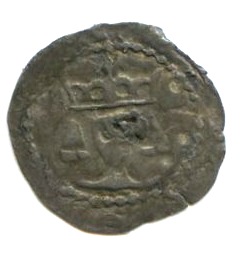
No response so far and this is bugging me, and yes, I know there's a hole in it. Long cross, 3 pellets in each angle on the reverse and I'm pretty certain it's contemporary with the northern european sterling imitations of the 13/14th centuries. Anyone with a copy of Engel et Serreure or the full version of Chautard? It isn't in the abridged set of plates of the latter published in the 1960s. Ta.
-
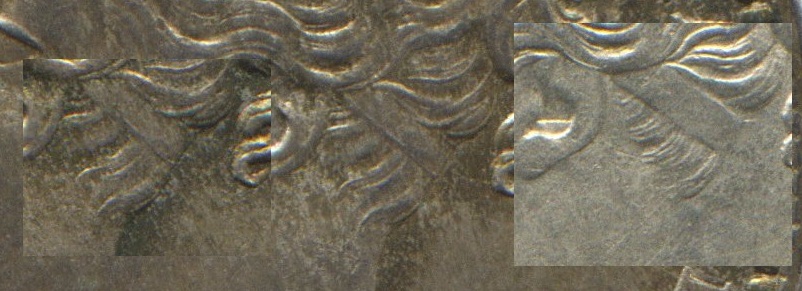
The date would help because 1880 onwards is definitely 4th and before 1878 definitely 3rd. The nose has a slightly pronounced bridge on the 4th head and the tip of the truncation is typically more rounded. Normally, the easiest way is to look at the way the hair is rendered at the nape below the fillet, but that presumes some detail. The one on the right in the picture is 4th head, the middle 3rd.
-
That raises an interesting question. Would a TPG be able to insist eBay remove those listings which imply their (presumably trademarked or copyrighted) name and grading system are being used in a way that misrepresents their business? eBay certainly do it for digital material and as I see it, there is the same insinuation that you are getting the genuine item.
-
Struggling with the mint because both sides read OLE, but then only one side has O whilst the other has C, but both have VS REX III with nothing clear for the mint signature
-
Ebay - the source of all knowledge and pricing.
-
George III shilling error
Rob replied to jaggy's topic in British Coin Related Discussions & Enquiries
Looking at a selection of things, a pattern of sorts appears to exist. His father was chief engraver of the seals and a medallist, but only appointed after his son. It has to be borne in mind that coin output at the Royal Mint was negligible over much of the reign of George III. Coppers from 1797 and 5 shilling dollars were produced at the Soho mint, leaving the Royal Mint to produce mostly gold, so a full time engraver was unlikely to be necessary. Appointed probationary engraver in 1811, his father had not yet been appointed chief engraver of seals and William was not yet on board, so it would appear that a simple W was adequate - such as on the Military Guinea. The question arises as to whether any others were employed as engravers prior to 1816. I don't know the answer to that. Where T Wyon Junior has engraved a medal, he signs it T Wyon Jun, and conversely his father uses T Wyon Sen. Pistrucci was appointed on Junior's death and used anything from BP to his full name. J B Merlen, engaged from 1820, used his initials, as did WW (employed from 1816). At this point the use of a single W would be ambiguous due to the appointment of Thomas Wyon Senior, leading I believe to the different identifying initials -
'Detail of edge lettering and orientation to obverse side suggest that this is an early circulated proof specimen and priced accordingly. Any questions please ask. Thanks' If anyone is logged in they could ask where this valuable information can be found. The response will be interesting, though, as Sword has mentioned, he may be quoting yestodtom.
-
George III shilling error
Rob replied to jaggy's topic in British Coin Related Discussions & Enquiries
The 1817 shillings occur across the grades, from fair to unc with a fairly even spread. The 1817 referred to in the DNW sale is illustrated somewhere on this forum. The one in DNW October 2002 I bought on ebay a couple years later and sold when I bought the 1817 above. The 1820 does appear to be rarer. -
George III shilling error
Rob replied to jaggy's topic in British Coin Related Discussions & Enquiries
That one reappeared in an MS65 slab, bought at bargain basement price (£130 ish), and I sold it for a forum member. The total is probably more than 10 as I now have records of 8. The two dates for shillings with I/S in HONI (1817 & 1820) are struck from different reverse dies. The first is still not listed in CoE. I don't know if the same error exists in 1817 for sixpences, but the consistency of error suggests they were done by the same hand, who presumably thought the N was that of PENSE. This will be a mirror of the S/I error where the engraver was obviously thinking of the N in HONI
.JPG.8d4fed2f10bb9f052c71f7a3d8969cb5.JPG)
-
Check the electoral roll for a guy called Arnold Layne.
-
Well done everybody. The 52nd edition of the general tome is out this month. Or for the decimal section only, the third edition.
-
They are all listed in Coins of England