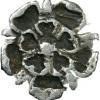
Coinery Posted Monday at 12:21 AM Posted Monday at 12:21 AM (edited) Does anyone have any insight into the relative scarcity of the three Newcastle classes, measured against themselves? Over the last 3 or 4 years I’ve managed to pick up a class 3 and a class 9 in good grades, but have struggled to find the class 10 in a similarly collectable grade, with the attached coin, bearing the full Edward legend, the best I’ve found to-date. Edited Monday at 02:11 AM by Coinery 2 Quote
Coinery Posted Monday at 12:22 AM Author Posted Monday at 12:22 AM (edited) The class 3 and 9 coins available in much better grades generally. Edited Monday at 12:23 AM by Coinery 3 Quote
TomGoodheart Posted Monday at 02:48 PM Posted Monday at 02:48 PM I have no idea, but it occurs to me that perhaps this is the sort of information that Martin Allen at the EMC might have to hand? Mra25@cam.ac.uk 1 Quote
Coinery Posted Monday at 09:57 PM Author Posted Monday at 09:57 PM Many thanks TG I’ll message him. ☺️ I’ve been trying to glean a bit more information from the SCBI 39 about the closure date of the Newcastle mint, and of the date signatures of class 10, to see if I can work out how long the Newcastle mint operated into that class. The date of the mint closure appears to be September 1302 but, depending on who you listen to, the commencement of Class 10 is either September that same year (Fox brothers), or nearly 18 months earlier if you go with North? The Fox brothers’ date would suggest a minuscule mintage of class 10 coins under Newcastle, whereas North’s dates would allow a production window of 18 months. Given the number of Newcastle Class 10 coins available, it makes me wonder who’s got the commencement of the class right? I’d love to acquire every mint in every class someday! I’m currently this far down the rabbit hole, so fingers crossed: Class VI Bury St Edmunds (#1) Class VI Bury St Edmunds (#2) 1c London 1d London 1d London (1 x reversed N on reverse) 2a London 2b Canterbury 3b London 3c Canterbury 3e Newcastle 3e York 3g London 3g Lincoln 3g Durham 3g Bristol (1) 3g Bristol (2) 4c Canterbury eBay 4c London 4d London 6a1 London 7a London 8a London 8c London 9b1 Durham 9b1 Exeter 9b1 London 9b1 Newcastle 9b2 York (Royal) 10ab London 10ab Newcastle 10cf1 London 10cf2 Durham 10cf2a London 10cf3 London 10cf5 London 12a Canterbury 12a Canterbury 12a Canterbury 12a London 14 Canterbury 14 Bury St Edmunds 15c Bury St Edmunds eBay 1 Quote
Rob Posted Tuesday at 09:52 AM Posted Tuesday at 09:52 AM (edited) I called Denis last night to disturb his break and he could only offer the following from memory. I think he misunderstood the question - but it was near the end of the evening. His reply as follows. 3e Northern mints. York (Royal), York (Episcopal), Newcastle, Durham. In my opinion not much to choose between them for relative rarity. York most common , then Newcastle and Durham about the same. 9b. Relatively common. Exeter, Chester and Kingston upon Hull the less common ones. Newcastle in early class 10 are very common even the 10X mules between class 9 and 10 which for other mints are rarer. Newcastle stops minting early in 10ab. I know of no data to confirm my thoughts or otherwise since data for amounts of silver coined is only available for London and Canterbury. All other rarity values are empirical. So to answer your question with my thoughts. It looks like the earlier pieces were lower mintage, but circulated less if typically found in higher grades. If the Newcastle 10s are more common, how does that tie in with larger production and troop movements given we did spend a lot of time fighting the Scots at this time. Sorry, I have too much to do, to do the spadework here. Just a thought. Edited Tuesday at 09:53 AM by Rob Quote
Coinery Posted Tuesday at 12:46 PM Author Posted Tuesday at 12:46 PM 2 hours ago, Rob said: I called Denis last night to disturb his break and he could only offer the following from memory. I think he misunderstood the question - but it was near the end of the evening. His reply as follows. 3e Northern mints. York (Royal), York (Episcopal), Newcastle, Durham. In my opinion not much to choose between them for relative rarity. York most common , then Newcastle and Durham about the same. 9b. Relatively common. Exeter, Chester and Kingston upon Hull the less common ones. Newcastle in early class 10 are very common even the 10X mules between class 9 and 10 which for other mints are rarer. Newcastle stops minting early in 10ab. I know of no data to confirm my thoughts or otherwise since data for amounts of silver coined is only available for London and Canterbury. All other rarity values are empirical. So to answer your question with my thoughts. It looks like the earlier pieces were lower mintage, but circulated less if typically found in higher grades. If the Newcastle 10s are more common, how does that tie in with larger production and troop movements given we did spend a lot of time fighting the Scots at this time. Sorry, I have too much to do, to do the spadework here. Just a thought. Thanks so much, Rob, really generous of you, I’ll digest that later, I’m currently in between nights. It’s interesting because I was reading a few of Denis’ articles on the BNS blog last night, that’s a rabbit hole of info. in itself. Quote
Coinery Posted Wednesday at 04:26 AM Author Posted Wednesday at 04:26 AM Hi Rob, I’m not sure that I’ve moved any further forward with this Newcastle conundrum, hopefully time will provide more evidence and some experiential statistics? However, in the meantime, some great learning has come from stumbling across Denis’ article on the class 6 coins, which I raised a query about on here a while back. I’ve got some new information, I think, on the 6a2 he wrote about, and a new obverse example hiding in plain sight. I look forward to adding it here during the upcoming 2 weeks I have off after tonight. I think he’ll/you’ll find it interesting 🙂 Quote
Rob Posted Wednesday at 06:08 AM Posted Wednesday at 06:08 AM Drop him a line. Better still, come up to the next SMNS meeting as he will be giving the talk, so definitely there. You can then speak face to face over some Hyde's beer in the pub where we meet. His knowledge on all things Edwardian (Plantagenet) is considerable, but is always willing to learn. Happy to put you up if a bed is needed. Quote
Coinery Posted 14 hours ago Author Posted 14 hours ago On 9/16/2026 at 7:08 AM, Rob said: Drop him a line. Better still, come up to the next SMNS meeting as he will be giving the talk, so definitely there. You can then speak face to face over some Hyde's beer in the pub where we meet. His knowledge on all things Edwardian (Plantagenet) is considerable, but is always willing to learn. Happy to put you up if a bed is needed. That’s really kind of you, Rob, such a generous invite. I can’t for a minute imagine I’d be able to make it, but when is your next meeting? Quote
Rob Posted 1 hour ago Posted 1 hour ago We meet on the first Tuesday of every month starting at 7:30 in the Nursey Inn on Green Lane in Heaton Norris. Below is the text outlined in our 2025 chairman's report which gives full details. South Manchester Numismatic Society (SMNS) Chairman’s Report to 2026 BANS Our AGM was held in June 2025 at our long-standing venue, the Nursery Inn, Heaton Norris, Stockport, SK6 4NL. 7 members attended and 2 apologies were accepted. In addition to the normal agenda, discussions moved on to topics which had been submitted by members as AOB. As a result of these conversations the following was agreed. It was decided that our subscription to Zoom should be cancelled, although the option to renew remains under consideration. We also reduced our annual subscription to £5. It was decided to change our meeting start time to 7.30 from 8.00 pm and to reduce the number of meetings to the level of most BANS societies at once a month. One of our members, Roy Williams, volunteered to submit pieces for publication in the Societies section of Coin News. He has been doing an excellent job in promoting SMNS. Since the AGM the average attendance has been eight across seven meetings which has been boosted by the recent pleasing acceptance of four new members. Two of us, Denis Martin and Paul Greenlees, have given presentations. The Exhibition Evening and the Colin Cooke trophy was won by David Holt for his display of Henry VIII posthumous coinage. At the latest meeting chairman Denis spoke an appreciation and presented Peter Crummett with a gift to celebrate his 90th birthday. It was decided to make Peter an Honorary Member following his over 65 years of support. Before the 2026 AGM in June we have a quiz and a talk from Peter to which we can look forward. In writing this Charman’s report I am pleased to announce that 2025/6 has been a most successful one. Dr Denis M Martin ( Chairman) There is a good range of knowledge in the club, with quite a few specialist fields. Early medieval, Tudor & Stuart, Greek and Roman and some Byzantine, Farthings, Shillings, Modern, Tokens misc. Foreign is probably the least represented unless covered by other fields. We are a tolerant lot that appreciate you can't know everything, so any additional knowledge is welcome. Online access to the meeting was used so that Garry Oddie and others could 'attend', but that obviously went tits up when he died. He joined most meetings and often gave a talk. Quote
Recommended Posts
Join the conversation
You can post now and register later. If you have an account, sign in now to post with your account.