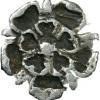
Coinery Posted Monday at 12:21 AM Posted Monday at 12:21 AM (edited) Does anyone have any insight into the relative scarcity of the three Newcastle classes, measured against themselves? Over the last 3 or 4 years I’ve managed to pick up a class 3 and a class 9 in good grades, but have struggled to find the class 10 in a similarly collectable grade, with the attached coin, bearing the full Edward legend, the best I’ve found to-date. Edited Monday at 02:11 AM by Coinery 2 Quote
Coinery Posted Monday at 12:22 AM Author Posted Monday at 12:22 AM (edited) The class 3 and 9 coins available in much better grades generally. Edited Monday at 12:23 AM by Coinery 3 Quote
TomGoodheart Posted Monday at 02:48 PM Posted Monday at 02:48 PM I have no idea, but it occurs to me that perhaps this is the sort of information that Martin Allen at the EMC might have to hand? Mra25@cam.ac.uk 1 Quote
Coinery Posted Monday at 09:57 PM Author Posted Monday at 09:57 PM Many thanks TG I’ll message him. ☺️ I’ve been trying to glean a bit more information from the SCBI 39 about the closure date of the Newcastle mint, and of the date signatures of class 10, to see if I can work out how long the Newcastle mint operated into that class. The date of the mint closure appears to be September 1302 but, depending on who you listen to, the commencement of Class 10 is either September that same year (Fox brothers), or nearly 18 months earlier if you go with North? The Fox brothers’ date would suggest a minuscule mintage of class 10 coins under Newcastle, whereas North’s dates would allow a production window of 18 months. Given the number of Newcastle Class 10 coins available, it makes me wonder who’s got the commencement of the class right? I’d love to acquire every mint in every class someday! I’m currently this far down the rabbit hole, so fingers crossed: Class VI Bury St Edmunds (#1) Class VI Bury St Edmunds (#2) 1c London 1d London 1d London (1 x reversed N on reverse) 2a London 2b Canterbury 3b London 3c Canterbury 3e Newcastle 3e York 3g London 3g Lincoln 3g Durham 3g Bristol (1) 3g Bristol (2) 4c Canterbury eBay 4c London 4d London 6a1 London 7a London 8a London 8c London 9b1 Durham 9b1 Exeter 9b1 London 9b1 Newcastle 9b2 York (Royal) 10ab London 10ab Newcastle 10cf1 London 10cf2 Durham 10cf2a London 10cf3 London 10cf5 London 12a Canterbury 12a Canterbury 12a Canterbury 12a London 14 Canterbury 14 Bury St Edmunds 15c Bury St Edmunds eBay 1 Quote
Rob Posted 19 hours ago Posted 19 hours ago (edited) I called Denis last night to disturb his break and he could only offer the following from memory. I think he misunderstood the question - but it was near the end of the evening. His reply as follows. 3e Northern mints. York (Royal), York (Episcopal), Newcastle, Durham. In my opinion not much to choose between them for relative rarity. York most common , then Newcastle and Durham about the same. 9b. Relatively common. Exeter, Chester and Kingston upon Hull the less common ones. Newcastle in early class 10 are very common even the 10X mules between class 9 and 10 which for other mints are rarer. Newcastle stops minting early in 10ab. I know of no data to confirm my thoughts or otherwise since data for amounts of silver coined is only available for London and Canterbury. All other rarity values are empirical. So to answer your question with my thoughts. It looks like the earlier pieces were lower mintage, but circulated less if typically found in higher grades. If the Newcastle 10s are more common, how does that tie in with larger production and troop movements given we did spend a lot of time fighting the Scots at this time. Sorry, I have too much to do, to do the spadework here. Just a thought. Edited 19 hours ago by Rob Quote
Coinery Posted 16 hours ago Author Posted 16 hours ago 2 hours ago, Rob said: I called Denis last night to disturb his break and he could only offer the following from memory. I think he misunderstood the question - but it was near the end of the evening. His reply as follows. 3e Northern mints. York (Royal), York (Episcopal), Newcastle, Durham. In my opinion not much to choose between them for relative rarity. York most common , then Newcastle and Durham about the same. 9b. Relatively common. Exeter, Chester and Kingston upon Hull the less common ones. Newcastle in early class 10 are very common even the 10X mules between class 9 and 10 which for other mints are rarer. Newcastle stops minting early in 10ab. I know of no data to confirm my thoughts or otherwise since data for amounts of silver coined is only available for London and Canterbury. All other rarity values are empirical. So to answer your question with my thoughts. It looks like the earlier pieces were lower mintage, but circulated less if typically found in higher grades. If the Newcastle 10s are more common, how does that tie in with larger production and troop movements given we did spend a lot of time fighting the Scots at this time. Sorry, I have too much to do, to do the spadework here. Just a thought. Thanks so much, Rob, really generous of you, I’ll digest that later, I’m currently in between nights. It’s interesting because I was reading a few of Denis’ articles on the BNS blog last night, that’s a rabbit hole of info. in itself. Quote
Coinery Posted 40 minutes ago Author Posted 40 minutes ago Hi Rob, I’m not sure that I’ve moved any further forward with this Newcastle conundrum, hopefully time will provide more evidence and some experiential statistics? However, in the meantime, some great learning has come from stumbling across Denis’ article on the class 6 coins, which I raised a query about on here a while back. I’ve got some new information, I think, on the 6a2 he wrote about, and a new obverse example hiding in plain sight. I look forward to adding it here during the upcoming 2 weeks I have off after tonight. I think he’ll/you’ll find it interesting 🙂 Quote
Recommended Posts
Join the conversation
You can post now and register later. If you have an account, sign in now to post with your account.