
Michael-Roo
-
Posts
1,521 -
Joined
-
Last visited
-
Days Won
52
Content Type
Profiles
Forums
Events
Downloads
Store
Gallery
Articles
Everything posted by Michael-Roo
-
Old Time Dealers-Reminising
Michael-Roo replied to Colin88's topic in British Coin Related Discussions & Enquiries
Regarding R&L Coins of Blackpool: I found this article in an August 1967 copy of Coin Monthly I have. The past is another country….. Page two to follow
-
Here's a close up of the reverse…...

-
With my thanks to Mr. Wayne G Sayles of Gainesville: Copper 1 is a modern fake of an Alexander the Great type. Copper 2 is a Seleukid bronze of Antiochus VIII 121-96 BC The silver is a Roman Republican denarius. Numa Pompilius and Ancus Marcius 88 BC.
-
1694 halfpenny with unbarred A's in Britannia. Near VF for type. Nice to find in this condition. 4 of date high over exergue too.


-
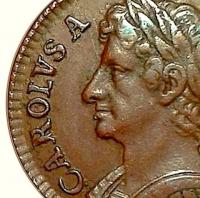
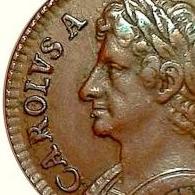
Much appreciated. Thank you. Here's another you all may find interesting. Charles I half groat. mm R in circle. The condition isn't great but, as you'll clearly see, the king's name is entered as 'arolvs'. There isn't an empty area where one would expect to find the letter C. Arolvs fills the available space.


-
Thanks both. Hi Rob. I have the coin in front of me now. I must confess, I don't see any evidence of double striking in the obverse field. Also: would multiple strikes result in Iacobus being entered twice yet leaving all other parts of the inscription as normal?
-
Hello all. Your thoughts on this coin would be most welcome. A James I shilling, mm lis. The king's name looks to have been entered twice. Not simply double struck, but at two distinct positions at the beginning of the legend. I know it is not uncommon to find hammered coins which display 'blundered' legends, but this error is something entirely different? All other parts of both obverse and reverse legends are as they should be. Any ideas concerning rarity value? Cheers.


-
There is indeed something below that exergue line. Unfortunately, even under high magnification, I can't for the life of me work out what it might be. I was hoping the obverse conjoined busts might be something which would give a clue to its identity. Clearly pre Roman. The tall head gear sported by the rider of the two horses on the reverse might also be something to consider. I guess best thing would be to show it to a few people in the Classics and Archaeology dept. of our Uni.
-
PS: The flan (silver coin) is noticeably thick for its 17mm size. Its also worth noting how the bust in the foreground is somewhat smaller than that behind.
-
You're quite right. Obviously not a 'W'. Apologies for my sloppy Greek. Its the silver coin I find most intriguing. I've owned this for 30 years or so, and yet still its the one which I've never been able to place.
-
Thanks for the quick response Peckris. What may appear to be a D or an R at the beginning of the reverse legend on the first coin is merely a line making up part of the central design motif. The legend reads: A /Greek letter sigma/I. Then: K/A/W. Hopefully this might help nailing it down to a particular time frame/mint. Funnily enough; my wife, who is a professional classicist, can't make much sense of this legend.
-
Hello all. I'm new to the forum, and this is my first post. Although the main focus of my collecting is English copper and silver C16th-19th I do also have a tray of ancient coins. All but three of these I have identified and noted. I'm uploading photos of the three mystery coins here in the hope that some of you may be able to identify them for me. Copper 1: 19mm / 6.2g. All detail is in high relief and looks much better in the hand than it does in my rather poor photo. Copper 2: 21mm / 8.6g. The bust looks not unlike that on a silver Ptolemy drachm I have. There are a couple of rows of vertical script on the reverse arranged either side of a standing figure. Silver: 17mm / 3.9g. Conjoined busts on the obverse, a rider on horseback on the reverse. There may also be a small inscription below. Thank you for looking.


