

Rob
-
Posts
12,801 -
Joined
-
Last visited
-
Days Won
347
Content Type
Profiles
Forums
Events
Downloads
Store
Gallery
Articles
Everything posted by Rob
-
Weight, surface detail, multiple examples with identical marks, incorrect die axis, edge quality, counterfeit references (of which there are many but people can't be bothered to read), quality of strike, sharpness of detail.
-
Hi. In that condition it is only worth a pound or two. The best indication of the value obtainable would be to check ebay for a similar item.
-
Scarce is a slight understatement as there are thought to be 2 1933 pennies available to collectors. Coins with altered dates appear on a regular basis and there are also copies available, but as the last genuine 1933 penny to change hands in 2006 cost the new owner £45K, nobody is going to be fooled by a coin on offer at £125. A well executed altered date does have some value though because by definition there can never be more than one or two people able to own the proper thing and it is the key date for any penny collection.
-
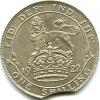 No thanks. It's from the same die pair as mine, so I wouldn't want two. Phosphor bronze, platinum or zinc would be interesting as would a 1914 twelve groats or a 1913 octorino and eightpence. Or better still, any of these designs in the aforementioned metals.
 -
I bought the iron example at DNW's sale last September, lot 3572, which was a piece virtually as struck and not listed in Linecar & Stone or ESC. The hammer price was £1400 (£1652 incl prem.). The lot before was ESC 401 with a plain edge which hammered at £820 (about £960 with prem.). The grade descriptions in the catalogue were identical, but I didn't look at the silver one to check if the grade was correct or not. Nor can I tell whether yours and the DNW piece are the same coin because of the different lighting conditions.
-
Credit where it's due, although I think I've bought very little from Cambridge Coins, I have generally thought their grading stood up to scrutiny. Run by a guy called Dave Allen who, as far as I know, is absolutely no relation! Well you're the undoubted expert on grading, Derek. I certainly wouldn't argue with your conclusions Dave and I are almost always in agreement on a coin's grade.
-
Probably because there was an illusion to finer work in the sale catalogue where it was bought initially as Morrieson in his 1921-2 article in the BNJ vol. 16 describes this obverse die (1643 F) as follows. F. Mint-mark plume. Finer bust than "E" having the edges of the lace collar well marked and with alternating pearls and jewels of(sic) the crown. Legend, CAROLVS:D:G:MAG:BR:FR:ET:HI:REX. This must be an early one as the C of CAROLVS has a chip out it like ojn those of 1642 and some of the early half-crowns of 1643 (Plate VII,99). Found with reverses 3 & 8. This coin has reverse 3, but fine work it aint.
-
William III halfpenny - UK grade and value?
Rob replied to Voynov_BG's topic in British Coin Related Discussions & Enquiries
It's a decent example of the type. Good fine (UK) is about right. I'd say it is worth £50 or even a bit more, but whether a Bulgarian would want to pay that much I wouldn't like to say. Most of the available examples are dire. -
CLIMATE CHANGE FOR PRIMATES MATES
Rob replied to JAG's topic in Nothing whatsoever to do with coins area!
I didn't add anything because I was unable to formulate a reply in terms that he would relate to. I'm not convinced it was A W because the style was too disimilar. The only thing in common with the aforesaid was a sign of mental instability, something the world is not short of. -
1829 sixpence with a possible overdate
Rob replied to chris's topic in British Coin Related Discussions & Enquiries
It certainly looks quite possible that it is a '2' punched over a '9'. The problem, as ever, is in establishing it as a variety. If it is currently unknown, your best bet is in tracking down a few people who also have examples. Or sending the coin to a reputable authority, such as the compilers of The English Silver Coinage, and get an ESC number for it. Ironically, unique specimens often have a problem arousing interest, as I've found with my 1887 wreath reverse sixpence, 8 over 8. You might have a problem adding it to ESC. Alan Rayner is pushing up the daisies as he died sometime in 2007. -
My gothic in GEF+ cost £575, a few years ago mind. I'm not complaining, I think it's probably beaten the stock market. Personally, I think Gothics are dear not because of the mintage, but because they are that good - nothing else comes close. If you just want an example of the design you might as well get a florin. True a mint state one will set you back well over book, but is worth it because they are much scarcer in mint state than the crown. I've only ever seen one in that condition and deeply regret not going higher.
-
I'm not sure why Gothic Crowns attract such high bids. 8000 were struck which when compared with wreath crowns is only surpassed by the 1927 proof and 1928 currency, yet they sell for many multiples compared to the wreaths. Sure they are attractive to look at, but not rare enough to spend as much on them as people do. Any example in virtually any grade sells for more than an UNC wreath, even EF ones sell for three or 4 times that of a wreath (1934 excepted). Only a really choice UNC 1847 is worth paying a few £Ks for IMO. Though the 1846 or 1853 are clearly worth a bit more. I think wreaths are also overpriced given the mintages.
-
He's been selling "uncirculated" tat for years - in fact I've never seen anything approaching unc listed by him. At least the pictures are good enough to see it isn't unc or anywhere remotely near either. Rather disturbingly his high and very high grade coins are better than his unc
-
For 30K it would have to be a big hammered gold piece such as a triple unite or a nice fine sovereign. It's still not enough for a Henry VII though.
-
possible copy 1699 sixpence!
Rob replied to chris's topic in British Coin Related Discussions & Enquiries
Why do you think it is a fake? 3g is correct, but could be anywhere between 2.5 & 3.5g. What is the weight to 2 decimal places? If it isn't made of silver, then the ring would be a different tone to a genuine one which you obviously have as you have compared tones. Is there any difference in the detail of the two items? -
2.4g is too low, but about right for a pewter with 80/20 Tin/Lead. Does it ring right? A cast will have a duller sound than a struck piece which has quite a clear resonance. Take a known 925 silver coin of about the same dimensions, place it on the end of your finger and give the edge a light tap with a pencil or similar. The ring will sound different if you have a casting in a different metal.
-
Decent grade, but looks a bit polished with all the shiny bits. That is a pity because a nice UNC would make £4-5K. Book price for an EF which yours certainly makes is £2500-3K, though any cleaning would knock that back. You can't tell without seeing it in the hand. 1841 is THE desirable date for the series. Even cleaned you are better off than you originally thought. It's a rare and much sought after coin, and you are a lucky man.
-
With all those contact marks, keep your hand away from your wallet. It isn't a rare coin and if you want a gEF or better you will find one in a reasonable time.
-
I didn't see any at York either, but wasn't looking for them. I suspect it is too high a ticket price for a half decent example for many dealers to stock, and if in dire condition they are equally difficult to shift.
-
They turn up on a reasonably regular basis. e.g. The last 3 St. James's sales had 2,4 & 4 pieces respectively. I didn't check the other houses, but it is reasonable to assume these were not the only pieces available in the past 15 months.
-
Desirability isn't objective, but it plays a huge part in pricing. Consider your wreath crown. Struck for currency between 1928 & 1936 with 9034 struck in the first year and a low point of 932 for 1934. Prices for UNC are between £500 & £5000 and availability is clearly not an issue because most sales will have at least one example. Now consider the following list: 1675/3/2 halfpenny 1694 1/2d with GV/B on the obverse. 1694 1/2d struck in brass (2 known, 1 available to collectors) 1788 1/2d type R24 in aluminium 1790 1/2d type R44 in silver P1231 obverse uniface in copper (1 available to collectors) 1807/6 restrike trial halfpenny 2x P564 1689 farthings struck on a Charles II halfpenny Charles I 2/6d im.Eye struck on a shilling flan Charles I 2/6d Worcester mint Allen dies D-23 13 varieties of Weyl patterns. This list is not exhaustive, but all of the above 23 coins are mine and other than where indicated are unique (or effectively so) to my knowledge. But - not more than 1 or 2 of them have a cat in hells chance of selling for more than the price of an uncirculated 1934 crown. Why? It all comes down to the number of collectors relative to the coins available in the market place. There are probably more than 932 collectors worldwide looking to acquire a mint state 1934 wreath crown despite not all being in that grade, but far fewer interested in a Weyl pattern for example. Collecting habits change too. One year it might be pennies, the next year it might be crowns. Currently you can't get good hammered gold for love nor money and as a result prices have exploded, but I wouldn't like to prophesy that this will be the situation next year. Desirability overrides the rarity factor time after time. The basic rule should be to collect what you like and invest in what you can comfortably predict. Coins are essentially a discretionary purchase made from surplus funds unlike commodities which are subject to the demands of commerce and so the latter are likely to produce more predictable and better investment results if you do your homework. Sure the investment tail has wagged the collecting dog as witnessed by last month's Heritage sale where an MS65 slabbed 1901 1d sold for about £600, but taken in isolation you could come a cropper big time if you paid too much attention to this isolated instance.
-
Silly idea. If you knew the answer to the question, you wouldn't be asking. Don't even try to second guess the market without a very deep knowledge of what you are "investing" in. On any day, all coins can be either cheap or expensive relative to market, but that requires you know what the market is and one swallow doesn't make a summer. Simply going for gold is even more of a risk, because bullion is a single commodity at the end of a very solid bull run whereas coins can effectively be many commodities depending on the field involved. However, as all prices have risen in line with the general market - in fact they are the general market, it would take a crystal ball to identify the next area to outperform the mean. I don't have one of these.
-
Guinea Weight of Queen Anne?
Rob replied to Coin_Hunter's topic in British Coin Related Discussions & Enquiries
Unfortunately mary's husband William batted for the other side... Pink and Orange clash, that can't be right. -
You could change the upper value to £38K ish based on the P1311 in the Evans descendants' sale. There's only one of those. Forget that one. Must remember not to try to communicate after pub.
-
You could change the upper value to £38K ish based on the P1311 in the Evans descendants' sale. There's only one of those.