
Rob
-
Posts
12,808 -
Joined
-
Last visited
-
Days Won
349
Content Type
Profiles
Forums
Events
Downloads
Store
Gallery
Articles
Everything posted by Rob
-
Never seen one with the defective lettering on either the real thing or a copy. Anyone else noted this previously?
-
A symptom of the striking method I'm afraid. The dies may or may not be flat enough to strike the full design in one go. The blow with the hammer may or may not be perpendicular to the face leading to more force applied to the edge of the die in one area or another, The top and bottom dies may or may not be aligned such as to give a well centred coin on both sides. The amount of force used may or may not be sufficient to imprint all the design in one go to both sides. Successive blows with the hammer may or may not be aligned with the previous strike, being either rotated or displaced. Every so often, all these things come together in perfect alignment and the price of the resulting coin rockets. What you have is a more typical result. It looks to have been further abused by gilding.
-
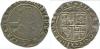
Stuart is correct. S2655 and not 2656. The easiest way to differentiate is by the hair behind the head. Wavy inward lines on the 4th bust as seen in the o/p, Sticky out and thicker hair on the 5th, as per image attached.
-
It looks from the reverse that it has been copper plated and then gilt in the past? This is not a very nice example of a common coin. If you want one, get another piece and bin this one
-
I thought we were talking the other way around, for milled it's fine but for hammered not Because as Nicholas pointed out, there are no prices for hammered above VF Plus the rarer variations of hammered coins which it does'nt go into depth onCompared to all the others, Spink is an encyclopedia of useful information for hammered. It still only covers maybe 20-25% of the varieties in terms of meaningful pricing, but this is way, way better than the alternatives. To expand on the 10 examples I looked at, The ratio of price paid to CYB was just under 1 in three cases, the other 7 started at over 2x, with a couple of double digit multiples. Taking Saxon coins as an example, a single figure for the 15 types of Edward the Confessor is of no practical use apart from giving a guide to the minimum price you can expect to pay - but you could establish that by viewing a few tables at a fair or perusing a few websites. Then you also have to consider the relative rarities of different mints. Only Spink lists these together with a rough cost in VF. I would say that cheap and cheerful price guides are predominantly used by people who are looking at the budget end of the market in any case, so the numbers for unc coins to a large extent serve little purpose. Spink are unquestionably overpriced for some of the milled, and for many coins in lower grades prices are effectively set by eBay, whatever the books say.
-
It doesn't appear to be in 2 or 3. Haven't looked elsewhere. Prices in catalogues can be completely misleading. I ran the last 10 purchases made in the open market and compared Spink pricing & CYB to the price I paid. There is is so much variation that it is impossible to conclude anything other than a simple price list such as CYB is virtually useless. Comparing the price paid to Spink gave results from 0.6x book up to 1.8x. The lowest price paid relative to CYB book price was 0.83x. The highest was 33x, but that is because they supply a single figure to the entire reign of Charles I including the Civil War coinage. Similarly unhelpful were the figures for most hammered, with Saxon and Norman coins also having a single price. In fact, if you have anything other than the most common type of hammered coin for a given reign, you have to use Spink as they are the only chance you have of being able to identify it and put an approx. value to it. The rest are chocolate teapots to varying degrees.
-
The listing title sounds like his hovercraft is full of eels. He appears to have latched onto some vaguely relevant words. Not sure where prince or silver come into it though. He also appears to have moved house in the past 6 months - to the back to back across the alley. Seems a bit strange to make such a short journey?
-
Once you said they had Dolphin tickets with them, all I had to do was start at catalogue no 1 and look for the coins. There's only 3 or 4 dozen to check. That the tickets said they had been in business for 27 years also helped as this was advertised (as 27 years) for 2 or 3 years from about 1995 onwards (when time stood still apparently ). Dolphin were never cheap. I see that the September cover warns of no trade deals, i.e. retail only at this special price up to the 30th Sept after which prices would return to normal. It would be misleading to read too much into the prices without making the comparison with other dealers.
-
No, just a nerd
-
And the Eadgar was from the March 1997 Sovereign list

-
Right, you've got out of jail. The Cnut was probably sold as part of their offer in Sept 1996 as seen in the Sovereign FPL

-
In that case I would say they are likely to be genuine as they dealt in rare and high value items on their monthly list. Bob Ilsley was the person's name. They now have a shop in Leighton Buzzard(?) but seem to mostly deal in modern stuff these days.
-
Rob's got no time at the moment. I'm not sure they are ok, but wouldn't commit to that. The weights are ok as is the general style, but I'd prefer to find matching dies without identical fine detail. The Eadgar has a pellet in the legend after EA and the rev. inner circle looks a bit too perfect in places. What's going on with the final O of MO? Cnut's nose and the lis on the crown look a bit bulky and the quatrefoil style on the reverse is markedly different to other examples of this type by this moneyer that I have found in a cursory check. e.g. Lloyd has one on his site at the moment where the quatrefoil is much more open.
-
This one?

-
It looks ok, if a bit abused. Why do you suspect it isn't genuine?
-
Do you mean Lakeland Coin Auctions? Based on a covesation I had a Corbitts 3 years ago, they gave up about 5 or 6 years ago as it was impossible to get sufficient material and hence generate enough interest. The other one that John did cataloguing for is PFK at Penrith.
-
1849 "Godless" Florin - Gothic or Not?
Rob replied to VickySilver's topic in Confirmed unlisted Varieties.
Both types use the gothic bust, but I use the two separately to differentiate the types. It doesn't matter what they are called as long as the other person understands - or is that a bit too concilliatory? -
1849 "Godless" Florin - Gothic or Not?
Rob replied to VickySilver's topic in Confirmed unlisted Varieties.
Oh Dear me. My mate does a good line in lives. Three for a tenner if anyone wants them. Why does it matter?! Godless is the 1849, no questions asked. Gothic to me would be the ones with gothic script, but I'm not going to throw the toys out the pram if someone disagrees. -
Mmmmmmmmm.
-
You've seen it before, but here's a gVF type 2.
-
Nor did anyone else. That's why it was unsold. They were all overgraded.
-
Virtually all the York coins were struck in the period 28th January 1642/3 to 28th January 1643/4. The type 3 halfcrowns were later than the type 2s based on the wear to the horse punch which was the same for both types. The Briot style shilling dies were later still according to the wear seen on the punches. We know that the Pocklington Hoard contained a few dozen type 3s which were fresh as from the mint when found. The most likely reason for their concealment would have been the breaking of the Hull siege by Parliamentary troops on the 11th October 1643 and their subsequent advance to around Stamford Bridge, thus threatening York, at which point the Royalists retired to the city for the winter and left on the 28th January 1643/4 to head north and confront the Scots Covenenters who were advancing on Newcastle. Whilst it doesn't confirm these months as the time they were struck, it is likely that more silver would have been available during the summer when they were enjoying success on the battlefield than the following winter when contemporary diaries record that there was little coining taking place due to lack of silver. Once the Northern Army left in the January, troop numbers in York dropped from about 10,000 to 8 or 900 which also demanded less coin. The cavalry left for the north while the remaining troops were foot soldiers, suggesting the shilling was a more practical denomination at this point in time. A cavalryman earned 2/6d per day, the foot soldier a shilling - when the got paid which wasn't often.
-
Struck most likely between August 1643 and the 28th January 1643/4, with August or September the favourites.
-
The testoon was the anglicised version of the Italian testone. A quick wiki check suggests the testone ceased to be struck in the1550s. The nordic skilling wasn't introduced until 1625, so looks to have been adopted from the English terminology. The scilling was an ancient accounting term, just as the merk was, and is likely to be the origin of the value's useage. As for the changeover in terminology, mint records covering the commission to John Bowes at Durham House of 29th Jan 1548/9 refer to the shilling and half-shilling, and the conversion of testoons (i.e. the debased HenryVIII issues). It seems likely that the change was initially aimed at distinguishing between the old and new coins. Subsequently, there is reference to shillings of varying fineness, so the use of testoon was restricted to the issues they were trying to call in and melt down, and is referred to as such when the maximimum levy for exchanging the old money was set at 2d in every 20s.
-
Fashion, I suspect