
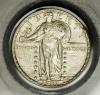
Sylvester
-
Posts
3,112 -
Joined
-
Last visited
-
Days Won
9
Content Type
Profiles
Forums
Events
Downloads
Store
Gallery
Articles
Everything posted by Sylvester
-
I shouldn't laugh though, it'll probably come to that. I'll swap you my Clement Atlee for your Douglas Hurd!
-
Slab or not to Slab?
Sylvester replied to Mat's topic in British Coin Related Discussions & Enquiries
If you do decide to break the coin out Mat, ensure you're careful! On a US forum I was once advised that there are numerous ways to crack coins out. Some use all kinds of things from pliers to clip bits of, hammers, chisels, vises, none of which sound very safe. One of the safest methods I came across was wrap the slab up in a soft cloth all way around and then use G-Clamps and slowly apply pressure to the edges of the slab or if you prefer on the surface of the slab in the label area, anywhere as far away from the coin as possible. You can just use one clamp. Just turn careful until you hear it crack. Unwrap and inspect the slab, if it needs a little more persuasion, re-wrap in cloth and apply a little more pressure, or perhaps from a different direction (depending upon how it has cracked). I've cracked two coins out using this method, a valueless Lincoln cent (as a test), followed by a decent grade fairly scare gold 2-ducat piece from the 1780s, nothing like pressure, but both came out totally fine. It just takes patience and nerve. Another method is to wrap it in cloth/rags and hit one of the long edges with a hammer. I'm not keen on this method though as it's harder to regulate the pressure, hit it too hard and you could damage the coin. -
Slab or not to Slab?
Sylvester replied to Mat's topic in British Coin Related Discussions & Enquiries
Anyone who has been on this forum for several years may remember all too well my views on slabbing. I have to confess to having moderated my ideas somewhat substantially since then. There was a time when I was anti-slabbing, and with good reason too. I have always enjoyed handling the coins I own, looking at them from all aspects, obverse, reverse and edges. Something that slabs hinder, particularly the edges. I have a strong passion for early milled and hammered coins and with hammered, as Geordie rightly points out, why would you want them slabbed? To me it's kind of like going to a museum and looking at coins behind glass. So that was my pre-2008 stance. However, in recent years I've mellowed somewhat on slabs, particularly considering my collecting fields have shifted slightly (although I was dealing with US coins long before my views changed). To me it's not so much the guarantee that the coin is genuine (because i'm sure we're all aware of instances where TPGs have been fooled and have slabbed fakes, or worse still fake slabs!) For me the slab really comes into its own on three grounds. 1. It offers the coin more protection from the environment (although not infallible). 2. Photographic evidence of the coin and proof that you own in. But for me the most important 3. It prevents mishandling of coins. I can't tell you the number of times I've heard collectors and dealers complain about the classic, "I found my late relative's coins, but they were dirty so I gave them a quick clean before I brought them here for valuing, how much are they worth?" Anything that stops coins, that were once well loved, from being completely ruined by a totally uninformed heir has to be a good move in my book. Frankly, I have little sympathy for the heirs losing out here, for me it's the fact that some coins have survived so well for so many years and could be eagerly sought after and enjoyed by real collectors but are totally ruined in a matter of minutes. Imagine what could have been a darkly toned UNC Bun Head penny presented to you freshly polished with brasso. It'd break the heart. -
Opinion Of this Sovereign
Sylvester replied to azda's topic in British Coin Related Discussions & Enquiries
I wish I knew more about sovereigns to shed light on this, looks like i'm going to have to get gemmed up a bit here! Regardless of what type it is, it's still a damn fine looking coin! I like Jubilee issues, especially the gold. -
I often thought of putting together a set of £2 back in around 1999, but it never got off the ground (not helped by the fact that I really disliked the Rugby one) and then I lost heart completely when the commems came every year. There's just too many of them and too much variety when you start taking into account minor varities as well. I do sometimes consider a date run of technology ones though, it's definately (for me) the best £2 coin design, simply because the design, so simple but so clever, so much meaning locked within. I've always admired that.
-
I remember near the end, around 1991 or so I was sent to the shop with a George V Florin to purchase a bottle of milk (despite my protests that I didn't actually want to spend this), my mother won the argument and it was spent.
-
Never say never Scott. With the way inflation is going what is 50p worth these days? I certainly don't think of it as a high denomination coin any more, you'd struggle to buy a chocolate bar with a single 50p these days! Even a £5 note doesn't go very far now when you go shopping. Anyway as with the State quarter program they could roll it out over a long period. One or two counties per month, remaining 50ps needed could be made up with the standard issue. Technically they're already doing this every year with 50p and £2 coin already, most years sees 2 or 3 designs (one/two commem plus the standard design) for each coin. Personally I miss the good old days when commems didn't really exist, the only time you got a £5 or something like that was during either a monarch change or a design change (every 20 or 30 years). Back then commems actually were special, the rot set in around 1927 when the wreath crowns arrived minted merely to sell as gifts for Christmas. Then the awful 1935 commem, followed by 1951 and then down hill it went. The only commem I really like is the Gothic Crown, depending which reason for its striking you are inclined to believe.
-
Oh dear. 29 designs, shallow clip art reliefs, reminds me of the US State Quarter project, which was such a money spinner that it then went on to many other similar themed projects. It wouldn't surprise me if the Royal Mint decide to make a regular thing out of this, using the 50p for lots of different clip art designs every year. Just think; a design for every county, historic buildings/monuments, monarchs, Prime Ministers etc. Certainly a shrewd business move. Not so sure I like it though. Note how since the redesigns of 2008 the overse relief has also been greatly reduced. Won't be long until we're doing what the Netherlands do, a simple outline portrait.
-
1882 London Mint penny ?
Sylvester replied to 1949threepence's topic in British Coin Related Discussions & Enquiries
Yeah I collect decimal 10ps but only the small ones! To be fair though this isn't really my main focus. I tend to strike a balance between Norman era coins and half guineas, although I have a fondness for 17th/18th century 6ds and sovereigns too. -
5p and 10p nickel plated steel as of 2011?
Sylvester replied to scott's topic in British Coin Related Discussions & Enquiries
I don't see how it really makes much difference to be honest, downgrading to nickel plated steel is still one better than aluminium. I suppose it doesn't really matter any more, after all (ignoring the vending machine industry) what are we actually losing? Cupro-Nickel, base metal rubbish anyhow. British money has been on one long downward spiral since 1920. Just my opinion, others may differ. -
Well I've deleted some, but as I'm not a full moderator I only have access to parts of the forum, so i've removed what I can!
-
A question for you advanced types
Sylvester replied to declanwmagee's topic in British Coin Related Discussions & Enquiries
Hmm a difficult one, it depends what you mean as lesser coins? If you meant modern ,then I'm afraid I view most things since 1816 as modern but that's only because I spent a good time with earlier material, which have a different feel, they don't feel modern. If you stack a pile of shillings dating from 1816-1966 in a pile the only difference is the silver ones are generally lighter and the milling on the cupro-nickel ones is closer. About the florin, well I have a fondness for florins of all types but I wouldn't want to pay a lot for anything struck from 1920 onwards (when the silver was debased). Cupro-nickel coins generally aren't as attractive as their silver counterparts in my opinion, in one way simply from an aesthetic point of view, silver is softer and the details appear sharper. The other thing is I simply just like silver in and of itself, moreso than gold. -
What coins do you collect
Sylvester replied to choolie's topic in British Coin Related Discussions & Enquiries
A very good question indeed and one I've had many answers to over the years! I been through most areas of British coinage at some time or other. Started out on shillings originally supplemented by brass threepences. However, Elizabeth II issues really didn't do a lot for me, neither did the whole Scottish/English having to get two of each date. So then I tried my hand at type sets (1887, 1893, 1901, 1912, 1937), which strangely morphed into collecting half sovereigns and shield reverse sovereigns by date instead (I still have a fondness for half sovereigns even now). Then I turned to hammered coins and sixpences. Initially the 6ds were from 1816-1967, but the long run, of what I consider dull wreath reverses, from 1831-1910 really put me off progressing far with that. I then switched to early milled sixpences (which I still adore), I did rather well with that set compared to most others i've tried in the past. However, I then got bit by the gold bug (again) and took to US gold, half guineas and hammered gold, which brought the sixpence collection to a stop. Then in 2005 I sold off everything to allow me to switch to Anglo-Saxon and Norman pennies, which after two years also stopped and were put into storage. I then took semi-retirement from collecting. These days I hardly buy coins any more, the one set I am actively working on (albeit part-time) is my date run of US Standing Liberty Quarters. Other than that I really don't find many post-1800 British coins that interesting any more. I still like the early milled coins and the early medieval coins though, and I purchase them as and when I feel inclined. Although I generally spend my money on other things. -
They turn up on a reasonably regular basis. e.g. The last 3 St. James's sales had 2,4 & 4 pieces respectively. I didn't check the other houses, but it is reasonable to assume these were not the only pieces available in the past 15 months. I will admit I wasn't thinking auctions. I've just never seen dealers selling them ((shops, internet, coinlists or otherwise). They may well have been some at the York fair but I didn't come across any.
-
Talking of undervalued, i've always pondered about acquiring some Edward VI gold, the thing is i've never actually encountered any for sale. Me thinks it's rarer than catalogues might suggest.
-
Guinea Weight of Queen Anne?
Sylvester replied to Coin_Hunter's topic in British Coin Related Discussions & Enquiries
Monarchs that are thought to be batting for the other side, or both; William II (Disputed, many primary sources simply had it in for him) Richard I Edward II (with Piers Gaveston, then Hugh Despenser) James I (many including the Duke of Buckingham) William III But of course much of it could simply be contemporaries that hated certain monarchs trying to villify them. For example if George IV hadn't been so overtly into the ladies then homosexuality could have been another complaint that was laid at his doorstep along with all his other faults. Whether true or not, it didn't really matter because it was all character assasination anyhow. It may be the case with the monarchs above. It could be that Edward II simply wasn't interested in warfare (unlike his father and son) and had close friendships with other men but none of them were sexual. To the observing medieval noble though, a king that doesn't like fighting and warfare? (Remember Edward I had left a rather large impression), well he must be a coward and womanly and well 1 + 1 and the answer will eventually lead you to 4. -
Guinea Weight of Queen Anne?
Sylvester replied to Coin_Hunter's topic in British Coin Related Discussions & Enquiries
In some respects beauty in one era is different to beauty in another. In Tudor times beauty was all ultra slim waists and white pale complexions (only peasants had tans, because tans meant you had been outside toiling in the fields all day). In the 1700s fashions had changed, fat was in, if you were fat it meant you were rich and everyone wanted to be seen to be rich! Then there was the whole wig thing, going from the darker wigs brought in by Louis XIV and Charles II to the powered white wigs of the 1700s. Of course in modern times things have changed and beautiful women these days 'have' to be thin (so the media keeps portraying them) and a tan goes a long way, whereas deathly pale is a no no. So Mary may well have been a stunner by late 17th century standards. -
Question on toning
Sylvester replied to azda's topic in British Coin Related Discussions & Enquiries
Well i certainly didn't pay that much! £35 was my limit, it is fairly dark but when held at an angle the red, orange, yellow and green are there. Doesn't really show up in a photo though, i've tried. -
Question on toning
Sylvester replied to azda's topic in British Coin Related Discussions & Enquiries
Ah the topic of toning. It's all in the eye of the beholder really. I'm not a great fan of toning as I lean towards white coins, but I do like the steel blue tones, anything graphite or pale lustrous grey. I've seen several US collectors drooling at the mouth over olive, yellow or worse still that speckly brown, which I to be honest find fairly hideous. The rainbow tones in particular always look fake to me, more like an oil streak in the road and they do much to distract from the beauty of the coin. Although of course this would be very acceptable on Churchill crowns, anything that distracts from that design is a bonus in my book. Although I perhaps ought to moderate that slightly, as I have an Edward I penny with rainbow toning, which actually looks quite pretty, and the toning was the only reason I bought it! -
Royal Mint Uncirculated Coins
Sylvester replied to mark3's topic in British Coin Related Discussions & Enquiries
Yeah but if silver or copper ever rose to the sky high prices that were around in the very early 1980s then a good percentage could feesibly be melted. The balance is 'historic curiostity/value' vs 'money to be made', if the money to be made is enticing enough (as it was in the early 80s for gold and silver) then they will get melted. The thing is the 1696/7 and 1757/8 silver mintages are generally safe at the moment because they have historic interest/value (sure they're common and shops are inundated with them) but people will hang onto them (thinking non-collectors here) because they old. If silver hit near $50 per ounce again then i think you'd find alot of coins getting melted regardless of age. This is definately true of the more recent bronze coins such as the 67s, they are held in far less regard than say the 1696/7, 1757/7, 1816 silver issues, or even the 1797 or 1806/7 copper issues. It's because the 'money to be made' on melting 67s would easily outweigh the 'historic curiosity/value' much in the same way when the 1971 bronzes would if we switched to the euro. -
Royal Mint Uncirculated Coins
Sylvester replied to mark3's topic in British Coin Related Discussions & Enquiries
Ha Ha, now when they're that rare i'll be interested in buying one off of you! lol. -
Royal Mint Uncirculated Coins
Sylvester replied to mark3's topic in British Coin Related Discussions & Enquiries
You know it could turn out to be quite ironic, as people will actively choose to scrap the 1967s over all other dates. They could actually become scarcer in 200 years time. The same with 1964 US silver, it's always the first choice to go to the melting pot. Whereas scarcer dates will generally be kept, regardless of their condition. -
I can imagine Gary, proofs must be even worse to crack out, one mark on the surface and it's all over.
-
The Great Recoinage of 1816
Sylvester posted a topic in British Coin Related Discussions & Enquiries
Something that i've been wondering about for years but never got an answer to is, what happened to the copper coinage during the Great Recoinage? The old silver and gold were called in and demonetised and a large supply of coins of a new design were struck to replace them, however, this appears not to have been the case with the copper coinage. So did the pre-1816 copper remain in circulation, or was it token coinage that had to fill the void until the copper started being produced again? Would George II and earlier coins still be around in the 1820s? I'm afraid copper/bronze coinage is a huge black hole in my numismatic knowledge. -
Ha cracking out coins from slabs is always a nerve racking experience. I have successfully liberated a few using the g-clamp method where you apply pressure until the slab cracks. The practice go with the Lincoln cent was a walk in the park, cracking out an Joseph II 2 ducat coin was not so pleasant, but it came out unscathed.