
Avocet
-
Posts
23 -
Joined
-
Last visited
-
Days Won
2
Content Type
Profiles
Forums
Events
Downloads
Store
Gallery
Articles
Everything posted by Avocet
-
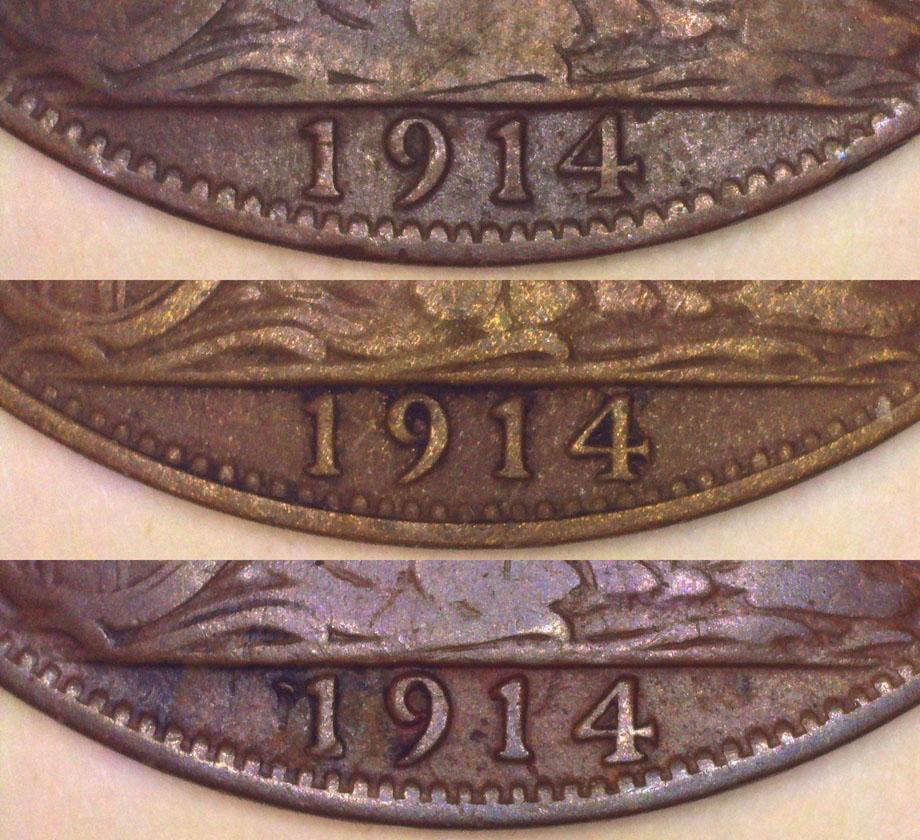
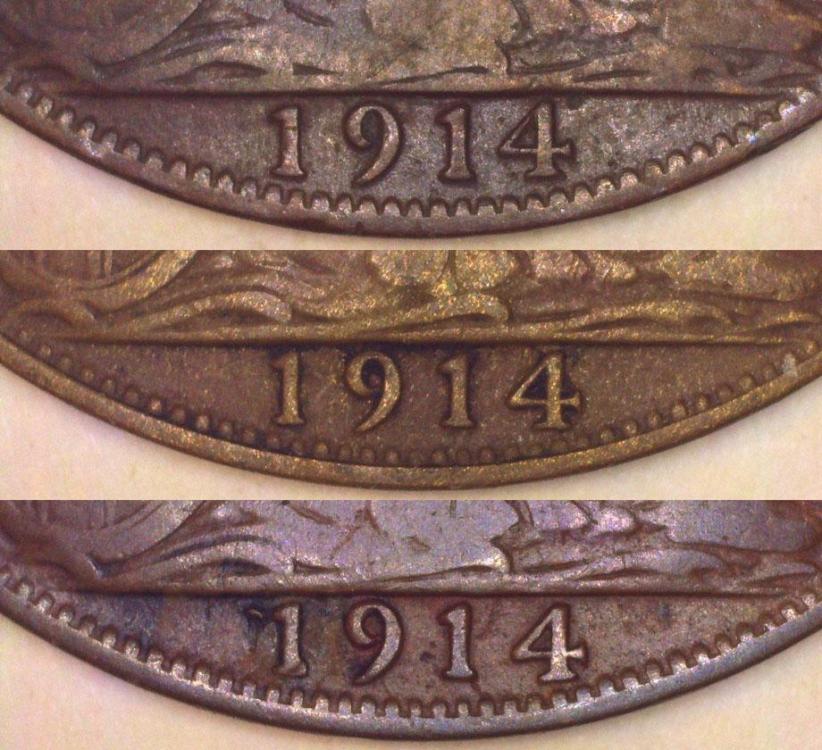
I now have three different cases. The middle example seems to represent the normal type: The bit of raised metal to the left of the 1 in the bottom coin is just a scrape. Conventional wisdom seems to be that these sort of wanderings largely ceased after 1907. I can't be the only person who's ever looked at 1914 pennies.
-
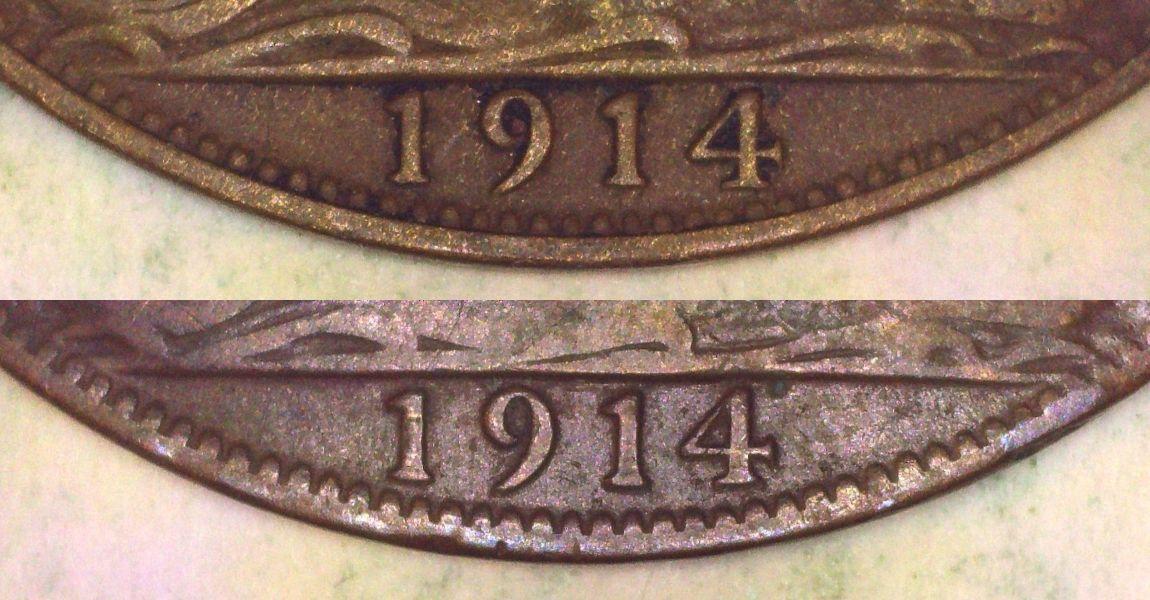
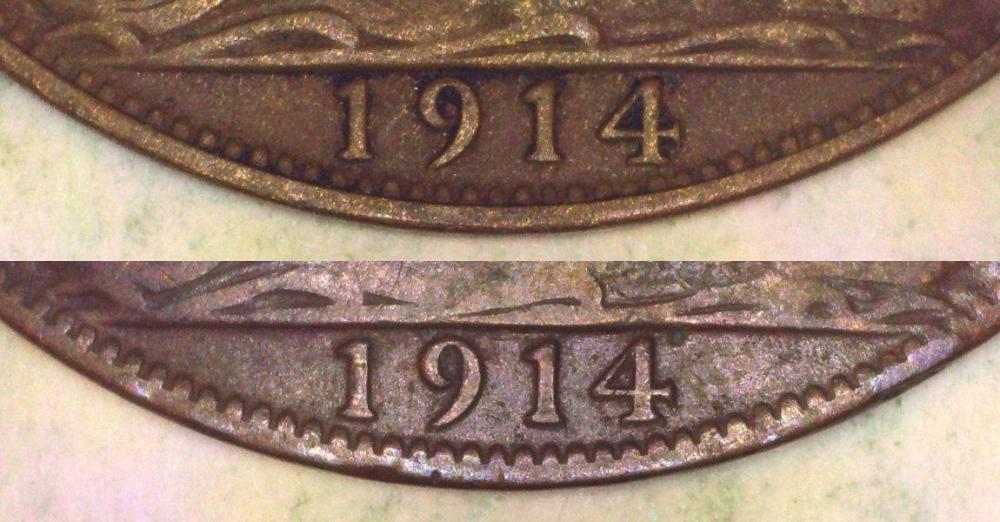
Browsing eBay listings the other day I noticed a 1914 penny with the 4 seemingly well to the left of its usual position. Naturally I bought it; it's the lower of the coins in this picture: The numerals look slightly higher on the regular coin, and I'm wondering if the exergue is a touch higher as well. Better examples would be needed to be sure. I don't see any doubt over the position of the 4, however. I couldn't find a similar example currently listed on eBay, but there was one where the upright of the 4 points directly to the tooth, likely due to an anticlockwise rotation of the 4 rather than a lateral movement. It's in the post!
-
I found my first 1946 ONE' penny today, in the rummage box at Dervaird Farm, Glenluce. It was obverse up on the bottom, looking like it might not have been looked at in years. One of those sublime moments. In view of your message above, I have to thank you for making it an even more desirable coin than it might otherwise have been😉
-
All these pursuits are commonly perceived as a bit eccentric or cranky, and anyone trying to explain what makes their hobby so fascinating might well be in danger of reinforcing that view! I don't necessarily agree. Coins have been a central part of everyday life for centuries. Given a few minutes I am pretty confident I can convince most folks that studying and collecting them can be both worthwhile and cool. The sharp trend away from cash transactions (presumably there's some quantification of this out there) is a dark cloud on the horizon, but the history remains.
-
1896 Penny date width
Avocet replied to absence of uniformity's topic in British Coin Related Discussions & Enquiries
I think the above is correct. The outlines seem to start going astray around teeth 7 and 8, both of which are a bit too narrow. This is my 11.5, alongside an 11: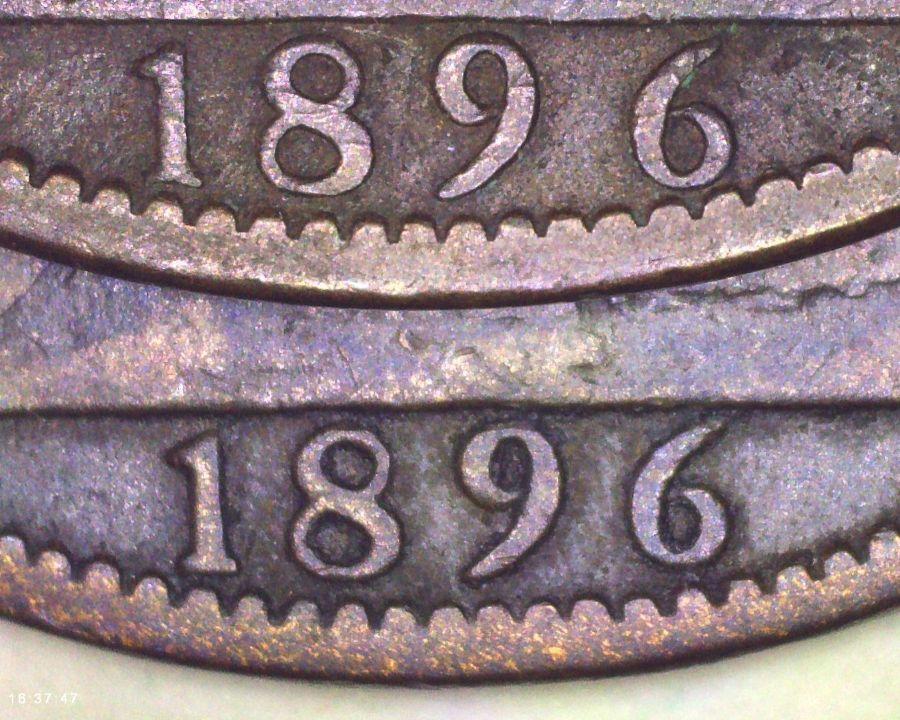
-
Looking at the comparative pictures above, most of the differences (apart from the colours!) seem to come from the angle of the final 1 rather that its horizontal position. Completely different to what we see with 1896 pennies, for example.
-
Allowing himself to stand again would need an amendment to the constitution, and he won't be able to get that done. But I find it hard to believe he has any intention of leaving the White House, and I expect him to stop at nothing to try to stay there. His death would simplify matters, but part of me hopes that doesn't happen. I'll be watching from a distance of course.
-
Is there still a demand for bronze pennies?
Avocet replied to RChris's topic in British Coin Related Discussions & Enquiries
If I'm understanding things correctly, to do this you need to use underhand methods - it's not a feature. The presence of such manoeuvres helps cement my belief that the only rational bidding strategy is to decide how much you're really willing to pay (a more complex mental process than many give it credit for) and bid once only, as late as you dare. The only proviso I can think of is that buy it now and make offer options are removed by the first bid, so it may be desirable to place a minimum bid early if someone hasn't done so already. -
I can quite see how a snappy descriptor, coupled with just the right level of scarcity, adds a touch of glamour to a particular coin and helps to make it more sought after - whether the V word is carelessly applied or not. Against the dot pennies, the poor old "1915 extra bar penny" doesn't stand much a chance, despite its origins and scarcity being broadly similar (IMO).
-
Coincidentally I checked my very small pile of 1961 half crowns the other week, prompted by seeing the missing EF abnormality listed on Michael Gouby's site. And I find that I have one, now properly installed in my collection as a coin of interest. Generally my wife's attitude to my hobbies is one of resigned acceptance at best, but she "gets" my coin collecting. I find people are genuinely interested when I show them examples of variations and abnormalities and talk about the stories behind them. The unanswered questions help to add to the intrigue.
-
I'm not sure I understand. Is anyone suggesting that features like those on the 1915 pennies pictured above were not created during the minting process? If we do call such things varieties (not an issue I was attempting to address) how does that give the green light to the sort of nefarious activity you are describing?
-
Not absolutely everyone then! 😂 Still very happy with my acquisition 🖖
-
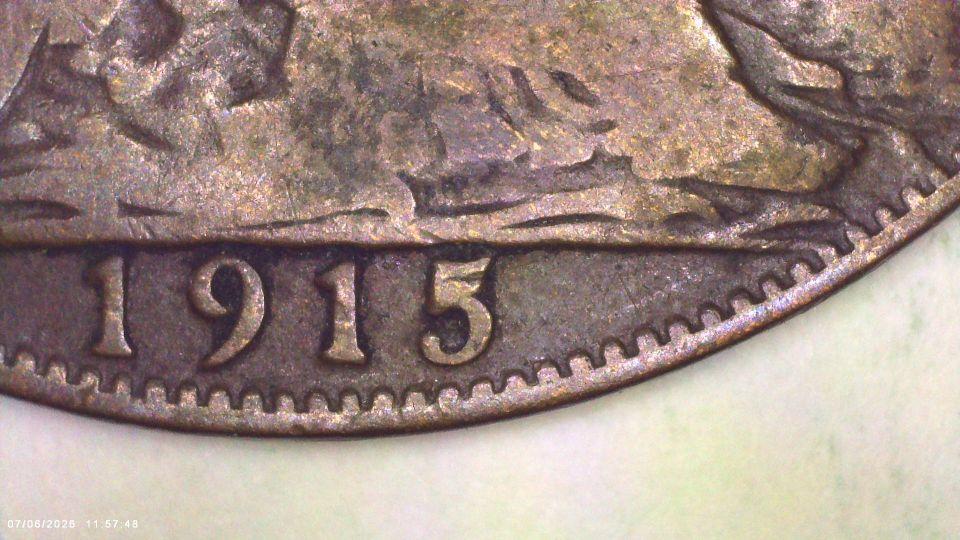
Right back on the first couple of pages of this thread I see there was discussion about partly filled date numerals in George V pennies, whether they constitute collectible varieties, etc. Clearly V M Court was keen on them, as shown by the attention he gave to the 1915 and 1920 examples. But over the years they seem to have attracted very little comment. This coin arrived in the post today, purchased unattributed from eBay for £2.18 including postage which I'm very pleased about: An almost perfect match for Mr Court's example, a coin which featured prominently in a celebrated document. Wouldn't everyone want one?
-
No, that wasn't my point at all. I left the shilling out of the argument altogether, it being the only denomination where the new design was issued for circulation. I'll rephrase: why do the 1927 threepence, florin, and the new design sixpence and half crown appear to command such widely different market values?
-
There's something I find curious about the market for the new 1927 coins. Tony Clayton's site lists the threepence at £140, sixpence £75, florin £170, and half crown £120. Ebay asking prices tend to be a bit higher but from my observation tend to follow a similar pattern. I don't see any compelling reason why they shouldn't all fetch roughly the same. Possibly some date-run collectors might be satisfied with a old-style sixpence and half crown and not see the need to include the new version?
-
From my observations, it's preferable to use the second N of PENNY rather than the P. Both vertical limbs point to teeth on a regular coin, spaces on a HT. Because the limbs themselves are much narrower it easier to be certain you've picked the right line.
-
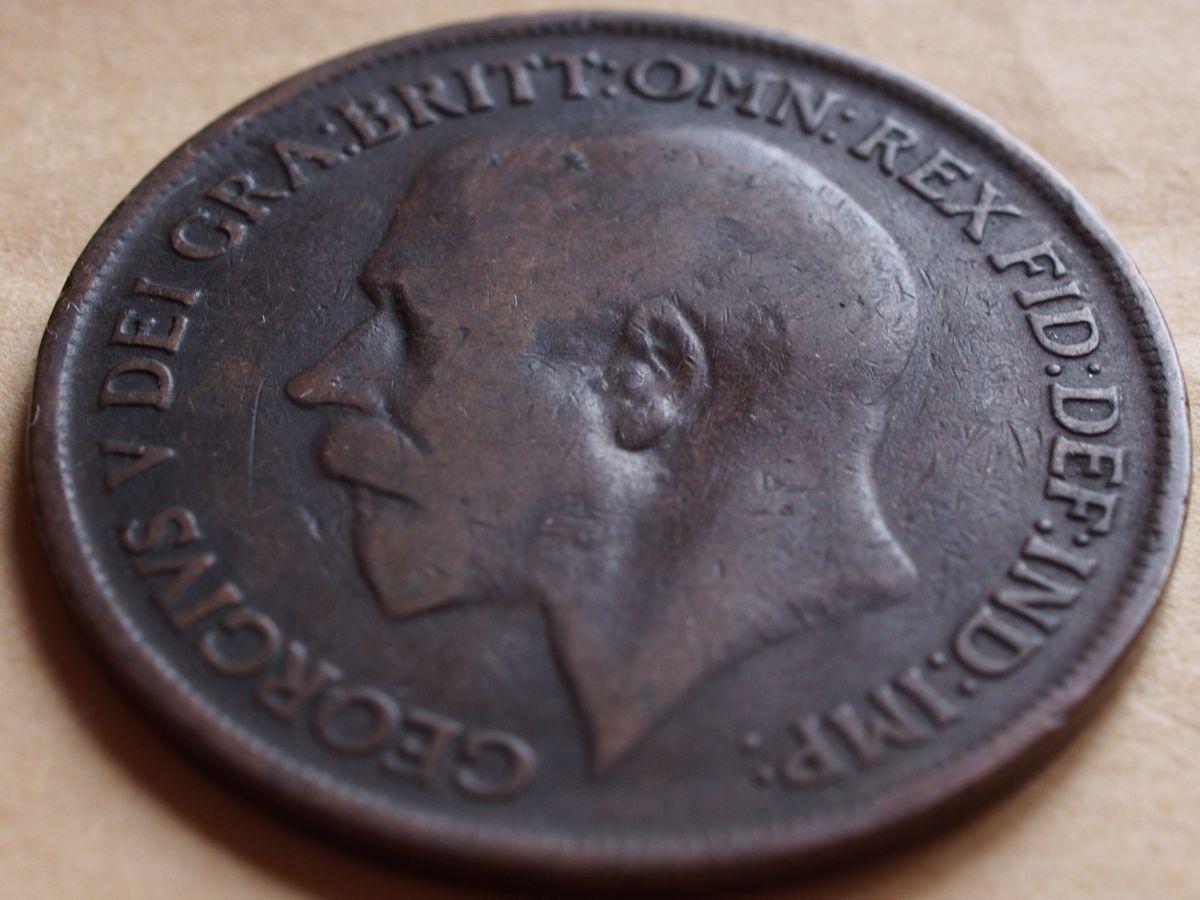
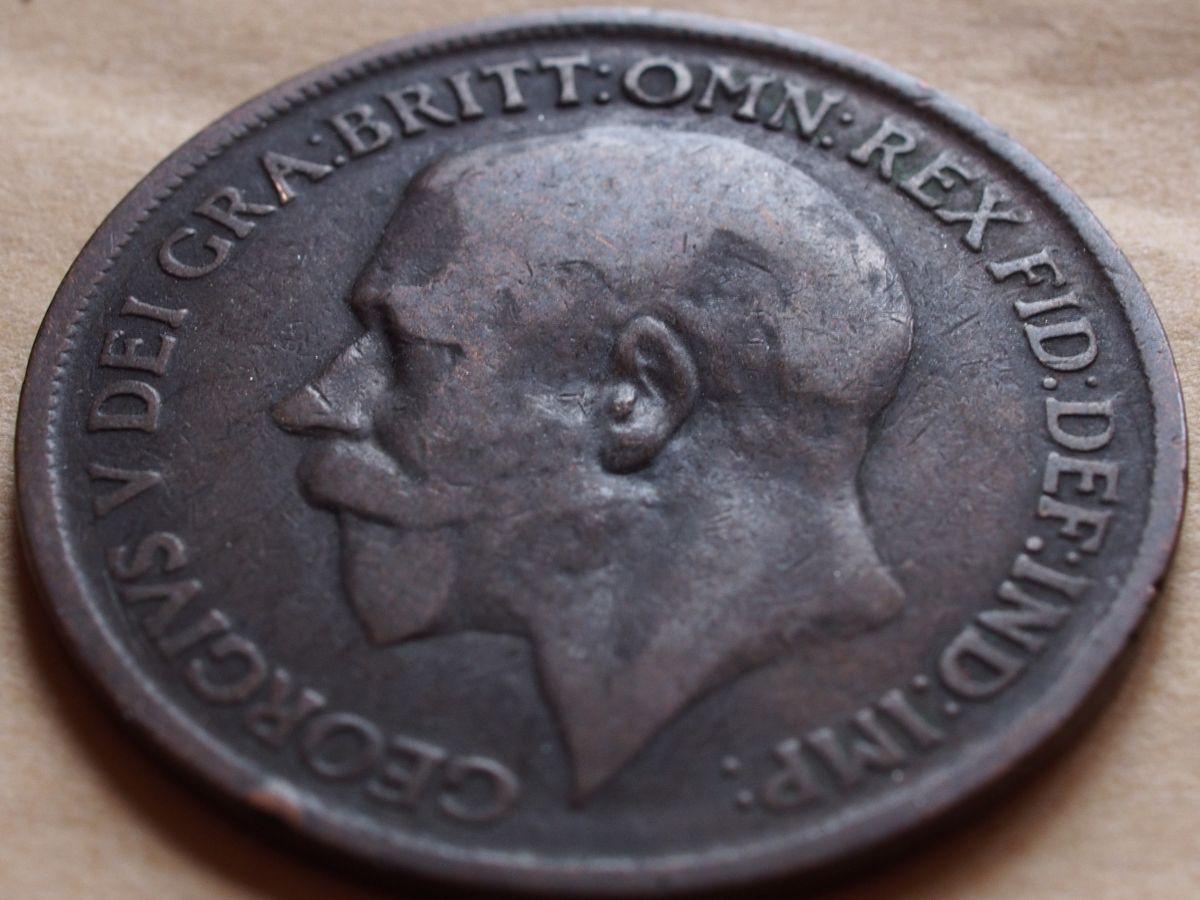
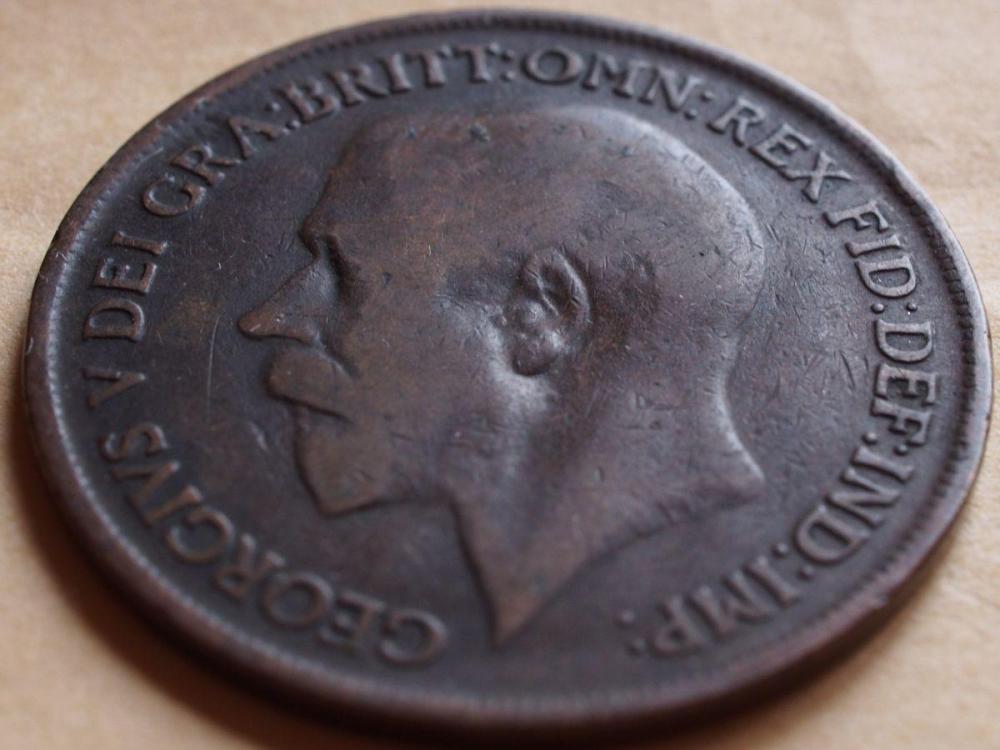
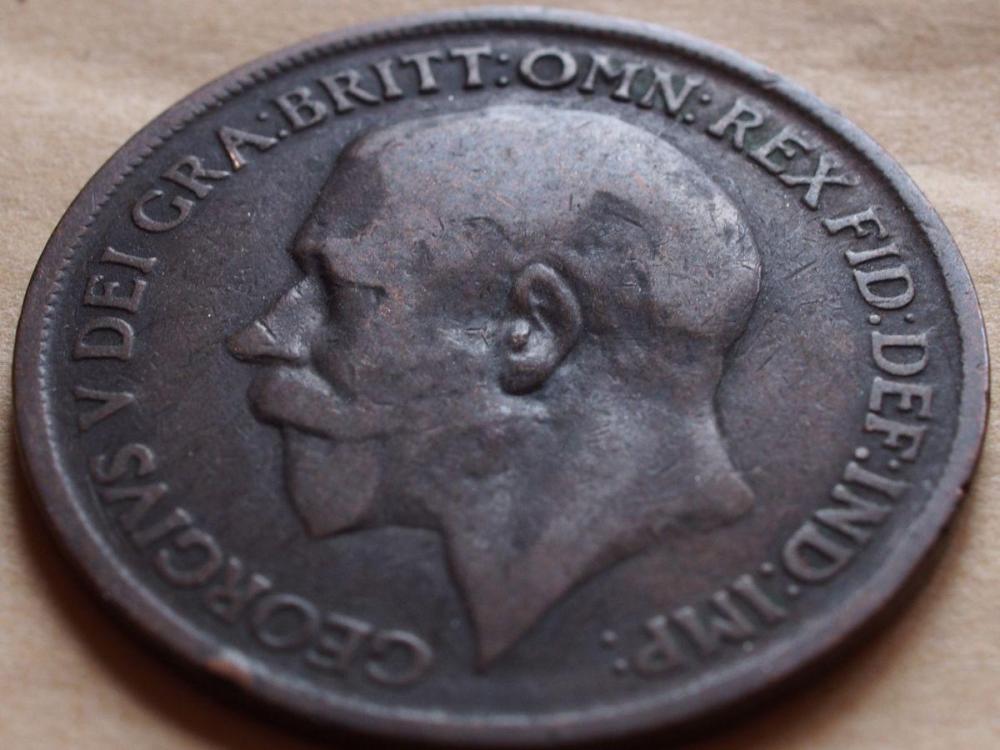
The recessed ear is a three-dimensional phenomenon, but most photographs are taken from directly above. With a coin in the hand I'm sure we all look from a variety of angles without thinking about it. With the images above I purposely used an angle to help accentuate the contours. It might be interesting to look at a similar view of a near uncirculated coin. Not to be found in my collection sadly!
-
If you think of the ear as an ellipse, the feature I find most readily identifiable is a crease running along the line of the shortest axis. Well-worn examples of a 1915 and a 1916 to illustrate: Both of these pass the broken tooth test. Note that the tip of the ear remains distinct despite the considerable wear.
-
1950 Penny Missing Waves
Avocet replied to Avocet's topic in British Coin Related Discussions & Enquiries
"Missing Waves" was intended as a joke (and should've been in the singular). What kind of force could have caused such a surgical removal of part of the face of a coin, without any sign of damage extending beyond the affected area or through to the other side? -
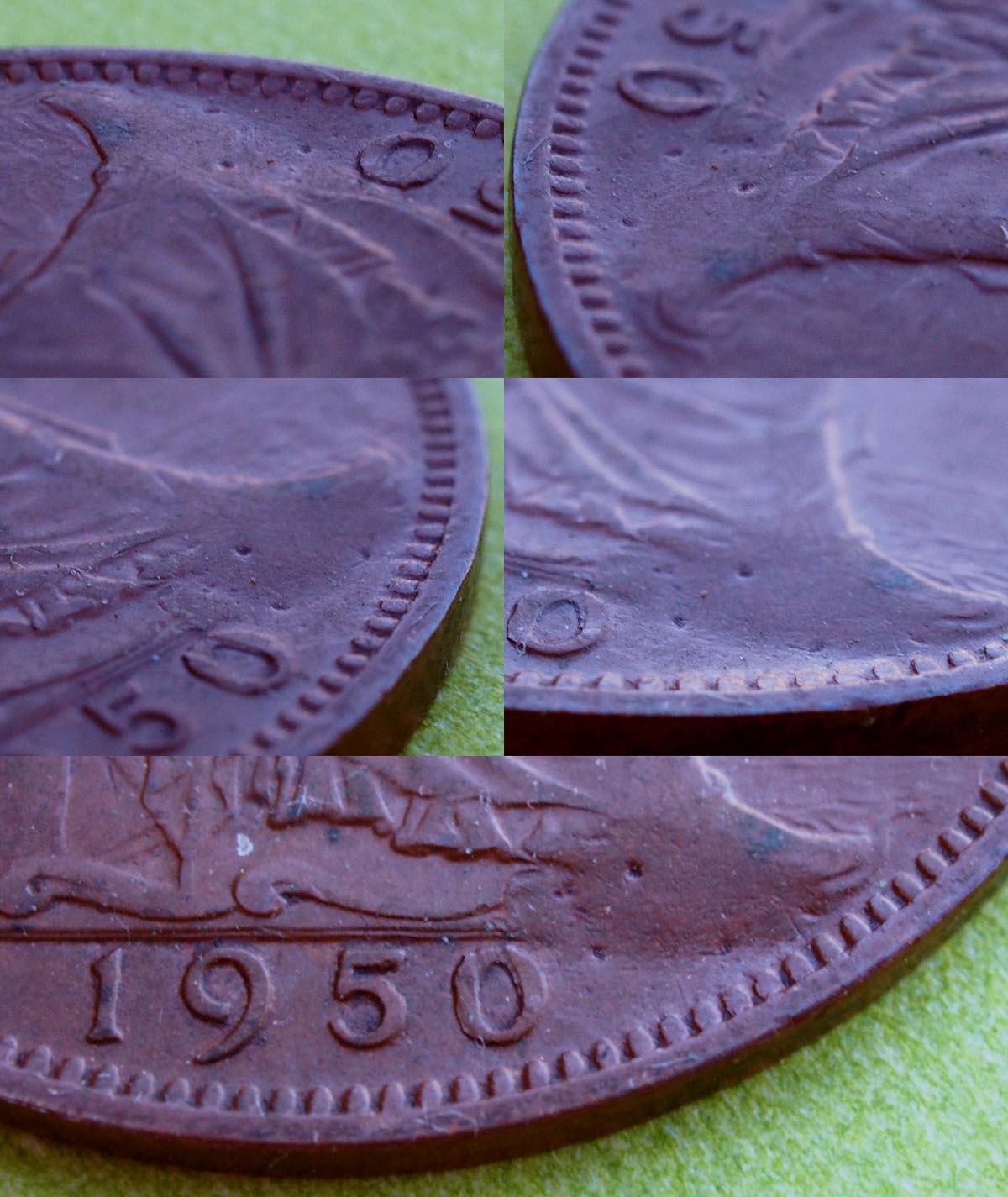
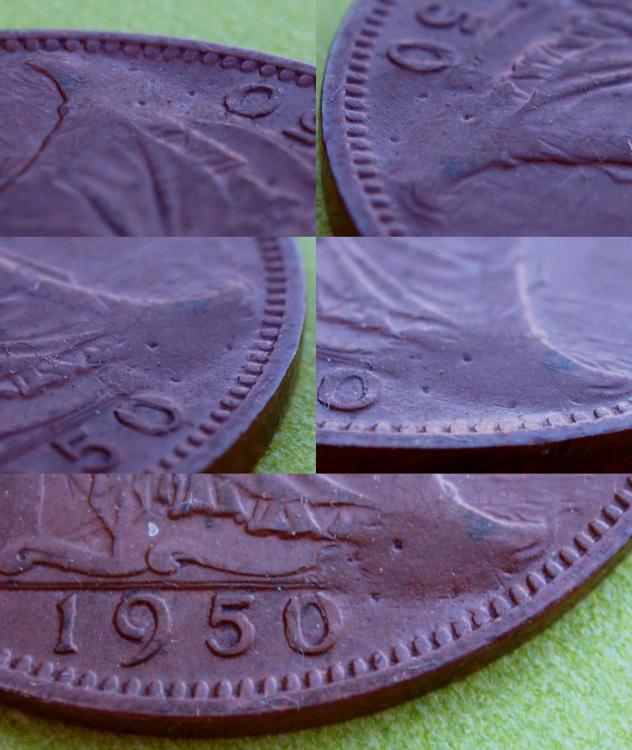
Alas, not a variety; I think I can rationalise it as a planchet defect, but I'd be delighted to hear what others think. I hope the images are clear enough. I see a fairly well-defined circular or elliptical area where the die has not properly impacted the surface of the coin. Until I took the pictures I hadn't noticed that the right edge of the date zero falls within the area in question and the character has suffered some distortion. Maybe this complicates the thinking a bit? I can see no corresponding distortion on the obverse, making me think that the planchet may have had a weak patch which fell away during the minting process. I have no interest in value. I imagine most people looking for a 1950 penny would want a normal one in better condition! But if someone's trying to put together a penny date run of coins with minting errors, the scarce dates would be tough to find.
-
Thanks for all the kind words. @Paddy I've never actually bought a bulk lot of coins, and I'm thinking it's something I need to experience! Doing your hunting at someone's shop you don't risk being saddled with stuff you don't want, but perhaps I'm playing things a bit too safe. @Peckris 2 I have a comparable tale from much earlier this year. I was at one of my local antiques centres where I'd been rummaging the lower grade pennies for a while, finding very little. I moved on to some of the other offerings and gathered together a nice little group. Before I left I thought I'd dip my hand in the pennies one more time, and out came a 1951. You can't beat that moment of disbelief!
-
Since finding this place I've very much appreciated the wisdom and knowledge on display here. I'm hoping that in due course that I might be able to contribute some of my own! I started collecting in the last years of pre-decimal coinage, and with my dad put together a collection which gave us a lot of pleasure. I like to think that most of the good ones I found when I slipped behind the scenes at the Post Office where my mum used to work a couple of days a week; truthfully most of them probably came via my dad's Civil Service colleagues and friends! But I do vividly remember finding my 1950 threepence, completing the date run - not at all easy towards the end. We moved on to stamps, which was also fun but I never loved them in quite the same way. Following the demonization of our historic coinage our collection spent almost 50 years hidden away, but when I officially retired (kind of) I began to think about reinvigorating it. There were some easy quick wins, such as filling date sequences we hadn't really been committed to (or perhaps were raided by me when my pocket money was proving inadequate 😧). Our pre-1920 silver collection was particularly threadbare, and I was lucky to acquire examples of many of the types while the silver price was still reasonably sensible. But for me nothing in the coin world beats rummaging through boxes and bowls of coins. Although sometimes it's quickly clear that I'm not going to find much, I'm often surprised at some of the coins that dealers are ready to throw into their bargain bins. Enhancing the collection has also proved to be a fine way of remembering my dad (d.1997) in a very meaningful way. The collection definitely remains "ours".