Leaderboard

Popular Content
Showing content with the highest reputation on 01/03/2016 in Posts
-
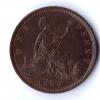
Those coins look perfectly nice to me, Frank, with plenty of eye appeal - and they haven't broken the bank. I'd be happy with them for the price you paid... If/when you get the Collectors Coins GB book, this contains mintage figures for each coin and each year, where figures were published. This will help give an idea of the coin's relative scarcity but doesn't necessarily correlate with how hard may be to find one in really top condition (older coins might have been melted down, or not kept as often, etc).2 points
-
It was DNW. Lot number 1773 Auction 29/09/10 I was unsure if the coin was genuine but Peter Davies assured me he believed it was.1 point
-
I wish I'd known this a couple of months ago. I could have let you have an 1873 unc - I had upgraded to BU.1 point
-
Totally disagree. If you disc out lead, not only will you miss seal matrices, lead tokens, Roman votives, cloth seals, pilgrim badges and ampullae and many other historic items, you will also lose depth on tiny hammered and celtic with most machines. And I always keep scrap lead, more than pays for the batteries. On ancient sites, dig everything but iron! Even scrap lead and shot are a good indicator of land usage. Jerry1 point
-
I've only found 1 of the rare 1965 varieties in around 15 years, a very difficult variety to find. I still check each one I come across. I'd have to choose the 1847 Sixpence for my coin of the year. Believed to be unique, it came up in auction a few years back and I didn't bid believing it would sell for way over my budget. When I checked the results, it sold for less than what I would have bid . . although I don't know what the winning bidder would have topped out at, I might have won it. I learnt my lesson.1 point
-
Secondly, an Early Bronze Age miniature flat axe head , approx 2000 BC. These were previously described as 'votive' but now thought simply to be small axes for finer work. It is currently in the National Museum of Wales for recording and metal analysis (the earliest of these were pure copper). Jerry

 1 point
 -
I have no idea on that one, never seen anything comparable, though it is unlike the Bronze age anvils on the BM site. It's certainly taken a battering. Here are a couple of my finds in the last few weeks, hardly been out in this awful weather. Firstly a C14-15 harness pendant, much red enamel remaining. The Lion rampant was a fairly common motif used by several prominent families, I haven't yet pinned it down, but likely to have had SE Wales connections. Jerry
 1 point


