Nick
-
Posts
2,063 -
Joined
-
Last visited
-
Days Won
31
Content Type
Profiles
Forums
Events
Downloads
Store
Gallery
Articles
Everything posted by Nick
-
-
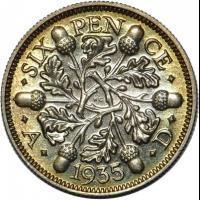
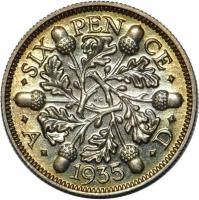
I know that many Victorian silver coins appear to have been struck on highly polished flans and as such are often offered as proofs. Given that there were little over one thousand proof 1887 threepences struck, it is highly unlikely that I have a proof, but I would welcome your opinions. The pictures show two 1887 threepences, both prooflike in appearance. The first picture has the coins square on to the camera, whereas the second has the coin surfaces angled toward the light source. I think that the coin on the left is probably from a specimen set, or just an early strike. It is the one on the right that is perhaps a proof. Nick
-
Hello Nick and welcome. Without re-reading Davies I am guessing that the dies are the same. The easiest tell for a maundy threepence is the toning. Currency issues tend to tone like all other silver coins whereas maundy issues tone with that lovely gun metal/steely blue tone. The coins have to be in high grade to differentiate. For B UNC coins the maundy usually appear prooflike with mirrored fields. I have sold a couple of early B UNCS and had to sell them as maundy issue becauase they looked like proof strikes. The currency, as I'm sure you will know, was worth about £100 more than I asked. Hope that is of some help. Thanks, that does help and will certainly help in future, as long as I remember to buy toned examples The specific examples I was looking at were the Maundy coins of Edward VII which are all the same Davies type '1 A'. If the Maundy '1 A' is the same as the currency '1 A' then it should be trivial to differentiate 1905-9 currency threepences as they all have a type 'B' reverse. I think I need to do some more research to try and firm up a theory. Nick
-
My first question to the forum. Please be gentle. In Davies book 'British Silver Coins' die numbers are attributed to varieties of currency threepence and also to Maundy coins. Where the Maundy threepence die comes from the currency series that die number is noted. Does this mean that for Maundy coins where no such currency die number is shown that the Maundy die is different from the currency die? If this is the case, are there any references that detail the differences? I really struggle to differentiate between early currency strikes and Maundy coins. Nick